
As an Amazon Associate, we earn from qualifying purchases. This post contains affiliate links – if you buy through them, we may earn a commission at no extra cost to you.
You’re choosing between three ways to weld at home without a gas cylinder: a cheap wire-feed MIG that feeds its own filler, a stick machine that runs on coated rods, or a portable handheld unit you point like a tool. What separates them is the process, the weight you carry, and what ships in the box.
Best overall: YESWELDER 135A MIG — three processes in one box, flux core wire included, and synergic control that sets voltage for you.
Best stick welder: Hpoouo 200A Stick — 3.7 lbs, 20 rods and gloves in the box, ready for farm and gate repairs.
Best dual voltage: ARCCAPTAIN 200A ARC — runs on 110V or 220V, 7.2 lbs, and a shoulder strap comes with it.
The rest of this guide covers the combo machines, the handheld option, and what to check before you order.
How We Picked
We looked at Amazon listings for small 110V welders and kept the ones whose sellers state real numbers: amps, weight, material thickness, rod or wire sizes, and what ships in the box. A listing had to name its process clearly — flux core MIG, stick, lift TIG, or a combination — because that decides what you can actually weld. Listings that only used vague praise without a single figure dropped out.
1. YESWELDER 135A MIG Welder

Best for: The first-time welder who wants one machine
This is the most complete starting point on the list. It runs gasless flux core MIG, stick, and lift TIG, and the listing says the box includes E71T-GS flux core wire in.030” and.035” sizes, so you can strike an arc without a shielding gas cylinder.
The synergic control matches voltage to your wire feed speed automatically, which takes the guesswork out of the two dials beginners usually fight with. A ±3V micro-adjustment lets you fine-tune from there. At 11.4 lbs with a handle, it’s a machine you can carry to a job rather than park in a garage.
The limit is the material: the listing puts mild steel capacity at 3/32″ (2.5mm), so thick plate is out of reach. Lift TIG also needs a torch you buy separately. If you plan to weld thick plate, this isn’t the machine for you.
Pros
- Three processes: flux core MIG, stick, lift TIG
- E71T-GS flux core wire included in the box
- Synergic control auto-matches voltage to wire speed
Cons
- Lift TIG requires a torch bought separately
- Mild steel capacity listed at 3/32″ (2.5mm)
2. Hpoouo 200Amp 20PCS Rods Stick Welder

Best for: Farm, gate and rooftop repairs away from power
This machine is listed at 3.7 lbs, and the listing gives its size as 7.8 x 3.9 x 5.3 inches — small enough for a backpack or a toolbox. The adjustable current runs from 20 to 200A, and the listing says it welds metal from 0.06 to 0.2 inch thick, which covers a lot of repair work.
The kit is the real story. It ships with 20 welding rods, two chipping hammers, and a pair of welding gloves, so your first project doesn’t wait on another order. Hot start, anti-stick, and arc force functions help the rod strike and stay lit.
One thing to read carefully: the included rods are acidic, so the holder and ground clamp go on the positive and negative terminals as the listing shows. Switch to alkaline rods like E7018 and the polarity reverses. For stainless, the listing allows E308L-16 rods only.
Pros
- 3.7 lbs and small enough for a backpack
- 20 rods, gloves and two chipping hammers included
- Adjustable 20-200A for thin and thick metal
Cons
- Stainless welding limited to E308L-16 rods
- Rod polarity must change with the rod type
3. FEMEROL 130A MIG

Best for: The buyer who wants a mask and wire included
Two modes here — gasless flux core MIG and stick — and the listing says the package covers almost everything: the welder, a MIG torch, electrode holder, ground clamp, welding mask, brush, gloves, contact tips and nozzles, plus 0.5kg of 0.8mm flux cored wire. That’s a full first setup with nothing else to buy.
Synergic control matches voltage and wire feed speed once you pick your wire diameter, and the listing says experienced welders can switch to manual MIG and set both by hand. It handles 2.2-pound wire rolls. The listing puts mild steel capacity at up to 4.0mm plate.
At 9 lbs with a hand grip it’s easy to move around. The listing states a two-year guarantee. If you want a digital display or a TIG option, this machine doesn’t offer either.
Pros
- Includes mask, gloves, brush, tips and flux core wire
- Two-year guarantee stated by the seller
- Takes 2.2-pound wire rolls
Cons
- No TIG mode
4. Saker Portable Electric Welding Machine

Best for: One-handed work in tight spots
This one breaks the mold: it’s a handheld arc welder you point at the joint, 3.3 lbs with a listed size of 9.8″ x 9.45″. The 20-120A output is set with a 5-speed knob rather than a digital panel, and the listing says it suits carbon steel and iron.
Hot start arc ignition helps the rod light, and the listing claims reduced spatter and cleaner welds from the IGBT inverter’s steady current. A 360° cooling design and built-in overheat protection are there to keep it running through longer sessions.
The trade-off is range. At 120A maximum, this is a light-duty tool for home DIY, auto repair, and fencing — not a machine for structural steel. It takes 3/32″ rods. If you need to weld thick plate, look at the stick machines instead.
Pros
- 3.3 lbs with one-handed handheld design
- 5-speed knob for 20-120A adjustment
- Hot start arc ignition for easier starts
Cons
- 120A ceiling limits it to light-duty work
5. ARCCAPTAIN 200A ARC

Best for: The buyer who wants 220V headroom later
This stick welder runs on both 110V and 220V, so it works on a household outlet now and gets more out of a 220V circuit later. At 7.2 lbs it carries by handle or the shoulder strap that comes in the package. The listing says it performs well on 6010, 6011, 6013 and 7018 rods.
Synergic control matches current and voltage once you select your electrode diameter, which is a real help while you’re learning to read the puddle. You can still adjust current yourself, and the hot start and arc force are both adjustable. Anti-stick keeps the electrode from freezing in the puddle.
It’s a two-in-one: stick or lift TIG, though the listing notes the TIG torch isn’t included. The listing also states TÜV and ANSI testing before the machine leaves the factory, plus a two-year service period.
Pros
- Runs on 110V or 220V input
- Shoulder strap included for carrying
- Adjustable hot start and arc force
Cons
- Lift TIG torch not included
- Stick and TIG only, no wire feed
How to Choose in Sixty Seconds
Which process do I actually need?
Match the process to your metal and your setting. Flux core MIG, like the YESWELDER 135A MIG or FEMEROL 130A MIG, feeds its own wire and works outdoors without gas. Stick, like the Hpoouo 200A Stick, handles thick plate. If most of your work is thin sheet and auto body panels, wire feed is the easier road.
Does 110V give me enough power?
For home work, usually yes. The listings here put mild steel capacity between 3/32″ (2.5mm) and 4.0mm on 110V. That covers trailers, gates, exhaust work, and most repairs. If you know you’ll move to thicker steel, the ARCCAPTAIN 200A ARC takes 220V as well, which gives you room to grow without buying a second machine.
What should I confirm before ordering?
Check three things on the listing. First, what’s in the box — rods, wire, mask, gloves and a ground clamp save you a second order. Second, the rod or wire sizes the machine accepts, because a narrow range limits you. Third, the stated warranty. Stick to the amperage range the listing gives.
Related guides
Frequently Asked Questions
What do I need to buy separately?
It depends on the machine. The YESWELDER 135A MIG includes flux core wire but needs a lift TIG torch for TIG work. The ARCCAPTAIN 200A ARC needs a TIG torch too. The Hpoouo 200A Stick and FEMEROL 130A MIG ship with rods or wire and the basic hand tools, so those are closer to ready out of the box.
What tends to go wrong first?
Overheating during long sessions is the common limit. Every machine here lists thermal protection — over-current, over-load and over-heating safeguards on the YESWELDER, and overheat protection on the Saker. Give it the cooldown, and check the duty cycle before a long bead.
Is the simplest machine on the list enough?
Often, yes. The Saker Portable Welder at 3.3 lbs does light-duty carbon steel and iron work with a 5-speed knob and no wire feed to thread. If your jobs are small repairs, fencing, and auto body patches, a handheld unit covers them. Step up to a stick or MIG machine when you need thicker steel or longer runs.
Closing
For most people, the YESWELDER 135A MIG is the pick — three processes, wire included, and synergic control that sets voltage for you. If you want the lightest kit for repair work, the Hpoouo 200A Stick comes with rods and gloves ready to go. Check the material thickness you actually weld, then head to the listing.
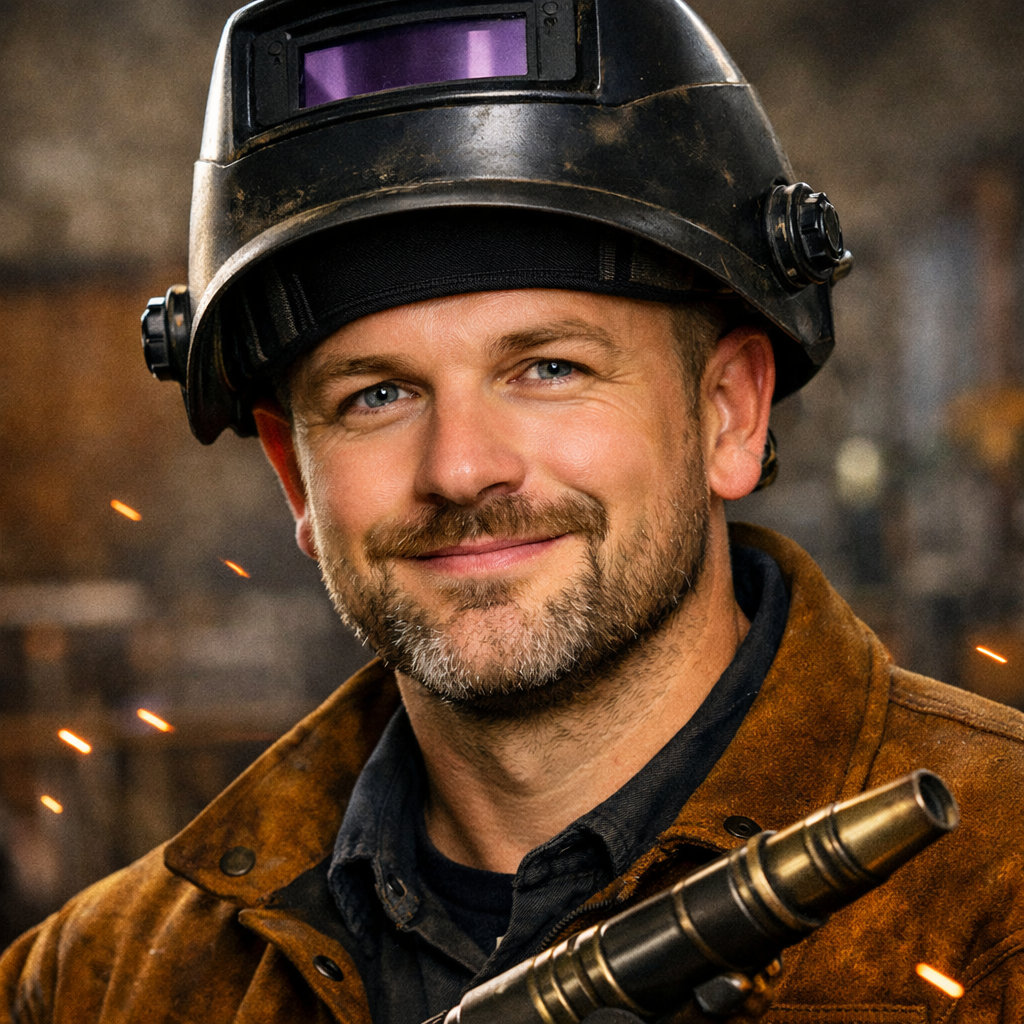
Hi, I’m Zachary Ford. I’m passionate about welding and dedicated to helping both beginners and experienced welders make informed decisions. I research, test, and write about welding helmets, welding machines, safety equipment, and essential workshop tools. My goal is to provide honest reviews, practical buying guides, and easy-to-follow tutorials that help you weld more safely, work more efficiently, and choose the right gear with confidence.