
A single wrong TIG welding filler rod can turn a precision joint into a cracked failure under load or corrosion attack within months. Whether you’re fabricating a stainless exhaust header, repairing aluminum structural tubing, or building a custom carbon steel frame, the filler rod determines tensile strength, ductility, corrosion resistance, and bead profile more than amperage or gas flow alone.
How to choose TIG welding filler rods correctly eliminates guesswork and delivers welds that match or exceed base metal performance. This decision hinges on base metal alloy, thickness, joint design, and service environment, factors that directly control fusion quality and long-term integrity.
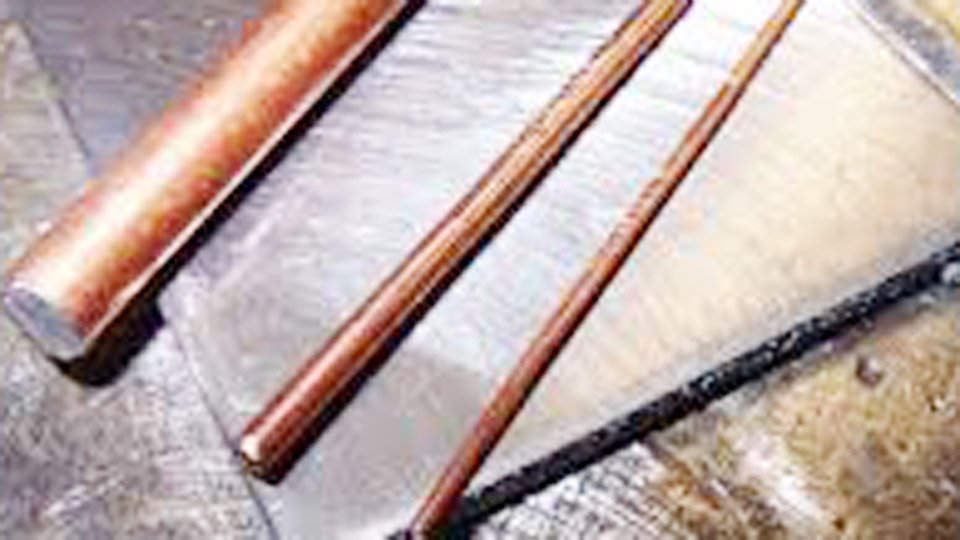
Image weldingtipsandtricks
Decoding AWS Classifications for TIG Filler Rods
AWS designations provide the precise chemical and mechanical roadmap for every TIG rod. The “ER” prefix confirms electrode or rod suitability for GTAW, followed by minimum tensile strength in ksi and alloy-specific chemistry indicators. Every digit and letter signals compatibility, deoxidizer content, and performance limits.
Carbon Steel Designations (ER70S Series)
ER70S-2 carries triple deoxidizers (aluminum, titanium, zirconium) for root passes and dirty surfaces, delivering clean fusion on mill scale without porosity. ER70S-6 increases silicon to 0.80-1.15% and manganese to 1.40-1.85%, improving wetting action and bead flow on carbon steels up to 70,000 psi tensile.
Both meet AWS A5.18 with typical as-welded yield around 65,500 psi and 24% elongation. Use ER70S-6 when puddle fluidity matters more than absolute cleanliness.
Stainless Steel Variants (ER308L, ER316L, ER309L)
The “L” suffix restricts carbon to 0.03% max, preventing sensitization and intergranular corrosion in 300-series stainless. ER308L matches 304/304L chemistry for food-grade tanks and piping. ER316L adds 2-3% molybdenum for pitting resistance in chloride environments.
ER309L bridges dissimilar joints like stainless-to-carbon steel, absorbing carbon migration without cracking. All fall under AWS A5.9 with deposited tensile exceeding 75,000 psi.
Aluminum Alloy Codes (ER4043, ER5356)
ER4043 contains 4.5-6.0% silicon for superior fluidity and crack resistance in 6xxx series like 6061, producing smooth beads that machine easily. ER5356 delivers 4.5-5.5% magnesium for 5xxx alloys, boosting tensile strength by 20-30% over 4043 while maintaining ductility for marine or structural loads.
Both comply with AWS A5.10; neither responds to post-weld heat treatment, so match the base alloy’s temper requirements exactly.
Specialized Alloys for Titanium and More
ERTi-2 matches commercially pure Grade 2 titanium with 0.08-0.16% oxygen for corrosion-critical aerospace and medical work. ERTi-5 (Ti-6Al-4V) adds aluminum and vanadium for 130,000 psi strength in Grade 5 applications.
Nickel-based rods like ERNiCr-3 handle Inconel under AWS A5.14. Always verify exact base metal grade against the rod’s UNS designation before striking an arc.
Matching Filler Rod Composition to Base Metal Properties
Base metal chemistry dictates filler chemistry. Mismatch creates brittle intermetallic compounds, reduced corrosion resistance, or hot cracking. Focus on carbon equivalent, alloying elements, and thermal expansion coefficients.
Carbon and Low-Alloy Steels
For A36 or 1018 mild steel, ER70S-6 provides the best balance of penetration and deoxidation. On 4130 chrome-moly tubing, ER70S-2 or ER80S-D2 maintains heat-treat response without excessive hardness in the HAZ. Higher-strength low-alloy steels demand ER80S or ER90S rods to hit 80-90 ksi tensile without preheat variations.
Austenitic Stainless Steels
304L demands ER308L to preserve low-carbon corrosion resistance. For 316L in chemical service, ER316L prevents molybdenum dilution. When joining 304 to mild steel, ER309L compensates for carbon pickup and thermal mismatch, delivering crack-free transitions up to 1,600°F service temperatures.
Aluminum Series Compatibility
6061-T6 pairs exclusively with ER4043 for its silicon-enhanced fluidity and reduced cracking sensitivity. 5052 or 5086 marine grades require ER5356 for magnesium-matched strength and anodizing color consistency. Never cross 4xxx and 5xxx fillers—silicon-magnesium reactions produce brittle Mg2Si phases that fail under fatigue.
Dissimilar Metal Joints
ER309L or ERNiCr-3 handles stainless-to-carbon transitions by buffering carbon migration. Titanium-to-stainless demands specialized nickel fillers to block brittle intermetallics. Always calculate dilution rates: filler should comprise 30-50% of the final weld pool chemistry.
Determining Filler Rod Diameter from Material Thickness
Rod diameter controls melt rate, heat input, and puddle stability. Too large chills the puddle and creates lack of fusion; too small overheats thin material and causes burn-through. Rule: diameter ≤ base metal thickness for optimal control.
Guidelines for Thin Sheet to Heavy Plate
| Base Metal Thickness | Recommended TIG Filler Rod Diameter | Typical Amperage Range (DCEN, Argon) |
|---|---|---|
| Up to 1/16″ (1.6 mm) | 0.045″ or 1/16″ (1.2 mm) | 60–100 A |
| 3/32″–1/8″ (2.4–3.2 mm) | 1/16″–3/32″ (1.6–2.4 mm) | 100–150 A |
| 3/16″ (4.8 mm) | 1/8″ (3.2 mm) | 180–250 A |
| 1/4″ (6.4 mm) | 3/16″ (4.8 mm) | 240–320 A |
| 1/2″+ (12.7 mm+) | 1/4″ (6.4 mm) or larger | 300+ A |
These values assume clean joint preparation and 100% argon shielding. Adjust ±10% for joint fit-up gaps.
Adjustments for Stainless and Aluminum
Stainless conducts heat slower, so drop one diameter size versus carbon steel at identical thickness to avoid excessive heat buildup. Aluminum’s high thermal conductivity requires matching or slightly larger rods than steel to maintain puddle fluidity—1/16″ rod handles 0.040″ 6061 without burn-through when using AC balance at 70% EN. Test on scrap: the rod should melt smoothly without excessive balling or dripping.
Accounting for Joint Design, Position, and Heat Input
Joint geometry and welding position alter required filler fluidity and deposition rate. Butt joints tolerate lower silicon rods; fillets demand higher wetting action.
Butt vs. Fillet Joint Considerations
Butt joints on 1/8″ plate use 3/32″ rod for precise root control and minimal reinforcement. Fillet welds on the same thickness shift to 1/8″ rod to fill the throat without undercut. Vertical-up fillets benefit from ER70S-6’s silicon for faster freeze and reduced sag. Overhead positions favor smaller diameters to control puddle size.
Welding Position Effects on Rod Choice
Flat and horizontal allow larger rods and higher deposition. Vertical and overhead require smaller rods plus pulsed current to freeze the puddle between drops. For 5G pipe positions, ER308L with 1/16″ diameter maintains control on 1/8″ stainless schedule 10 pipe. Always factor travel speed: faster speeds pair with smaller rods to prevent cold laps.
Integrating Shielding Gas and Process Parameters with Filler Selection
Shielding gas purity and flow directly influence filler performance. Contaminated argon introduces oxygen that reacts with deoxidizers, creating inclusions.
Argon Purity and Flow Impacts
99.995% pure argon at 15-20 CFH prevents oxidation in carbon steel and stainless. Aluminum demands 20-25 CFH to counter its reactivity. Helium mixes (25-50%) increase heat input for thicker aluminum when using ER5356, allowing larger rod diameters without porosity. Never exceed 30 CFH—turbulence pulls air into the puddle.
Amperage and Travel Speed Alignment
Set amperage so the filler melts at the leading edge of the puddle without dipping into the arc. For 1/8″ carbon steel with 3/32″ ER70S-6, 140-160 A DCEN and 8-10 IPM travel speed produces consistent 1/8″ beads.
Stainless requires 10-15% lower amperage to prevent carbide precipitation. Aluminum AC at 120-140 A with 70% EN balance feeds 1/16″ ER4043 cleanly on 1/8″ plate.
Evaluating Mechanical Properties and Long-Term Performance
Mechanical testing data separates adequate fillers from optimal ones. Review manufacturer datasheets for as-welded tensile, yield, elongation, and CVN impact values.
Tensile Strength and Ductility Metrics
ER70S-6 delivers 78,000 psi tensile and 24% elongation on mild steel—sufficient for most structural loads. ER5356 on 5086 aluminum achieves 42,000 psi versus ER4043’s 27,000 psi, critical for vibration-prone marine frames. Ductility above 20% prevents brittle failure in cyclic loading.
Corrosion Resistance and Post-Weld Heat Treatment
Low-carbon “L” grades maintain ASTM corrosion ratings after sensitization testing. Titanium fillers require argon back-purging to preserve oxide layer integrity. Post-weld heat treatment on chrome-moly demands matching filler chemistry to avoid strength loss—ER80S-D2 retains 95% of base properties after 1,100°F stress relief.
Sourcing Quality TIG Filler Rods and Storage Best Practices
Certified rods carry AWS and ISO markings plus heat numbers. Purchase from manufacturers with traceable mill test reports.
Certification Standards and Supplier Selection
Demand material test certificates verifying chemistry within AWS limits. Reputable suppliers provide color-coded ends and sealed tubes to prevent mix-ups. Avoid generic imports lacking traceability—micro-alloying deviations can drop impact values by 50%.
Preventing Contamination During Storage
Store rods in original sealed tubes at 60-80°F and <50% humidity. Stainless and aluminum rods oxidize quickly; use dedicated racks and desiccant packs. Wipe rods with acetone immediately before use. Titanium demands dedicated stainless-steel storage to eliminate iron cross-contamination that causes embrittlement.
Real-World Application Insight
Selecting TIG welding filler rods ultimately comes down to matching chemistry first, then optimizing diameter and parameters for the exact joint and position. Run a test coupon under actual service conditions—load, temperature, and corrosion exposure—before committing production material.
The most advanced welders treat filler selection as an engineering calculation: calculate dilution, verify mechanical properties against design specs, and confirm corrosion performance with salt-spray or immersion testing.
This disciplined approach turns every TIG joint into a documented, repeatable success that outperforms code minimums and extends service life by years.

Hi, I’m Zachary Ford. I’m passionate about welding and dedicated to helping both beginners and experienced welders make informed decisions. I research, test, and write about welding helmets, welding machines, safety equipment, and essential workshop tools. My goal is to provide honest reviews, practical buying guides, and easy-to-follow tutorials that help you weld more safely, work more efficiently, and choose the right gear with confidence.