
As an Amazon Associate, we earn from qualifying purchases. This post contains affiliate links – if you buy through them, we may earn a commission at no extra cost to you.
There’s no single best portable welder for a small shop. There’s a best one for your outlet, your metal, and your hands. Three facts decide it: whether you have 110V only or 220V too, whether you’re welding thin auto body panels or thick plate, and whether you want to hold a gun or a stinger. These machines differ by process, weight and control style, not by rank. The YESWELDER 135A MIG and the ARCCAPTAIN 200A Stick Welder cover the two most different jobs here.
1. YESWELDER 135A MIG Welder

Best for: someone welding thin steel panels in a home garage.
This machine’s synergic control matches voltage to your wire feed speed automatically, and the ±3V micro-adjustment lets you fine-tune from there. It runs gasless flux core, so you don’t need a shielding gas cylinder.
The 135A output on 110V handles mild steel up to 3/32″ (2.5mm) thick, and it weighs 11.4 lbs with a carrying handle. Stick and Lift TIG are also on board, but Lift TIG needs an extra torch you buy separately.
Good if:
- You weld thin sheet metal and want to stop burning holes in it
- You work outside or in a drafty shop and don’t want gas cylinders
- You want a digital display you can read in daylight
Skip it if:
- You mostly weld thick plate or heavy structural steel
- You want Lift TIG without buying a torch separately
2. ARCCAPTAIN 200A Stick Welder

Best for: someone who needs one machine for garage, farm and remote jobs.
Versatility here means two things: dual voltage and two processes. This unit runs on 110V or 220V, so it works from a household outlet and from a heavier circuit when you have one. It does stick and Lift TIG, and the listing says it performs well on 6010, 6011, 6013 and 7018 rods.
The synergic control matches current and voltage once you pick your electrode diameter, which suits a beginner learning to strike an arc. Adjustable hot start and arc force let you tune the strike and the puddle, and automatic anti-stick keeps the electrode from freezing in place. It weighs 7.2 lbs and comes with a shoulder strap.
The trade-off is that Lift TIG needs a torch you supply yourself. Also, the listing carries an explicit warning: don’t power it on until the screen turns off and the fan stops.
Good if:
- You want both 110V and 220V from one machine
- You weld a mix of stainless, mild steel and repair work
- You want a shoulder strap for carrying between sites
Skip it if:
- You need wire-feed MIG for thin panels
- You won’t follow the listed power-down sequence before restarting
3. Hpoouo 200Amp 20PCS Rods Stick Welder

Best for: a first-time buyer who wants everything in the box.
A first welder should let you start the same day, and this listing leans hard into that. It ships with 20 welding rods, two chip hammers and a pair of welding gloves. Adjustable current runs 20-200A on 110V, and the listing says it welds metal from 0.06 to 0.2 inch thick.
At 7.8 x 3.9 x 5.3 inches and 3.7 lbs, it fits in a backpack or a toolbox, which suits rooftop, farm or remote work where you carry everything in. Hot start, anti-stick and arc force are all built in, plus over-voltage, over-current, over-heating and overload protection with a cooling fan.
One listed detail needs care: the included rods are acidic, so the electrode holder and earth clamp go to the “+” and “-” terminals respectively. If you switch to alkaline rods, those connections reverse. For stainless steel, the listing says to use E308L-16 rods only. This isn’t for someone who wants a MIG process or a gun-style torch.
Good if:
- You’re buying your first welder and want rods and gloves included
- You carry your gear to the job rather than welding in one spot
- You want a machine that fits in a toolbox
Skip it if:
- You want MIG wire feed rather than stick
- You’d rather not track which rod type needs which terminal setup
4. Saker Portable Electric Welding Machine

Best for: someone who wants to weld with a single hand in tight spots.
Holding a stinger and a helmet at once is awkward. This unit is a handheld gun, so a single hand does the work, and the listing says that makes it maneuverable. Output is adjustable from 20-120A through a 5-speed knob, and it runs on 110V with IGBT inverter technology.
At 3.3 lbs and 9.8″ x 9.45″, it stores in a home, workshop or car trunk. The listing names home DIY, automotive repair, fencing, ironwork and general metal repair as its uses, and it fits 3/32″ (2.5mm) rods. Hot start arc ignition helps the arc catch, and internal 360° cooling with overheat protection is meant to keep it running through longer sessions.
The catch is the top of the current range. It’s also not for anyone who wants to run stick, MIG and TIG from a single box. This is a dedicated tool for small repair jobs.
Good if:
- You weld in tight spaces where a stinger is hard to angle
- You want to weld with a single hand
- You do light repair work on carbon steel and iron
Skip it if:
- You need more than 120A for heavier material
- You want multiple welding processes from a single box
5. TOOLIOM 135A 110V Mini Stick Welder

Best for: someone carrying a welder between job sites all week.
Portability here is about how you carry it, not just how much it weighs. This unit comes with an adjustable shoulder strap, which the listing calls out for moving between job sites. It runs on standard 110V household voltage and handles 6011 and 6013 electrodes.
It’s a 2-in-1 machine: stick or Lift TIG, whichever you need. Built-in anti-stick, arc force and hot start make it easier for a beginner to strike and hold an arc. A digital display shows output welding current, and a trouble indicator flags problems. It welds mild steel, cast iron, stainless steel and hard surfacing.
Two things to know. Lift TIG needs a torch you buy separately, and the listing names the specific part: TL-WP-17V-10-25 from TOOLIOM. And the voltage warning is blunt: this welder is 110V input only, and connecting it to 220V will cause immediate damage and fire risk. Check your outlet before you plug in. This isn’t for anyone who wants a dual-voltage machine.
Good if:
- You move your welder between sites and want a shoulder strap
- You want a digital current readout and a trouble indicator
- You only have 110V available
Skip it if:
- You need 220V capability
- You want Lift TIG without buying the torch separately
Where These Overlap
The Hpoouo 200A Mini and the Saker Handheld are the two closest calls, and both are stick-only, 110V machines for light repair. The difference is the form: one is a box with a stinger, the other is a gun you hold. If your work is overhead or in a corner, the gun shape decides it. The TOOLIOM 135A and the ARCCAPTAIN 200A overlap on stick and Lift TIG, but the ARCCAPTAIN adds 220V. The YESWELDER 135A MIG is the wire-feed machine singled out here for thin panels.
Still Not Sure?
Will I actually use this enough to learn it?
Stick welding takes practice before beads look clean. If you’ll weld a few times a year, the Hpoouo 200A Mini includes rods and gloves so you can start without a second order. If you’ll weld weekly, the ARCCAPTAIN 200A Stick Welder runs on 110V or 220V and handles 6010, 6011, 6013 and 7018 rods.
What outlet do I have in my shop?
This decides more than any feature. The TOOLIOM 135A and the YESWELDER 135A MIG are 110V only, and the TOOLIOM listing warns that 220V input causes immediate damage. If you have both outlets, the ARCCAPTAIN 200A Stick Welder runs on either.
What will I regret most later?
Usually the process, not the machine. Stick is forgiving outdoors and on dirty metal, but it won’t do thin auto body panels. If thin sheet is your real job, the YESWELDER 135A MIG’s synergic control is built for exactly that. Buy for the metal you actually have.
Frequently Asked Questions
Can a portable welder for a small shop run on a normal household outlet?
Some can. The TOOLIOM 135A, YESWELDER 135A MIG, Hpoouo 200A Mini and Saker Handheld all run on 110V. The ARCCAPTAIN 200A Stick Welder runs on 110V or 220V. Check your outlet first, because the TOOLIOM listing warns that 220V input causes immediate damage.
How thick a metal can these welders handle?
It varies by listing. The YESWELDER 135A MIG states mild steel up to 3/32″ (2.5mm). The Hpoouo 200A Mini states 0.06-0.2 inch. The Saker Handheld states a 20-120A output and 3/32″ (2.5mm) rods.
Do I need to buy a shielding gas cylinder?
No, not for these. The YESWELDER 135A MIG runs gasless flux core, which the listing notes suits outdoor and windy work. The stick machines run on electrodes rather than wire feed.
What’s the difference between stick and MIG for a beginner?
Stick uses a flux-coated electrode that burns away as you weld, and it handles dirty or outdoor metal well. MIG feeds wire continuously, which is easier on thin sheet. The YESWELDER 135A MIG’s synergic control matches voltage to wire speed automatically, which the listing calls foolproof for beginners.
Conclusion
If you weld thin panels, the YESWELDER 135A MIG is the one. If you want a single box for garage, farm and site work, the ARCCAPTAIN 200A Stick Welder covers more ground. Check your outlet, then open the listing for today’s details.
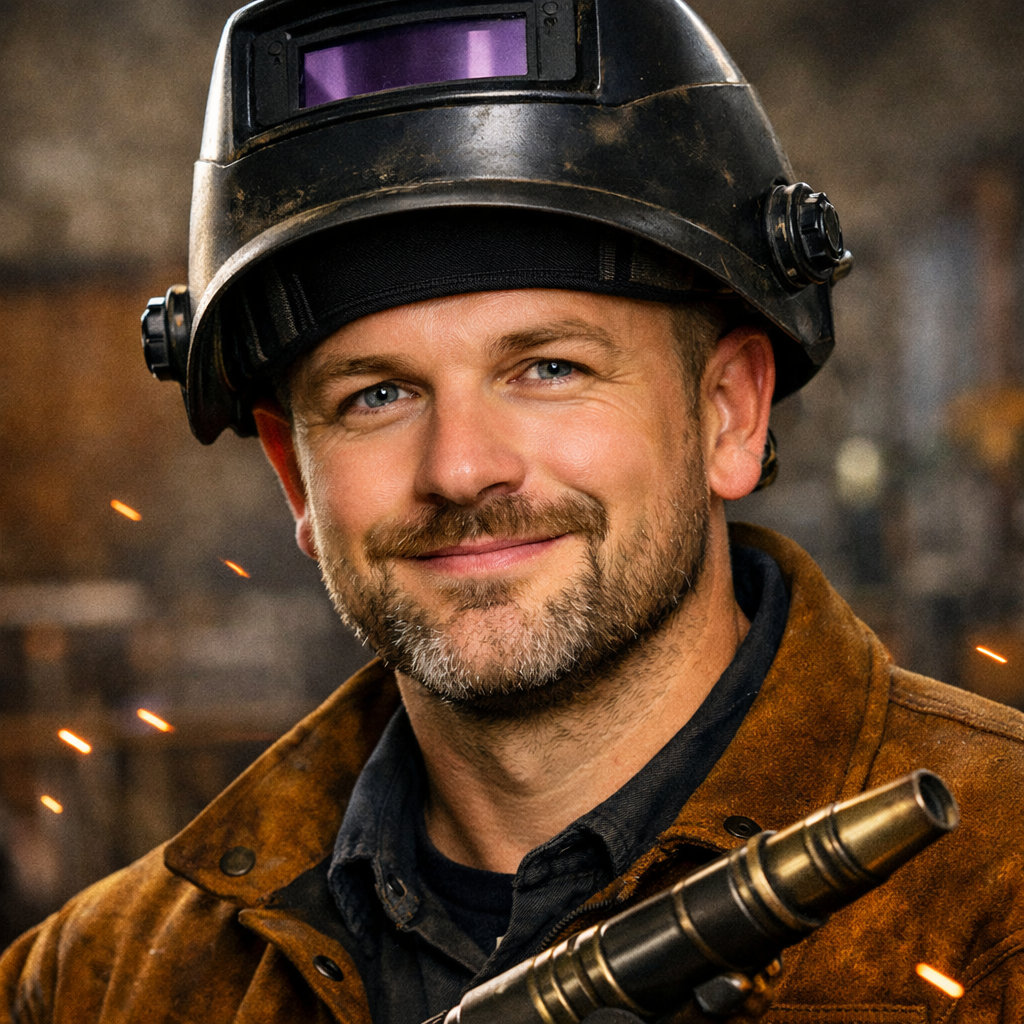
Hi, I’m Zachary Ford. I’m passionate about welding and dedicated to helping both beginners and experienced welders make informed decisions. I research, test, and write about welding helmets, welding machines, safety equipment, and essential workshop tools. My goal is to provide honest reviews, practical buying guides, and easy-to-follow tutorials that help you weld more safely, work more efficiently, and choose the right gear with confidence.