
As an Amazon Associate, we earn from qualifying purchases. This post contains affiliate links – if you buy through them, we may earn a commission at no extra cost to you.
The Tomahawk 15 HP Welder Generator and the Lincoln Eagle 10,000 Plus sit in the mid range, while the Miller Bobcat 230 and the Klutch 11kW Inverter Welder push higher; the Hobart Champion Elite 225 prints no output figure at all. These engine driven welder generators differ in what their listings state, since duty cycle and fuel capacity appear for only some of them, so they are worth checking alongside amps. The Klutch 11kW Inverter Welder is the only unit here whose listing states a run time.
Head to Head on What Matters
Welding Output and Duty Cycle
Welding output is where the listings give the most to compare. The Tomahawk 15 HP Welder Generator states 210 amps at a 60% duty cycle, which is the only duty cycle figure any of these listings prints. The Klutch 11kW Inverter Welder states a 260 max amp DC output, the highest amp figure in the group. The Lincoln Eagle 10,000 Plus names 225 amps in its title, while the Miller Bobcat 230’s listing gives no amp figure. The Hobart Champion Elite 225 gives no output figure in its listing at all, so on amps alone it sits as unknown rather than last.
Power for Tools On Site
A welder generator earns its place by running tools too, and here the listings differ in how much they spell out. The Klutch 11kW Inverter Welder is the most detailed: it names 120V and 240V capability, two sets of 120V GFCI receptacles, one 240V 3-pin NEMA 650R and one 240V 4-pin NEMA 14-50R. The Tomahawk 15 HP Welder Generator says it can weld and run electric tools at once, and its title states 2,000 watts. The Miller Bobcat 230 lists auxiliary power use among its jobs.
Run Time, Weight and Coverage
Run time is stated by one listing only. The Klutch 11kW Inverter Welder names an 8-gallon fuel capacity and up to 7 hours of run time on one tank, and its inverter design is described as up to 50% lighter than comparable models. The Miller Bobcat 230 claims it weighs less than any other engine-driven welder in its class, with no figure given. The Tomahawk 15 HP Welder Generator states a stable sine wave for steady welding.
1. TOMAHAWK 15 HP Engine Driven Portable 2

Best for: Steady arc quality on mixed welding and tool work
This one leads on arc stability, since the listing names an inverter design with a stable sine wave, and that’s the spec that shows up in the weld itself. The 210 amps at 60% duty cycle is a mid-range figure in this group. It also states it can weld and run electric tools at once, which is the whole point of a machine like this on a remote job. The electronic reader and knob make amperage changes quick to set and easy to read back.
The Klutch listing prints a higher amp figure. It’s also not for a buyer who needs a stated run time, since this listing gives none.
Pros
- 210 amps at a stated 60% duty cycle
- Inverter design with a stable sine wave
- Welds and runs electric tools at the same time
- Electronic reader and knob for setting amperage
Cons
- Lower stated amp output than the Klutch and Miller units
- No fuel capacity or run time in the listing
2. Hobart Champion Elite 225

Best for: Buyers who want a known welding brand name
This listing is a title and nothing more, so the honest position is that the specs aren’t on the page. What it does carry is the Hobart name, which is why it sits as the trusted-brand pick in this group. If you already know the brand and you want that familiarity, this is the one you look at first. If you need to compare amps, duty cycle or fuel capacity before deciding, this listing won’t help you do it.
It isn’t for a reader who wants the numbers in front of them before buying. With no features listed, there’s nothing here to weigh against the Tomahawk’s duty cycle or the Klutch’s run time.
3. Miller Bobcat 230

Best for: Maintenance and repair work where the machine moves often
The Miller Bobcat 230 carries a 23.5 hp Kohler CH730 engine, the largest engine figure any of these listings prints. It’s built for maintenance and repair, construction, farm, ranch and auxiliary power, so it covers the widest range of jobs described in this group. The single-knob design sets and shows amperage and voltage together, which cuts down on hunting for the right parameters. The listing also claims it weighs less than any other engine-driven welder in its class, a claim with no figure attached.
Pros
- 23.5 hp Kohler CH730 engine, the largest stated here
- Single-knob amperage and voltage setting
- Listed for stick and flux-cored welding
- Described as lighter than others in its class
Cons
- No weight figure given for that lighter claim
- No duty cycle, fuel capacity or run time stated
4. Lincoln Electric 225 Amp Eagle 10
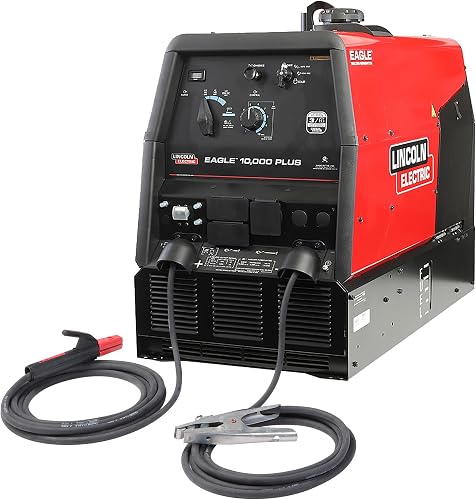
Best for: Farm and ranch repair jobs around the property
The Lincoln Eagle 10,000 Plus carries 225 amps in its model name, which puts it just above the Tomahawk and below the Klutch on stated output. It uses a Lincoln LE engine, and the brand is well known in farm and ranch circles, which is where this one fits. For repair work around a property, the output is enough for most stick welding on gates, trailers and implements.
The listing itself is thin, offering only a short line about tools, so there’s no duty cycle, no fuel capacity and no receptacle detail to compare.
Pros
- 225 amps stated in the model name
- Lincoln Electric LE engine
Cons
- Listing gives almost no feature detail
- No duty cycle, fuel capacity or run time stated
5. Klutch 11kW Engine-Driven Inverter Stick Welder/Generator with LCD Screen

Best for: Long days on site with the most control and outlets
This is the most advanced pick on controls and the most detailed listing in the group. The 260 max amp DC output is the highest here, and the LCD screen makes settings quick to read in the field. It handles steel, stainless steel, aluminum, cast iron and hard surfacing up to 5/8 inch thick, which is the only thickness figure any of these listings gives. The 8-gallon tank and up to 7 hours of run time is the only run time stated in this comparison.
It’s also the only one that spells out its receptacles: two sets of 120V GFCI, one 240V 3-pin NEMA 650R and one 240V 4-pin NEMA 14-50R. The engine is a 764cc, 14 HP air-cooled unit with electric start and recoil backup. A buyer who wants a single-knob layout will find it busier than the Miller.
It isn’t for someone who wants the simplest possible control layout.
Pros
- 260 max amp DC output, the highest stated here
- LCD screen for quick settings
- 8-gallon tank with up to 7 hours of run time
- 120V and 240V receptacles spelled out in full
- Inverter design described as up to 50% lighter
Cons
- More settings to learn than a single-knob machine
- No warranty period stated
Also Worth Considering
The TOMAHAWK Stick Welder Engine Driven is the smaller sibling in the Tomahawk line, built around a 120 amp, 7 HP gasoline engine. Its title calls it a quiet inverter generator with 2,200 watts, so it suits lighter stick work and small tool loads rather than heavy plate.
The Welder AC Power Welder Generator pairs a 4,500 watt generator with a 160 amp stick welder. That combination points to a machine for general repair and backup power rather than production welding.
The Engine-Driven Welder Generator sits in the Bobcat 265 Series with electric start and 11,000 watts peak. Its title states electric start and 11,000 watts peak, so it’s worth a look if you want a Bobcat-series machine with those figures.
Frequently Asked Questions
Is a bigger amp number always better?
No. Higher amps let you weld thicker metal in one pass, but they don’t help on thin stock and they don’t tell you how long you can weld. Duty cycle and run time matter just as much on a long job.
What does an unlisted spec mean?
It means the seller didn’t print it, not that the machine lacks it. Treat it as unknown and compare only the figures the listings actually state, so you’re not guessing in either direction.
How do I compare two welders with different units?
Match the unit first. Amps compare to amps, watts to watts, and gallons to gallons. A watt figure and an amp figure describe different things, so they can’t be lined up directly.
Does a higher wattage mean better welding?
Not on its own. Wattage describes the generator side and the tools it can run. Welding quality comes from the amp output and the arc, so read both figures before you decide.
Closing
The Klutch 11kW Inverter Welder leads on stated output and run time together. If you’re not sure which axis matters for your work, the Tomahawk 15 HP Welder Generator is the safer pick. Check your thickest metal first, then choose.

Hi, I’m Zachary Ford. I’m passionate about welding and dedicated to helping both beginners and experienced welders make informed decisions. I research, test, and write about welding helmets, welding machines, safety equipment, and essential workshop tools. My goal is to provide honest reviews, practical buying guides, and easy-to-follow tutorials that help you weld more safely, work more efficiently, and choose the right gear with confidence.