
As an Amazon Associate, we earn from qualifying purchases. This post contains affiliate links – if you buy through them, we may earn a commission at no extra cost to you.
Buying a portable gasless MIG welder looks simple until the box shows up and the wire won’t feed or the arc burns holes in thin panels. Most people trip on the same few things: the wrong voltage for their garage, a torch they still have to buy, or a spool size the machine won’t hold. This guide covers those traps first, then a short list of machines that hold up. The hardest mistake to undo is a welder that can’t run on the power you actually have, and the YESWELDER 135A MIG Welder sidesteps it.
What Buyers Get Wrong
They buy the wrong voltage version
The single biggest trap with a gasless mig welder portable is the plug. A 110V-only machine runs from a normal household socket, but a dual-voltage unit only gives you its full output on 220V. If your garage has no 220V outlet, you’re paying for headroom you can’t reach. Check your outlet before you check the specs.
The feature that sounds useful
Synergic control sounds like a gimmick until you use it. It auto-matches voltage to your wire feed speed, which matters most on thin auto body panels. Beginners often skip this and buy a plain voltage dial instead. Then they chase the setting by hand and burn through the metal anyway. Look for synergic mode plus a small voltage trim.
The detail sellers leave out
Listings rarely shout about torch and spool limits. Many 3-in-1 machines need a separate Lift TIG torch, and some hold only a 2lb wire spool. Those two facts change how you work. Read the fine print on included accessories and spool capacity before you commit.
The compromise that gets returned
Duty cycle is the quiet one. People buy on amps alone, then weld a full seam and hit the thermal cutout. Match the duty cycle to your job length, not to the biggest number on the box.
What Did Not Make the List
Plenty of listings got set aside while building this shortlist. Some were the wrong category entirely – stick-only machines, or TIG units with no flux core mode. Others gave no useful detail: no output range, no wire sizes, no weight, nothing to judge them on. A few were near-duplicates of a better pick from the same brand, with one small feature swapped. And some promised the world in the title but said nothing about what’s in the box.
1. YESWELDER 135A MIG Welder

Avoids the trap of: buying the wrong voltage version.
This 110V, 135A machine runs from a standard household socket. The listing says it handles gasless flux core MIG, Stick, and Lift TIG, though the Lift TIG torch is extra. It ships with E71T-GS.030” and.035” flux core wire, so you can start without a gas cylinder.
The synergic control matches voltage to your wire feed speed, with a ±3V micro-adjustment. It weighs 11.4 lbs and welds mild steel up to 3/32″ (2.5mm). That’s thin material territory – good for auto body panels, not for heavy plate.
Pros
- Runs on standard 110V household power
- Includes.030” and.035” flux core wire
- 11.4 lbs with a carrying handle
Cons
- Lift TIG torch sold separately
- Listing states 3/32″ (2.5mm) max on mild steel
2. YESWELDER 160A MIG Welder

This one runs on both 110V and 220V, so it’s the pick for someone who has a 220V outlet or plans to add one. The listing rates it at 160A and says it handles Flux Core MIG, Gas MIG, Stick, and Lift TIG – the TIG torch is a separate purchase.
Pros
- 110V/220V dual voltage input
- Takes 2LB and 10LB wire spools
- Stick mode covers 6010, 6011, 6013, 7018 rods
Cons
- Weighs 19.4 lbs
- Lift TIG torch sold separately
3. ARCCAPTAIN 165A MIG Welder 110V 220V 4-in-1 Gasless Gas MIG

Avoids the trap of: the compromise that gets returned.
It’s a 4-in-1 Gas MIG, Flux Core MIG, Lift TIG, and MMA unit. Output reaches 165A, and the listing says it handles mild steel up to 3/16″ thick.
If you want to run 10lb spools, this isn’t the machine. It also requires the screen off and the fan stopped before you change voltage settings.
Pros
- 4-in-1: Gas MIG, Flux Core, Lift TIG, MMA
- 2T/4T modes for trigger or continuous welding
- 12.8 lbs with handle or shoulder strap
Cons
- Holds a 2lb wire spool only
- WP-17V TIG torch must be bought separately
4. TOOLIOM 135A 110V Gasless Flux Core MIG Welder Kit

Avoids the trap of: the feature that sounds useful and is not.
The synergic setting auto-recommends voltage and wire speed once you pick your wire size and metal thickness. Wire feed speed is adjustable, and the listing prints the ranges: 0.030″ runs 120-420 in/min, 0.035″ runs 120-308 in/min. A ±3V fine-tune is there for experienced users. It weighs 11.24 lbs and includes welding gloves and wire.
It’s a 110V machine at 135A, so the listing’s 1/6″ mild steel figure is the ceiling. For thicker work, look at the dual-voltage options.
Pros
- Includes welding gloves and wire
- Synergic setting auto-matches voltage
- 11.24 lbs with carry handle
Cons
- TIG torch sold separately
- Listing states 1/6″ max on mild steel
5. SEESII 135A MIG Welder 110V

At 7.7 lbs, this is the lightest machine on the list. It’s a 3-in-1 covering Gasless MIG, MMA, and Lift TIG. The IGBT inverter delivers 30A-135A and the listing says it penetrates up to 5/16″ mild steel. It handles 1/16″ to 1/8″ welding rods.
The gasless flux core mode runs outdoors with the included.030″ wire, and the listing notes MMA mode burns through rust without heavy pre-cleaning. It ships with the welder, MIG torch, ground clamp, a 1lb spool of flux core wire, brush, and contact tips.
Pros
- 7.7 lbs
- Includes MIG torch, ground clamp, wire, tips
- 30A-135A output range
Cons
- Includes a 1lb spool of wire
- Lift TIG torch not included
Also Worth Considering
FEMEROL MIG Welder is a 2-in-1 flux core and Stick machine at 130A on 110V. It’s gasless, uses an IGBT inverter, and the title mentions synergic control and a portable wire feed design. If you only need MIG and Stick and don’t care about TIG, it’s a simpler option to weigh against the multi-process picks above.
ARCCAPTAIN 3-in-1 MIG Welder Gasless is a 135A, 110V unit covering gasless MIG, Stick, and Lift TIG. Same brand, fewer amps, and the same trio of welding processes.
BILT 3-in-1 IGBT Inverter Welder is a 135A, 110V machine with flux core MIG, Lift TIG, and Stick. The title lists synergic control, an LED display, 2T/4T/SPOT modes, and a full kit with a solar helmet. The helmet in the box is the standout detail here.
Before You Order
- Check what voltage your garage or shop outlet actually supplies before picking a model.
- Confirm the machine’s spool capacity against the wire rolls you plan to buy.
- Add up the accessories you still need – a Lift TIG torch is extra on most of these.
- Match the stated duty cycle and max material thickness to the longest weld you’ll run.
Frequently Asked Questions
Is the simplest one on this list enough?
For home repairs and auto body work on thin steel, yes. The 110V, 135A machines cover mild steel up to the thickness their listings state. Step up only if you weld thick plate or run long seams, where a dual-voltage unit and a higher duty cycle help.
What if it turns out to be the wrong one?
Check the return window before you unpack the wire. Keep the box and all accessories together, and don’t cut the spool seal until you’ve confirmed the voltage and process modes suit your work. A machine returned complete is far easier to send back.
What gives out or runs out first?
Consumables go first – contact tips, nozzles, and wire. The 1lb and 2lb spools empty faster than 10lb rolls, so buy spares with the machine. After that, duty cycle limits matter: a 60% rated unit needs cooling time on long welds.
Which trap catches most people twice?
Buying on amps alone. The first machine feels underpowered, so the second one is bigger – but it still won’t reach full output without the right outlet. Match voltage, spool size, and duty cycle to your actual jobs, and the second purchase is the last one.
Closing
The trap that catches most people is voltage and accessories – a machine that can’t reach its full output, or a torch that isn’t in the box. The YESWELDER 135A MIG Welder avoids both for a standard 110V garage. Check your outlet, then pick from there.
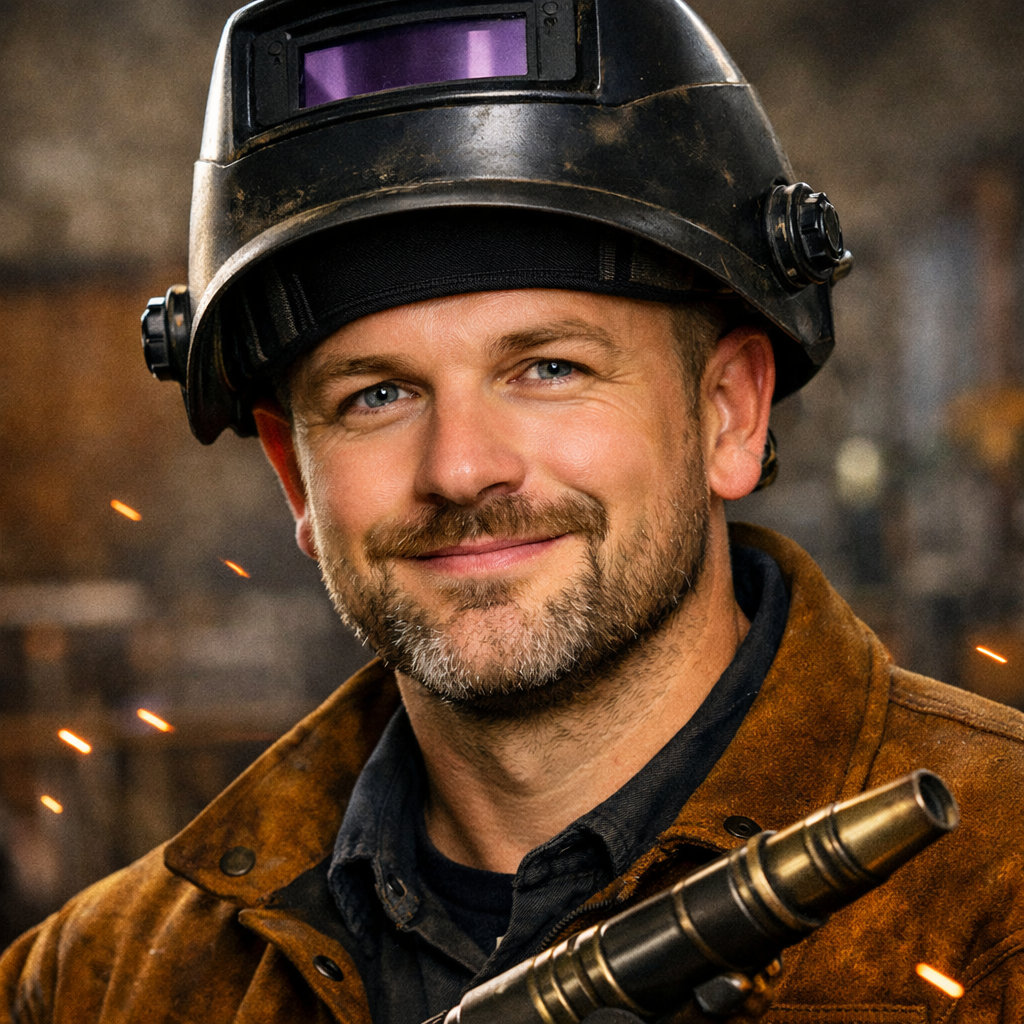
Hi, I’m Zachary Ford. I’m passionate about welding and dedicated to helping both beginners and experienced welders make informed decisions. I research, test, and write about welding helmets, welding machines, safety equipment, and essential workshop tools. My goal is to provide honest reviews, practical buying guides, and easy-to-follow tutorials that help you weld more safely, work more efficiently, and choose the right gear with confidence.