
Running out of welding rods in the middle of a job is one of those frustrations every welder remembers. You’re focused on a tight joint, sparks snapping back at your gloves, the weld pool finally behaving—and suddenly you’re forced to stop. That headache is exactly why learning How to Calculate Welding Rod Consumption matters more than most people think.
I didn’t pick this up from theory or charts on a wall. It came from trial and error on real jobs, wasting rods, misjudging quantities, and rushing to finish welds that deserved more patience. I learned that poor rod planning doesn’t just cost money—it affects weld strength, consistency, and even safety on the job.
When you know how much rod a weld actually needs, everything gets smoother. You plan better, weld cleaner, and avoid those stressful mid-job interruptions that kill focus and quality.
If you’ve ever questioned why rods vanish so fast or how experienced welders always seem prepared, stick with me. I’ll break it down in a practical, no-nonsense way that you can use right away.
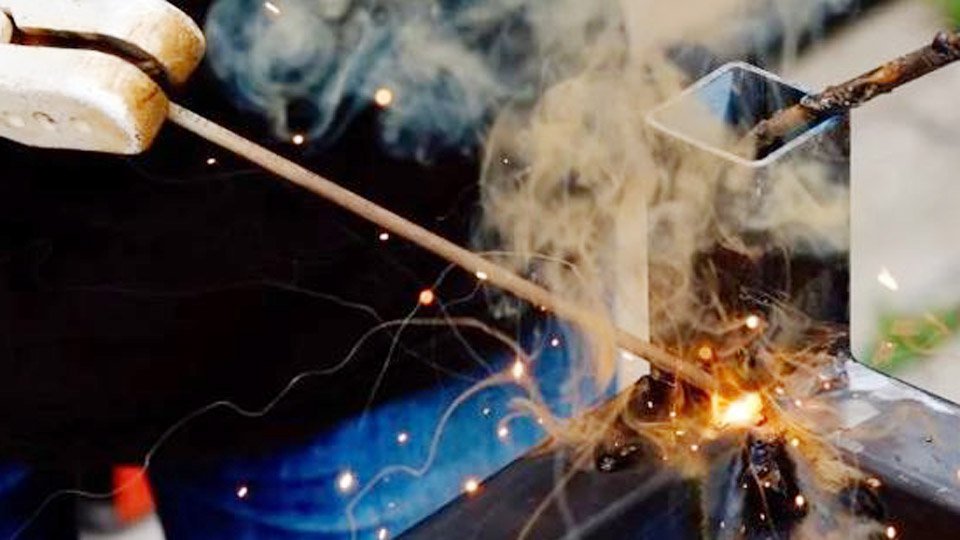
Image by logosweld
Why Getting Rod Consumption Right Matters in Real Welding
Rod consumption hits your wallet directly. A 10-pound pack of decent 7018 can run $25–$40 depending on the brand (Lincoln, Hobart, or Forney are shop staples), and on larger jobs those costs add up fast. But it’s more than money.
Under-ordering means downtime and potential quality issues. Over-ordering ties up cash and leaves you with rods that might pick up moisture if not stored right.
On the weld side, wrong estimates often lead to pushing amperage too high or too low to stretch your supply, which causes poor penetration, excessive distortion, or undercut. I
’ve seen beginners burn rods way too fast by running oversized diameters on thin material, or pros waste them on dirty joints where half the rod turns into spatter instead of weld metal.
Accurate calculation helps with:
- Precise material ordering for bids
- Better inventory management
- Optimizing technique for efficiency
- Reducing overall project costs by 10–20% on consumables in some cases
Understanding Welding Rods and SMAW Basics
Stick welding (SMAW) is still one of the most versatile processes in the US—great for field repairs, structural steel, farm equipment, and pipe work. The “rod” is a covered electrode: a metal core wire coated with flux that provides shielding, stabilizes the arc, and adds alloying elements.
The core melts to become filler metal, while the coating forms slag and gas to protect the weld. Not all rods consume the same way. Cellulosic rods like E6010 burn hotter and faster with deep penetration but lower deposition efficiency.
Low-hydrogen rods like E7018 have iron powder in the coating, giving smoother arcs and higher deposition rates—often 20–30% more weld metal per hour at the same amperage.
Common shop diameters in the States are 3/32″, 1/8″, 5/32″, and sometimes 3/16″ for heavy plate. Length is usually 14 inches. Always match the rod to the material (mild steel, low-alloy, etc.) and code requirements.
Pro tip from the bench: Keep rods in a rod oven at 250–300°F for 7018. Moisture turns them into hydrogen bombs that cause cracking, and wet rods also burn inconsistently, throwing off your consumption numbers.
Key Factors That Influence How Much Rod You’ll Burn
Several variables change consumption dramatically. Ignore them and your calculations will be off by 30% or more.
Weld Joint Type, Size, and Reinforcement
Fillet welds are the most common in fab work. A 1/4-inch leg fillet has a theoretical triangular cross-section of (leg × leg)/2. Add 20–30% for typical reinforcement and you get the real deposited metal needed.
Groove welds (butt joints) require calculating the groove area plus root face, gap, and reinforcement. Multi-pass welds on thick plate eat rods faster because of more starts and stops.
Larger welds mean more metal deposited, obviously, but also more heat input and potential distortion that might require extra passes to fix.
Electrode Diameter and Amperage
Bigger rods deposit more metal per inch of length but require higher amperage and are harder to control on thin material or out-of-position work. Smaller rods give better control but you’ll need more of them (more starts/stops = more stub waste).
Here’s a typical amperage range I use on a Miller or Lincoln machine for mild steel:
| Electrode Diameter | E6010 / E6011 (Amps) | E7018 (Amps) |
|---|---|---|
| 3/32″ | 40–80 | 70–110 |
| 1/8″ | 75–125 | 110–165 |
| 5/32″ | 110–170 | 150–220 |
| 3/16″ | 150–250 | 200–275 |
Running at the high end of the range increases deposition rate and can reduce total rods needed, but only if your technique and joint prep support it. Too high and you get undercut and spatter—wasted rod.
Travel Speed, Technique, and Position
Faster travel speed means less rod per foot of weld. But go too fast and you lose penetration. Vertical-up welding usually requires slower speeds and more rod than flat position. Whipping or weaving techniques consume more than straight stringers.
Dirty or rusty metal forces you to slow down or run hotter, burning rods faster. Proper joint prep (grinding, wire wheeling) is one of the cheapest ways to improve efficiency.
Material Thickness and Type
Thicker steel needs more passes or larger rods. Stainless or high-strength alloys often require specific rods with different efficiencies. On repair jobs with unknown material, I always start conservative.
The Practical Formula for Calculating Welding Rod Consumption
Here’s the straightforward method I use on every job. It works for both fillet and groove welds.
- Calculate the cross-sectional area of deposited weld metal (in square inches).
- Fillet: (leg size in inches × leg size) / 2 × 1.25 (for ~25% reinforcement).
- Groove: Break the groove into triangles/rectangles, add root gap and reinforcement.
- Multiply by weld length (in inches) to get volume in cubic inches.
- Convert to weight: Volume × 0.283 lb/in³ (density of steel) = pounds of deposited weld metal.
- Account for efficiency: Divide by deposition efficiency.
- Typical SMAW: 55–65%. Use 60% for E7018, 55% for E6010.
- This gives total electrode weight consumed (including coating, spatter, and stub loss).
- Convert to number of rods if needed: Divide total pounds by weight per rod (≈0.08–0.09 lb per 14″ 1/8″ rod).
Example: 20 feet of 1/4-inch fillet weld on mild steel with E7018
- Leg = 0.25″
- Area ≈ (0.25 × 0.25)/2 × 1.25 = 0.039 in²
- Length = 20 ft = 240 inches
- Volume = 0.039 × 240 ≈ 9.36 in³
- Deposited weight = 9.36 × 0.283 ≈ 2.65 lbs
- At 60% efficiency: 2.65 / 0.60 ≈ 4.42 lbs of electrode needed
That’s roughly 50–55 individual 1/8″ rods (depending on exact rod weight). I always add 10–15% buffer for starts, stops, and mistakes.
For quick field estimates, many welders use charts showing pounds of rod per foot for common sizes. A 1/4″ fillet typically runs about 0.22–0.25 lbs of electrode per foot with 7018.
Quick-Reference Tables for Shop Use
Approximate Electrode Consumption for Fillet Welds (1/8″ E7018, mild steel)
| Leg Size (inches) | Deposited Metal (lb/ft) | Electrode Consumed (lb/ft) | Rods per 10 ft (approx.) |
|---|---|---|---|
| 1/8″ | 0.035 | 0.06 | 7–8 |
| 3/16″ | 0.08 | 0.13 | 15–17 |
| 1/4″ | 0.14 | 0.23 | 26–30 |
| 5/16″ | 0.22 | 0.37 | 42–48 |
| 3/8″ | 0.32 | 0.53 | 60–70 |
These are shop-tested averages—your results will vary with technique and position. Vertical welds can increase consumption by 15–25%.
Deposition Rates (lbs of weld metal per hour)
| Electrode | Diameter | Amps | Approx. Rate (lb/hr) |
|---|---|---|---|
| E6010 | 1/8″ | 100 | 2.0–2.2 |
| E7018 | 1/8″ | 130 | 2.5–3.0 |
| E7018 | 5/32″ | 180 | 4.0–4.5 |
Higher deposition means fewer rods overall because you complete the weld faster with less arc time waste.
🔧 Essential Tools for Calculating Welding Rod Consumption
Accurate material estimates depend on proper rod storage, electrode selection, amperage control, and welding technique. These tools can help improve efficiency and reduce electrode waste.
Zonon Welding Rod Storage Tube (4-Pack)
Protect welding electrodes from moisture and contamination with airtight, waterproof storage tubes designed to help maintain rod quality and performance.
Check Price on Amazon →YESWELDER E6011 3/32″ Welding Rods
A versatile stick electrode option for carbon steel projects, making it easier to estimate rod usage and material requirements for common welding jobs.
Check Price on Amazon →Klein Tools CL120 Digital Clamp Meter
Monitor amperage and electrical measurements accurately to help optimize welding settings and improve electrode efficiency.
Check Price on Amazon →Auto-Darkening True Color Welding Helmet
Improve visibility and maintain consistent welding technique with a large-view true-color helmet designed for multiple welding processes.
Check Price on Amazon →Real Shop Examples and Lessons Learned
Trailer hitch repair: Customer brought in a cracked 1/2-inch plate hitch. I needed about 8 feet of 3/8″ fillet. Calculation showed roughly 4.2 lbs of 7018. I ordered a 5-lb pack and had a couple rods left—perfect. The key was grinding out the crack fully and using 5/32″ rod at 190 amps for good penetration without excessive heat.
Structural beam splice: On a 10-foot 1/4″ web fillet job, I initially calculated without enough reinforcement allowance and came up short by about 15%. Now I always measure actual bead size after the first pass and adjust.
Pipe welding: For a 4-inch schedule 40 pipe butt joint, groove volume calculation plus two passes gave me the number. E6010 root + 7018 fill/cap is my go-to combo—different consumption rates for each.
One mistake I see a lot: ignoring stub loss. You typically lose the last 1.5–2 inches of every rod. On a long job with hundreds of rods, that adds up.
Common Mistakes and How to Fix Them
- Using the wrong diameter: Too big on thin stuff causes burn-through and wasted rod on repairs. Too small on thick plate means extra passes.
- Poor joint prep: Mill scale or rust increases spatter and requires more rod to achieve fusion.
- Inconsistent amperage: Dial it in and keep it steady. Modern inverter machines hold settings better than old buzz boxes.
- Forgetting position: Overhead or vertical-up can double consumption on some joints because of slower travel and more slag management.
- No buffer: Always add 10–15%. Weather, fit-up issues, or inspector rework can eat extra rod.
Fix bad welds from wrong settings by grinding out defects completely—don’t try to weld over them. It wastes more time and rod than starting fresh.
Optimizing Consumption: Machine Settings, Prep, and Technique
Set your machine based on the rod manufacturer’s recommendations, then fine-tune by sound and puddle feel. DCEN or DCEP? Most 7018 runs DCEP (reverse polarity) for best results.
Clean metal is non-negotiable. A quick flap disc pass saves rods and improves bead appearance.
Practice consistent arc length—too long and you lose efficiency. Drag the 7018 slightly, whip the 6010 as needed.
On production work, high-iron-powder rods like E7024 in flat position can dramatically cut consumption compared to standard 7018.
Wrapping It Up: Better Control, Better Welds
Once you start calculating welding rod consumption properly, you’ll notice jobs run smoother, bids are more accurate, and you waste far less material. You’ll develop an intuition for how much a certain joint will take, but the numbers keep you honest when scaling up.
The biggest takeaway? Small improvements in planning and technique compound into real savings and higher quality work. Next time you’re quoting a job or stocking the truck for a repair call, take those extra two minutes to run the numbers.
Keep a small notebook or phone note with your actual consumption from past jobs. Nothing beats your own shop data for future estimates.
FAQ
How does electrode diameter affect rod consumption?
Larger diameters deposit more metal per rod and per hour, so you often use fewer total rods for the same weld volume. However, they’re harder to control on thin material or tight joints, which can lead to defects and rework that wastes rods. Match diameter to thickness and position.
What’s the easiest way to calculate for groove welds?
Break the groove into simple shapes (rectangle for root, triangles for bevels), add root gap and 1/8–3/16″ reinforcement, then use the same volume-to-weight method. Online calculators or manufacturer charts help for standard V-grooves, but always verify with a test section.
Does the type of rod change the calculation much?
Yes. E6010/6011 typically have lower deposition efficiency (more spatter and faster burn) than E7018. Iron-powder rods like 7018 or 7024 give you more weld metal per pound of electrode. Adjust your efficiency factor accordingly—55% for cellulosic, 60–65% for low-hydrogen.
How can I reduce rod waste in the shop?
Store low-hydrogen rods properly, cut joints accurately for good fit-up, use the right size rod for the job, and practice steady travel speed. On long seams, minimize starts and stops. And always buy in the right quantities—10-lb packs for small jobs, 50-lb for production.
Should I calculate differently for field vs. shop welding?
Field work often requires a bigger buffer (20%+) because of wind, awkward positions, and less-than-perfect prep. Shop jobs allow tighter calculations. I usually add extra for anything outdoors or on repairs.

Hi, I’m Zachary Ford. I’m passionate about welding and dedicated to helping both beginners and experienced welders make informed decisions. I research, test, and write about welding helmets, welding machines, safety equipment, and essential workshop tools. My goal is to provide honest reviews, practical buying guides, and easy-to-follow tutorials that help you weld more safely, work more efficiently, and choose the right gear with confidence.