
Incorrect machine settings are one of the leading causes of poor penetration, excessive spatter, weak fusion, and failed inspections. A Lincoln Welder Settings Chart provides the amperage, voltage, wire feed speed, and material thickness ranges required to achieve stable arc performance and consistent weld quality.
Without accurate settings, even a high-quality machine can produce undercut, burn-through, or incomplete fusion, resulting in costly rework and structural risk.
In real fabrication conditions, material type, electrode classification, joint design, and welding position all affect parameter selection. Relying on guesswork increases distortion and reduces productivity.
A properly interpreted settings chart eliminates that uncertainty by giving a controlled starting point for optimization.
I’ll explain how to read and apply a Lincoln Welder Settings Chart correctly so you can improve arc stability, penetration control, and overall weld reliability in shop or field applications.
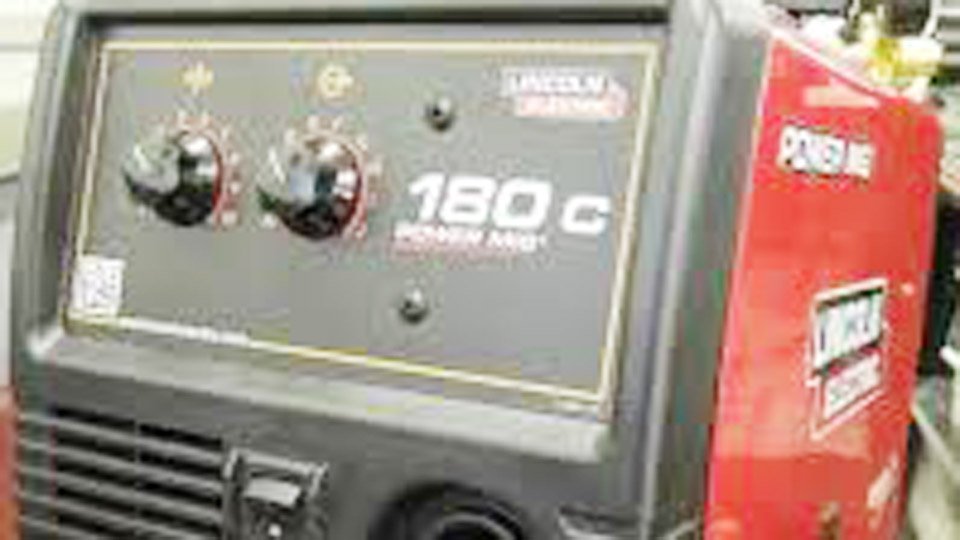
Photo wrightwayrestorations
MIG Welding Settings for Lincoln Power MIG Series
Lincoln Power MIG machines, such as the 210 MP, support GMAW with ER70S-6 wire for steel, ER308L for stainless, and ER4043 or ER5356 for aluminum. Settings vary by input voltage (120V or 230V), with higher voltage enabling thicker materials. Gas flow typically ranges 25-35 CFH for argon/CO2 mixes.
The following table outlines parameters for mild steel using ER70S-6 wire and C25 shielding gas (75% argon/25% CO2). Amperage and wire feed speed (WFS) ensure arc length of 1/4-3/8 inch for flat position welding.
| Material Thickness (in) | Wire Diameter (in) | Voltage (V) | WFS (IPM) | Amperage (A) | Polarity | Gas Flow (CFH) |
|---|---|---|---|---|---|---|
| 24 ga (0.024) | 0.025 | 15-17 | 100-150 | 40-60 | DCEP | 20-25 |
| 22 ga (0.030) | 0.030 | 16-18 | 150-200 | 50-70 | DCEP | 20-25 |
| 20 ga (0.036) | 0.030 | 17-19 | 200-250 | 60-80 | DCEP | 25-30 |
| 18 ga (0.048) | 0.035 | 18-20 | 250-300 | 80-100 | DCEP | 25-30 |
| 16 ga (0.060) | 0.035 | 19-21 | 300-350 | 100-120 | DCEP | 25-35 |
| 14 ga (0.075) | 0.035 | 20-22 | 350-400 | 120-140 | DCEP | 25-35 |
| 12 ga (0.105) | 0.035 | 21-23 | 400-450 | 140-160 | DCEP | 30-35 |
| 3/16 (0.187) | 0.045 | 22-24 | 450-500 | 160-180 | DCEP | 30-35 |
| 1/4 (0.250) | 0.045 | 23-25 | 500-550 | 180-200 | DCEP | 30-40 |
| 5/16 (0.312) | 0.045 | 24-26 | 550-600 | 200-220 | DCEP | 30-40 |
| 3/8 (0.375) | 0.045 | 25-27 | 600-700 | 220-240 | DCEP | 35-40 |
For stainless steel with ER308L wire and argon mix, reduce voltage by 1-2V and WFS by 10-20% to control heat input and prevent carbide precipitation. Aluminum settings with ER5356 require pure argon at 30-40 CFH, with voltage increased by 2-3V for push technique to maintain arc stability.
In vertical positions, decrease WFS by 15-20% and amperage by 10% to manage puddle control. Joint preparation involves 60-70 degree bevels for thicknesses over 1/8 inch, ensuring full penetration without excessive reinforcement.
⚙️ Recommended Tools for Better Lincoln Welder Settings
Getting the right Lincoln welder settings is easier when you can clearly see your welds and verify machine performance. These tools can help improve setup accuracy and welding consistency.
Klein Tools CL120 Digital Clamp Meter
Monitor electrical measurements and verify machine performance to help troubleshoot and fine-tune Lincoln welder settings with confidence.
Check Latest Price →Auto-Darkening True Color Welding Helmet
Improve visibility and maintain better control while adjusting voltage, amperage, and travel speed for cleaner, more consistent welds.
View on Amazon →Stick Welding Settings for Lincoln AC/DC Welders
Stick welding (SMAW) on Lincoln machines uses electrodes like E6010 for root passes and E7018 for fill layers. Polarity affects penetration: DCEP for deep penetration, DCEN for higher deposition. Electrode classification determines slag behavior, E7018 produces low-hydrogen welds with minimal spatter.
Amperage ranges are based on rod diameter and material compatibility. For mild steel, maintain travel speed of 8-12 inches per minute to achieve 1/8-3/16 inch bead width.
| Electrode Type | AWS Class | Polarity | 3/32 in Amps | 1/8 in Amps | 5/32 in Amps | 3/16 in Amps | Deposition Rate (lb/hr) | Material Compatibility |
|---|---|---|---|---|---|---|---|---|
| Fleetweld 5P | E6010 | DCEP | 40-70 | 75-130 | 90-175 | 140-225 | 2.5-3.5 | Pipe, structural steel |
| Fleetweld 35 | E6011 | AC/DC | 50-85 | 75-120 | 90-160 | 120-200 | 2.0-3.0 | General fabrication |
| Fleetweld 37 | E6013 | AC/DC | 75-105 | 110-150 | 160-200 | 205-260 | 1.8-2.8 | Sheet metal |
| Excalibur | E7018 | DCEP | 85-110 | 110-160 | 130-200 | 175-250 | 3.0-4.0 | Low-hydrogen welds |
| Shield-Arc 70+ | E8010-G | DCEP | – | 75-130 | 90-185 | 140-225 | 3.5-4.5 | High-tensile pipe |
For out-of-position welding, use E6010 with 70-90 amps on 1/8 inch rods to control slag flow. Preheat thicker materials (over 1/2 inch) to 150-300°F per AWS D1.1 to prevent cracking. Arc characteristics: E6010 provides digging arc for root penetration, while E7018 ensures smooth bead with easy slag removal.
TIG Welding Settings for Lincoln Precision TIG Machines
TIG (GTAW) on Lincoln Precision TIG models like the 225 requires high-frequency start for AC aluminum welding. Electrode preparation: sharpen tungsten to 20-30 degree angle for DC, ball end for AC. Gas flow of 5-15 CFH argon prevents oxidation.
Settings focus on arc stability and penetration. For DCEN on steel, use 2% thoriated tungsten; for AC on aluminum, use pure or zirconiated.
| Material | Thickness (in) | Tungsten Diameter (in) | Polarity | Amps | Gas Flow (CFH) | Filler Rod Diameter (in) | Travel Speed (in/min) |
|---|---|---|---|---|---|---|---|
| Mild Steel | 1/16 | 1/16 | DCEN | 80-130 | 5-10 | 1/16 | 8-12 |
| Mild Steel | 1/8 | 3/32 | DCEN | 130-180 | 9-13 | 3/32 | 6-10 |
| Mild Steel | 3/16 | 1/8 | DCEN | 180-225 | 11-15 | 1/8 | 5-8 |
| Stainless | 1/16 | 1/16 | DCEN | 60-100 | 5-10 | 1/16 | 8-12 |
| Stainless | 1/8 | 3/32 | DCEN | 100-150 | 9-13 | 3/32 | 6-10 |
| Aluminum | 1/16 | 3/32 | AC | 100-130 | 13-17 | 3/32 | 10-15 |
| Aluminum | 1/8 | 1/8 | AC | 130-180 | 15-23 | 1/8 | 8-12 |
| Aluminum | 3/16 | 1/8 | AC | 180-225 | 15-23 | 1/8 | 6-10 |
AC balance set to 60-70% EN for aluminum maximizes cleaning action without excessive heat. Position usability: flat for max amps, vertical reduce by 20%. Joint preparation: clean edges to 1/32 inch land for fusion.
Factors Influencing Lincoln Welder Settings
Electrode classification impacts performance, E7018 requires storage at 250°F to maintain low-hydrogen properties. Polarity recommendations: DCEP for MIG and most stick, DCEN for TIG steel. Penetration behavior varies; higher amperage increases depth but risks burn-through on thin sections.
Travel speed influences deposition: 10-15 in/min for MIG ensures uniform bead without undercut. Material compatibility: match filler to base metal tensile strength. Common failure causes include improper gas coverage leading to porosity, or excessive moisture causing hydrogen cracking.
One practical insight: in multi-pass welds, interpass temperature below 300°F prevents distortion. Another: monitor arc voltage drop under 2V for stable power delivery.
Advanced Process Settings for Power Wave Machines
Lincoln Power Wave series offers modes like Pulse and RapidArc for efficiency. For GMAW Pulse on steel, use mode 12 with argon mix at 75-1200 IPM WFS, UltimArc control for spatter reduction. Deposition rates reach 5-7 lb/hr on 0.045 wire.
FCAW-G settings: mode 90 with CO2 at 175-600 IPM, pinch control for slag control. These optimize arc stability in high-production environments.
Performance Summary
Accurate Lincoln welder settings ensure arc characteristics align with fabrication demands, from deep penetration in structural work to controlled heat in thin-gauge repairs. Quantified parameters reduce trial-and-error, enhancing efficiency across processes.
In Pulse TIG on stainless, adjust frequency to 100-200 Hz for refined bead appearance and 20% improved penetration over constant current.
FAQs
What amperage range is recommended for 1/8 inch E7018 electrodes on Lincoln stick welders?
For 1/8 inch E7018, use 110-160 amps DCEP on mild steel, adjusting down 10-20 amps for vertical positions to manage slag.
How does input voltage affect MIG settings on Power MIG 210 MP?
On 120V, max output limits to 100A for 1/8 inch material; 230V enables 200A for up to 3/8 inch, with corresponding WFS increases.
What gas flow is optimal for TIG aluminum welding on Lincoln machines?
15-23 CFH pure argon for 1/8-3/16 inch, ensuring post-flow of 10-15 seconds to protect the weld pool.
Why adjust AC balance in TIG welding?
Set to 60-70% EN for cleaning oxide on aluminum; higher EN reduces tungsten erosion but limits penetration.
How to correct porosity in MIG welds?
Increase gas flow to 30-35 CFH or check for drafts; ensure wire cleanliness to prevent contaminants.

Hi, I’m Zachary Ford. I’m passionate about welding and dedicated to helping both beginners and experienced welders make informed decisions. I research, test, and write about welding helmets, welding machines, safety equipment, and essential workshop tools. My goal is to provide honest reviews, practical buying guides, and easy-to-follow tutorials that help you weld more safely, work more efficiently, and choose the right gear with confidence.