
You clamp two 18-gauge steel panels for a bracket repair, fire up the machine, and the joint either holds under load or warps and pulls apart after cooling.
The difference between a spot welder and an arc welder decides that outcome in seconds. Spot welders use resistance heating at a single point under electrode pressure to create a localized nugget.
Arc welders strike a plasma arc that melts base metal and filler into a continuous fusion zone. This distinction controls heat input, material thickness limits, production speed, and final joint performance across DIY brackets, auto body panels, structural frames, and appliance repairs.
Choosing correctly avoids distortion on thin stock, ensures penetration on thick sections, and matches workflow volume without unnecessary filler or setup time.
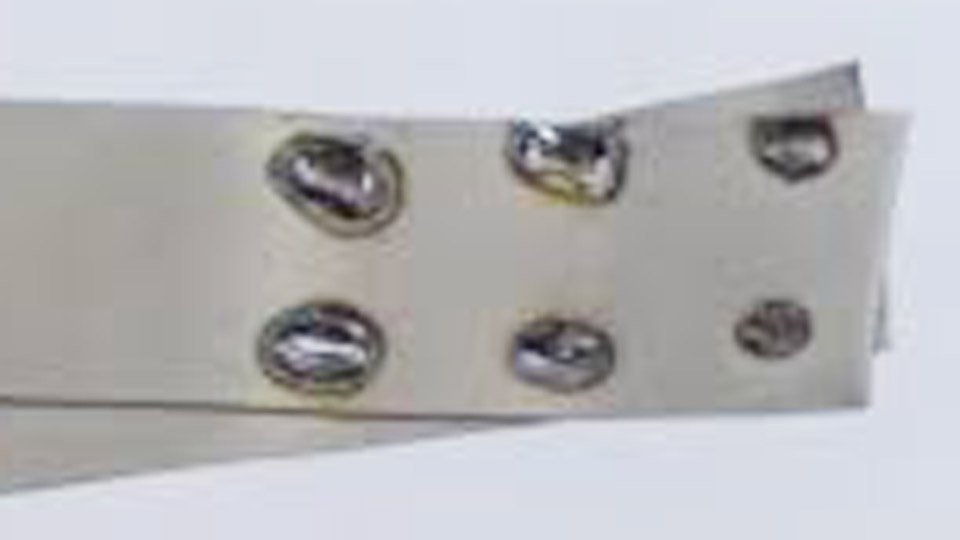
Image by westermans
Core Process Differences That Drive Every Decision
Resistance Heating and Nugget Formation in Spot Welders
Spot welding passes high current through overlapping sheets held between copper-alloy electrodes. Contact resistance at the faying surface generates heat according to I²Rt, where current dominates.
Initial resistance concentrates at the interface; as temperature rises, the nugget forms in milliseconds. Typical parameters for 1 mm mild steel include 8,000–12,000 A at 2–4 V for 0.15–0.35 seconds under 2–4 kN force.
The nugget diameter follows the 4√t to 6√t rule (t = sheet thickness in mm), yielding 4–6 mm spots that solidify under continued pressure.
No filler metal enters the joint; the bond relies entirely on parent-metal fusion at the interface. This produces minimal heat-affected zone (HAZ) beyond the nugget boundary, preserving base-metal properties in coated or galvanized sheets.
Electric Arc Plasma and Fusion Pool in Arc Welders
Arc welding establishes a sustained plasma column between electrode and workpiece at 3,500–6,000 °C. Voltage drop across the arc (18–28 V) and current (70–300 A depending on process) create a molten pool that fuses base metal and, in most cases, added filler.
Shielded metal arc welding (SMAW) uses flux-coated sticks; gas metal arc welding (GMAW/MIG) feeds wire with shielding gas; gas tungsten arc welding (GTAW/TIG) employs non-consumable tungsten. Travel speed and weave control pool shape and penetration.
Heat input calculates as (V × A × 60) / travel speed (mm/min), typically 0.8–2.5 kJ/mm—orders of magnitude longer exposure than spot welding’s brief pulse. The resulting bead provides continuous metallurgical continuity across the joint length.
Heat Input, Distortion, and Material Impact
Spot welding confines energy to a 5–8 mm diameter circle for under 0.5 seconds, limiting total heat to 5–15 kJ per spot. Distortion stays below 0.2 mm on 1.2 mm panels when electrode follow-up force maintains clamp pressure during cooling.
Arc welding distributes heat along the entire bead length, raising cumulative input to 20–60 kJ per 100 mm of weld. This expands the HAZ to 3–8 mm wide and creates angular distortion up to 2–3° on unrestrained thin stock unless clamped or sequenced properly.
For coated materials, spot welding preserves zinc layers outside the nugget because the short cycle prevents burn-off. Arc processes require burn-through or post-weld coating restoration on galvanized steel.
Aluminum demands even tighter control: spot welding handles 0.8–2 mm series-5xxx alloys with MFDC inverters at 15–25 kA, while arc welding (AC TIG or pulsed MIG) manages oxide layers but risks hot cracking without proper filler selection (e.g., 4043 or 5356).
Equipment Configurations and Shop Integration
Spot welders appear as bench-mounted C-guns, portable tongs, or robotic arms with servo-driven electrodes. Transformer or inverter supplies deliver 10–50 kVA peak power in short bursts.
Duty cycles rate on 10-second windows—50 % means five seconds on, five off—because thermal mass in the electrodes and transformer limits continuous operation. Water-cooled arms and tip dressers maintain consistent resistance across 5,000–10,000 welds.
Arc welders use constant-current (CC) or constant-voltage (CV) inverters rated 200–400 A at 20–60 % duty cycle over 10 minutes. MIG guns integrate wire feeders at 0.030–0.045 in. diameters; TIG torches require gas solenoids and foot pedals for amperage ramping.
Polarity selection (DCEP for SMAW penetration, DCEN for TIG aluminum) and inductance settings directly alter puddle fluidity. A 220 V single-phase unit draws 30–50 A continuous versus a spot welder’s brief 200 A spikes on the primary side.
Material Thickness Ranges and Compatibility
Spot welding performs best on 0.5–3 mm mild steel or low-carbon equivalents. Beyond 3 mm, current requirements exceed standard machine capacity and nugget cooling times lengthen, increasing expulsion risk.
Overlap must equal at least 3× sheet thickness for full strength. High-strength steels (AHSS) up to 1.5 mm require precise schedule development to avoid martensite cracking in the nugget.
Arc welding covers 0.6 mm sheet to unlimited plate thickness. Root passes on 6 mm plate use 1/8 in. E7018 at 110–140 A; filler passes scale to 5/32 in. at 180–220 A. Multi-pass technique builds thickness without the access limitations of spot electrodes, which require opposing-side reach.
| Parameter | Spot Welder | Arc Welder (Typical MIG/SMAW) |
|---|---|---|
| Thickness range | 0.5–3 mm (optimal) | 0.6 mm to unlimited |
| Joint type | Lap only, discrete points | Butt, lap, fillet, tee (continuous) |
| Filler metal | None | Required (except autogenous TIG) |
| Access | Both sides required | One side sufficient |
| Typical current | 5,000–20,000 A (pulse) | 70–300 A (sustained) |
| Heat input per joint | 5–15 kJ per spot | 0.8–2.5 kJ/mm |
Weld Speed, Cycle Times, and Production Scaling
A manual spot welder places 4–6 spots per minute on body panels; robotic cells achieve 1–2 spots per second with multiple guns. Cycle time includes clamp, weld, hold, and retract—under 1.5 seconds total per spot.
Arc welding travel speeds average 150–400 mm/min for MIG on 3 mm steel, equating to 2–4 minutes per meter of continuous bead. Production volume favors spot welding above 500 identical lap joints; custom or repair work favors arc welding for its single-setup flexibility.
Joint Strength, Testing, and Failure Modes
Spot weld shear strength scales with nugget area and base-metal tensile strength. For 1.2 mm mild steel (yield 250 MPa), a 6 mm nugget typically withstands 4–6 kN in tensile-shear before plug failure. Peel tests reveal button diameter; destructive chisel tests confirm nugget pull-out rather than interfacial fracture. Cross-tension strength drops when expulsion creates voids.
Arc welds achieve full-penetration fillet throat equal to leg size. A 6 mm leg fillet on 6 mm plate yields 8–10 kN/cm shear capacity with E7018. Bend and macro-etch tests verify fusion and lack of porosity. Fatigue life in arc welds benefits from smooth toe transitions; spot welds rely on multiple nuggets to distribute cyclic loads.
Power Consumption and Duty Cycle Realities
Spot welders consume high instantaneous power (50–150 kW peaks) but average 2–5 kWh per 100 spots because of short duration. Inverter models improve efficiency to 85 % versus 60 % in older transformers.
Arc welders draw 4–12 kW sustained, averaging 1–3 kWh per meter of weld. Duty cycle ratings reveal true shop capacity: a 200 A arc welder at 60 % can run 6 minutes continuously before cooling; spot welders cycle every few seconds regardless.
Cost Breakdown for Hobby vs. Professional Setups
Entry-level 220 V spot welders (5–10 kVA) cost $800–$2,500 with basic tongs. Professional pedestal machines with programmable schedules reach $8,000–$25,000. Tips last 5,000–15,000 welds before dressing. Arc welders start at $400 for 140 A MIG and scale to $3,000 for multi-process 350 A inverters.
Consumables dominate arc costs: wire at $2–$4/lb and gas at $0.10–$0.30 per cubic foot add $0.50–$2 per meter versus near-zero filler for spot welding. Labor savings appear in high-volume spot applications where operators need only positioning skill.
Choosing Based on Project Type and Scale
Sheet Metal Fabrication and Auto Repair Scenarios
Auto body panels, HVAC ducts, and appliance enclosures favor spot welding for speed and minimal distortion. Overlap joints on 0.8–1.6 mm steel achieve factory appearance without grinding. Repair shops combine spot for factory seams and arc for patch edges where access is one-sided or thickness varies.
Structural and Heavy Fabrication Needs
Frames, trailers, and pressure vessels require arc welding for full-penetration butt and fillet joints that pass visual, ultrasonic, or radiographic inspection. Spot welding cannot deliver continuous load paths or handle plate over 3 mm without multiple overlapping spots that introduce stress risers.
Hybrid Approaches and When to Combine Both Processes
Modern fabrication sequences spot welds for fixturing then overlays arc beads for added strength on hybrid joints. Robotic lines tack with resistance then finish critical seams with pulsed MIG. Understanding thermal cycles prevents tempering the spot nugget HAZ during subsequent arc passes.
In high-fatigue applications such as chassis components, engineers calculate combined nugget spacing and bead overlap to achieve target endurance limits exceeding either process alone.
Final Thoughts
The decision between a spot welder and an arc welder ultimately rests on joint geometry, material gauge, production quantity, and required mechanical properties. Spot welding delivers rapid, low-distortion point attachments on thin sheet; arc welding supplies versatile, continuous fusion across any thickness or configuration.
Matching the process to these constraints eliminates rework, controls costs, and delivers weldments that perform under real loads.
Advanced insight: in fatigue-critical designs, the discrete stress distribution of properly spaced spot nuggets combined with selective arc reinforcement can outperform monolithic arc welds by reducing crack initiation sites while maintaining overall stiffness.

Hi, I’m Zachary Ford. I’m passionate about welding and dedicated to helping both beginners and experienced welders make informed decisions. I research, test, and write about welding helmets, welding machines, safety equipment, and essential workshop tools. My goal is to provide honest reviews, practical buying guides, and easy-to-follow tutorials that help you weld more safely, work more efficiently, and choose the right gear with confidence.