
Run it twice that long and the wire starts feeding rough, the arc sputters, and you’re chasing a weld defect that isn’t your technique.
How often to maintain a welder by how hard you run it
A machine that sits in a garage most weekends ages by dust and moisture, not by arc hours. Count your arc time honestly — most hobby users overestimate it — and set your interval from the table below, not from the calendar.
| How you use it | How often | What tells you it’s due |
|---|---|---|
| Light hobby, under 5 hours a month | Every 20 to 25 arc hours | Rough wire feed, dusty louvers |
| Weekend shop, 5 to 15 hours a month | Every 15 arc hours | Liner drag, spatter in nozzle |
| Regular shop, 15 to 30 hours a month | Every 10 to 12 arc hours | Drive roll grooves shiny, tip wear |
| Daily production, 30 to 60 hours a month | Every 8 to 10 arc hours | Porosity, arc wander, hot cable ends |
| Multi-shift, over 60 hours a month | Every shift or every 8 hours | Any change in arc sound |
What happens when you skip welder maintenance
The first thing you’ll notice is feed trouble, not a breakdown.
The long-term failure is heat. Cooling fins and fan intakes packed with grinding dust make the machine run hotter, and heat is what shortens the life of the transformer and the rectifier. You can’t put a number on that in advance — the honest check is your own machine’s duty cycle rating, printed on its data plate or in its manual, against how long you actually run at full output.
Signs your welder is overdue for service
- The wire stutters or birds-nests at the drive rolls. The liner is dirty or kinked, or the roll tension is set wrong for the wire size.
- The arc cracks and pops instead of humming. Gas flow is blocked or the contact tip has worn oversize.
- Porosity in the bead, gray pin holes after grinding. Shielding gas is escaping around a spattered nozzle.
- The contact tip won’t stay tight or is egg-shaped. It’s worn past its bore size and needs replacing, not tightening.
- The fan sounds louder or the case is hot to touch after a short run. Airflow is blocked by dust on the fins and intake.
- The ground clamp and its cable ends feel warm. A poor connection is adding resistance and robbing you of amps.
- Rust or white powder on the wire spool or inside the case. Moisture is sitting in the machine between uses.
What each maintenance round actually takes
A full round takes about 20 to 30 minutes on a MIG or flux-core machine, and most of that’s inspection, not work.
The cost is small in money and real in attention: it asks you to stop mid-project and look at parts that are working fine. The trade-off is that a rough-feeding torch ruins more work in one afternoon than a 25-minute service costs you in a month.
Habits that stretch the time between services
- Set drive roll tension by the push test. Too tight flattens the wire and sheds metal dust into the liner; too loose causes slipping and birds-nesting. Both shorten the interval.
- Keep the spool covered and the machine closed when idle. Dust and moisture are what wear a garage welder, not arc hours.
- Blow out the case and fins every 10 arc hours if you grind nearby. Grinding dust is conductive and it clogs airflow fast.
- Use the right liner for the wire. A liner sized for .035 wire drags if you switch to .023, and the friction wears both.
- Drain the moisture trap and check gas flow before a long run. A blocked shield means you’ll be redoing welds, not servicing the machine.
Frequently asked questions
How often should I clean my welder?
Every 10 to 15 arc hours for a machine used a few times a week, and every 8 hours in daily production. If you grind near the machine, blow out the case and cooling fins more often, because conductive dust builds up faster than arc time suggests.
How long does a contact tip last?
Replace it when the bore is egg-shaped or the arc starts wandering — don’t wait for a set schedule.
Can I use compressed air to clean inside my welder?
Yes, but keep the pressure low and the nozzle back from the boards. High-pressure air can drive metal dust into the electronics and push it deeper into the windings. A soft brush plus low-pressure air is the safer pair.
Is it safe to open my welder to clean it?
Only after unplugging it and letting it sit, because the capacitors inside hold a charge after the power is off. If you’re not sure how to discharge them safely, clean only the outside and the accessible wire path, and leave the inside to a qualified technician.
What happens if I never change the liner?
The wire feed gets rough, you get birds-nests and porosity, and the friction wears the drive rolls too. A liner is a cheap part, and letting it go usually costs you a ruined weld or a stalled job before it costs anything else.
Does my welder need maintenance if I barely use it?
Yes, because sitting still is its own kind of wear. Moisture rusts the wire and the internal parts, and dust settles on the cooling fins. Keep it covered and store the wire spool in a dry place.
Why does my weld suddenly look worse after months of working fine?
Check the consumables first — contact tip, nozzle, and liner — before you touch your settings. Worn parts change the arc far more often than a machine fault does, and they’re the cheapest thing to rule out.
Does it matter which wire I use for maintenance?
It matters for how often you service. Flux-core wire leaves more residue inside the liner and nozzle than solid wire with gas, so you’ll clean more often. Check your machine’s manual for the wire sizes and types it’s rated to run.
Conclusion
Start with the consumables, because they cause most feed and arc problems: unplug the machine, pull the nozzle and contact tip, and blow out the liner. You should see a steady, quiet wire feed and a clean arc on your next bead within one round. If the machine still trips a breaker, smells hot, or arcs inside the case, stop and take it to a qualified repair tech — that’s past what cleaning fixes.
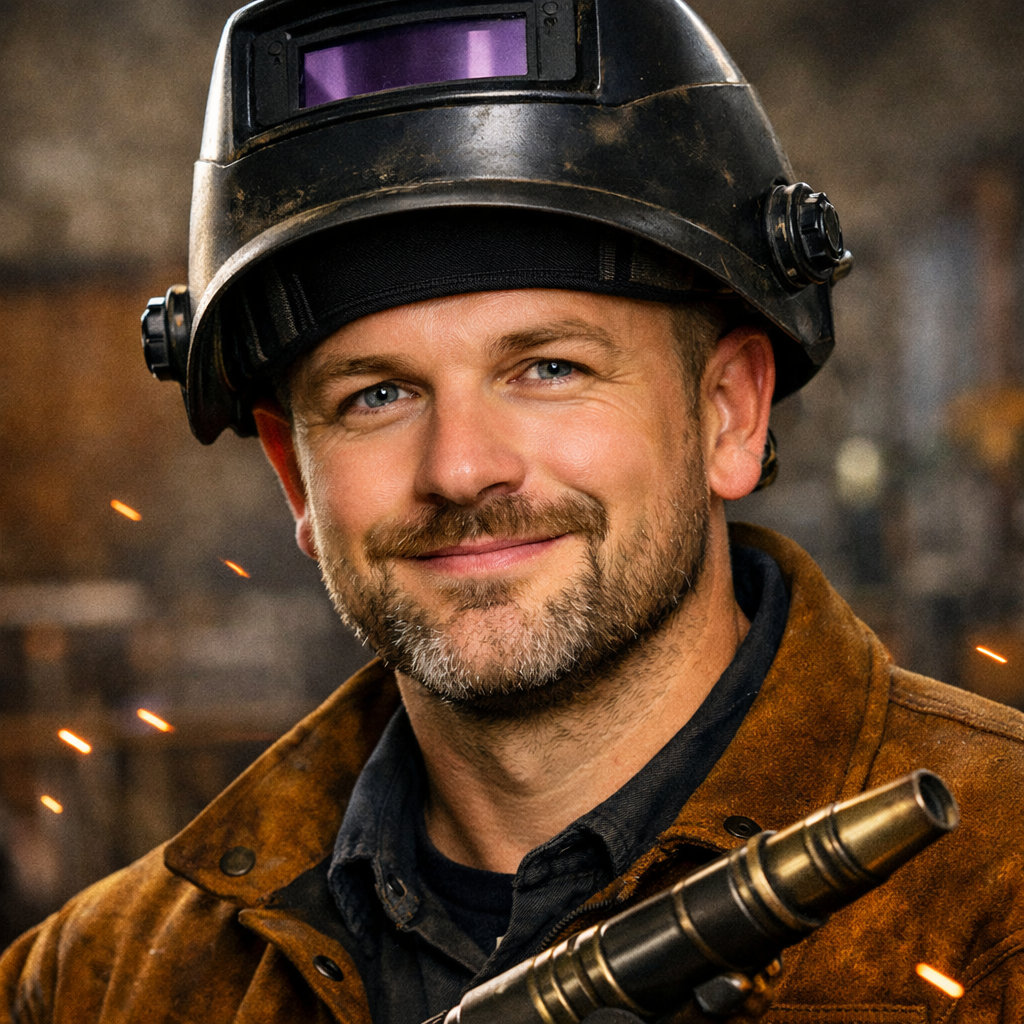
Hi, I’m Zachary Ford. I’m passionate about welding and dedicated to helping both beginners and experienced welders make informed decisions. I research, test, and write about welding helmets, welding machines, safety equipment, and essential workshop tools. My goal is to provide honest reviews, practical buying guides, and easy-to-follow tutorials that help you weld more safely, work more efficiently, and choose the right gear with confidence.