
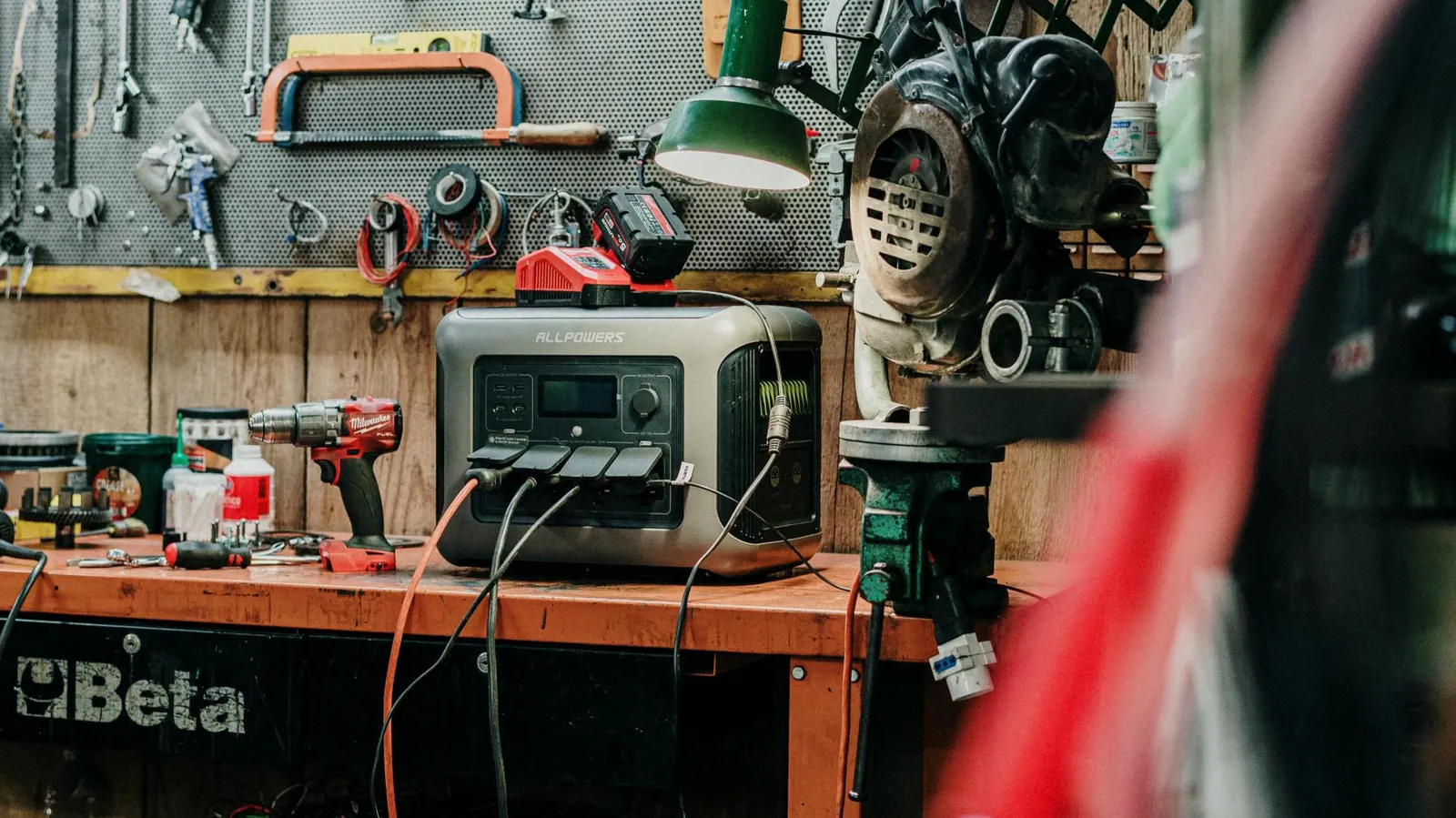
Running a welder on a portable generator is possible, but you need to match the generator’s continuous (running) wattage to what the welder actually draws — and because welders have high inrush and duty-cycle demands, the safe rule of thumb is to size the generator at roughly 1.5 to 2 times the welder’s rated input. For a typical 120V MIG welder, that means a 3,500–5,000 watt generator; for a 240V stick or MIG machine, expect 7,000–12,000 watts or more.
Key Takeaways
- Match continuous watts, not surge watts, to the welder’s input rating — surge only covers startup.
- A 120V, 140-amp MIG welder typically needs a 3,500–5,000W generator.
- A 240V, 180–210-amp welder usually needs 7,000–12,000W.
- Add up to 50% headroom if you also run lights, a grinder, or a compressor on the same unit.
- Check the welder’s data plate for input amps and voltage — that math beats guesswork every time.
- Inverter generators run cleaner and are lighter, but cost more per watt than conventional units.
Why Wattage Math Beats Guesswork
Every welder carries a data plate listing input voltage and input amperage at a given output. Multiply volts by amps to get watts. A machine rated at 240V and 30 input amps draws about 7,200 watts at full output. That single calculation tells you more than any “recommended generator” sticker.
Welding is also an intermittent load. The duty cycle — the percentage of a 10-minute period a machine can run at rated output — means the welder isn’t pulling full power constantly. But generators must still handle the peak, so size for the worst case.
The Formula for Sizing a Generator
Use this three-step method:
- Find input amps and input volts on the welder’s data plate.
- Multiply them (V × A = watts).
- Add 30–50% headroom for startup surge and any accessories.
That headroom matters because welders draw a brief inrush when you strike an arc, and it protects the generator from nuisance tripping.
Generator Size by Welder Type
| Welder Type | Typical Input | Minimum Generator | Comfortable Generator |
|---|---|---|---|
| 120V MIG (140A) | ~20A at 120V | 3,500W | 5,000W |
| 240V MIG (180–210A) | ~25–30A at 240V | 7,000W | 9,500W |
| 240V Stick (200A) | ~30–40A at 240V | 8,000W | 12,000W |
| 240V TIG (200A) | ~25–35A at 240V | 7,500W | 10,000W |
| Engine-driven welder/generator | Built-in | N/A | N/A |
These are starting points. Always confirm against your specific machine’s plate.
Conventional vs. Inverter Generators
| Feature | Conventional | Inverter |
|---|---|---|
| Clean power | Good | Excellent for electronics |
| Weight | Heavy | Lighter |
| Noise | Louder | Quieter |
| Cost per watt | Lower | Higher |
| Best for | Stick, high-draw MIG | MIG, TIG, sensitive tools |
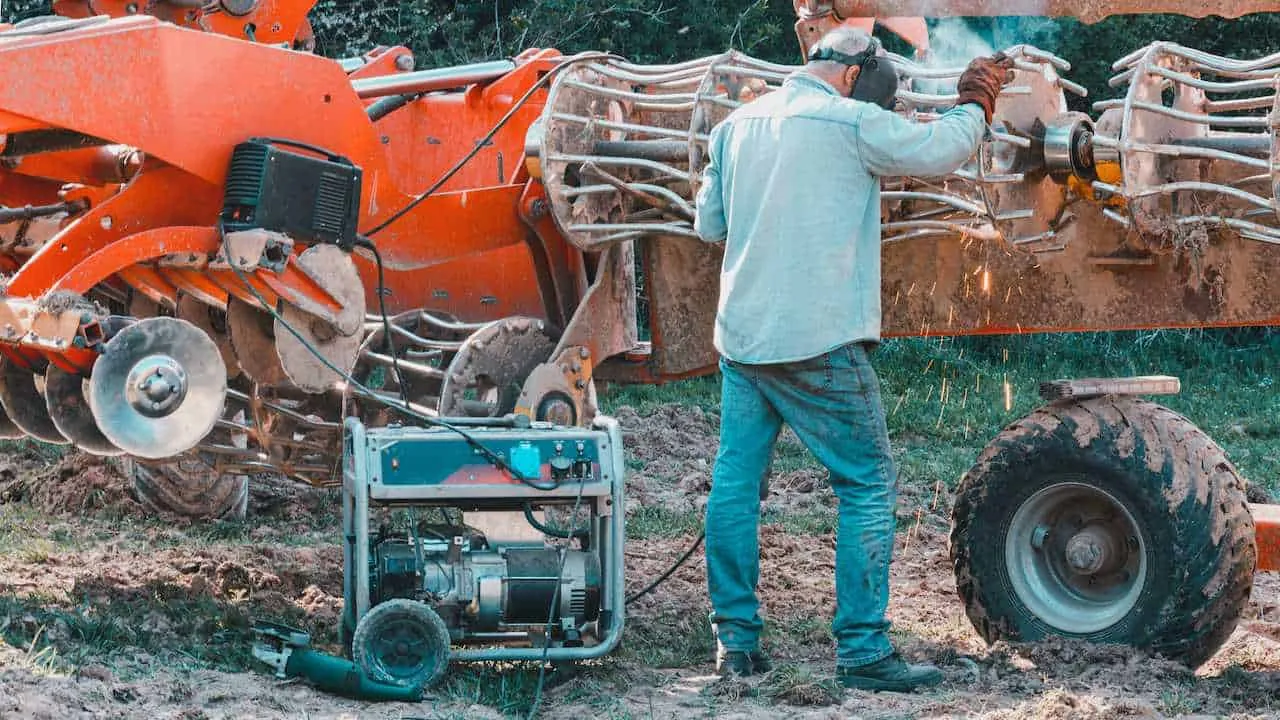
Inverter units produce cleaner sine-wave power, which protects wire-feed controls and circuit boards inside modern welders. If your machine has digital displays or synergic controls, an inverter generator is the safer choice.
Single-Voltage vs. Dual-Voltage Output
Many larger generators offer both 120V and 240V receptacles. A dual-voltage unit lets you run a 240V welder and still power 120V lights or a grinder. Just remember that total draw across both voltages can’t exceed the generator’s continuous rating.
If you only weld occasionally, a dual-voltage inverter in the 7,000–9,000W range covers most homeowner and small-shop needs.
Step-by-Step: Match Generator to Welder
- Photograph the welder’s data plate.
- Note input volts and input amps.
- Multiply for watts.
- Add 30–50% headroom.
- Compare to the generator’s continuous watt rating (not peak).
- Confirm receptacle type matches your welder’s plug.
- Check the generator’s THD if your welder has sensitive electronics.
Pro Tip: Generator manufacturers list both running and starting watts. Only the running figure matters for sustained welding — starting watts last just seconds.
When You Need Extra Headroom
Add capacity if you plan to run any of these alongside the welder:
- Angle grinder (about 1,000–1,500W)
- Air compressor for plasma cutting (1,500–2,500W)
- Work lights (300–1,000W)
- Shop vac for fume extraction (800–1,200W)
Stacking these loads is where undersized generators fail. A unit that welds fine alone may trip the moment you fire up a grinder.
Warning: Never backfeed a generator into a home’s wiring without a proper transfer switch. The Occupational Safety and Health Administration publishes guidance on generator grounding and electrical safety that every portable-power user should review.
Common Mistakes to Avoid
- Buying on peak watts instead of running watts.
- Ignoring the welder’s duty cycle and assuming constant draw.
- Forgetting accessory loads.
- Using a generator with high THD on a digitally controlled welder.
- Skipping the grounding requirement for the generator frame.
Do You Need a Welder-Generator Combo?
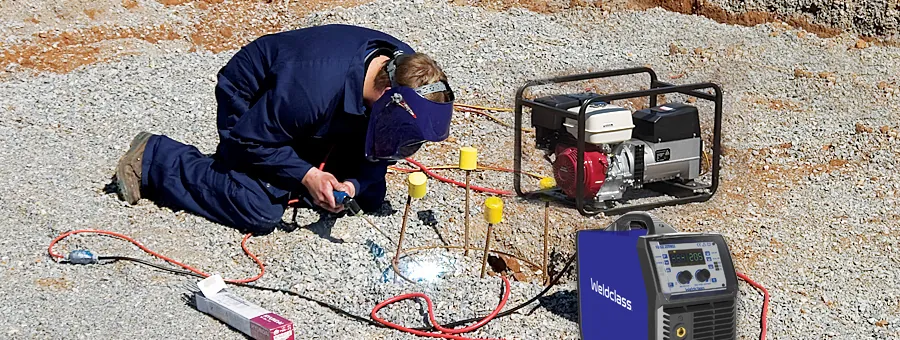
Engine-driven welder/generators — sometimes called welder-generators — combine a welding power source and a generator in one unit. Brands like Miller and Lincoln Electric make these for field work. They cost more upfront but eliminate the matching problem entirely, because the manufacturer already sized the alternator to the welder.
For occasional home use, a separate portable generator paired with a plug-in welder is usually cheaper.
Frequently Asked Questions
What size generator runs a 240V welder?
A 240V welder drawing roughly 30 input amps needs about 7,200 watts, so plan on a generator rated 7,000–12,000 continuous watts. Higher-output machines or those with accessories push you toward the top of that range. Always verify against the welder’s data plate before buying.
Can a 5,000W generator run a welder?
Yes, for many 120V MIG welders drawing around 20 amps. It won’t reliably run most 240V machines at full output. If your welder is 240V, step up to at least 7,000 watts.
Will a generator damage my welder?
Only if it produces dirty power or the wrong voltage. Inverter generators with low total harmonic distortion are safest for welders with circuit boards. Conventional generators can work but may stress sensitive electronics.
How many watts does a welder use?
It varies widely. A small 120V MIG unit might draw 2,400 watts, while a 240V stick machine can pull 9,600 watts or more. The data plate is the only reliable source for your specific welder.
Can I run a welder and a compressor together?
Sometimes, but you need extra capacity. Add the compressor’s running watts to the welder’s draw, then add headroom. A 12,000W generator handles most welder-plus-compressor combinations.
Do I need a pure sine wave generator for welding?
Not always, but it helps. Pure sine wave output protects digital controls and wire-feed motors. Modified sine wave units may cause erratic feeding or display glitches.
Conclusion
Pick your welder’s data plate, do the volts-times-amps math, add 30–50% headroom, and compare that number to a generator’s continuous rating — not its peak. That one afternoon of arithmetic saves you from a tripped breaker, a fried control board, or a generator that quits mid-bead.
Hi, I’m Zachary Ford. I’m passionate about welding and dedicated to helping both beginners and experienced welders make informed decisions. I research, test, and write about welding helmets, welding machines, safety equipment, and essential workshop tools. My goal is to provide honest reviews, practical buying guides, and easy-to-follow tutorials that help you weld more safely, work more efficiently, and choose the right gear with confidence.