
Yes, portable welders are good for light repair work, thin metal, and jobs away from a power socket. They struggle on thick steel and long, heavy welds. The machine’s duty cycle and input power decide where the limit sits.
Portable welder basics
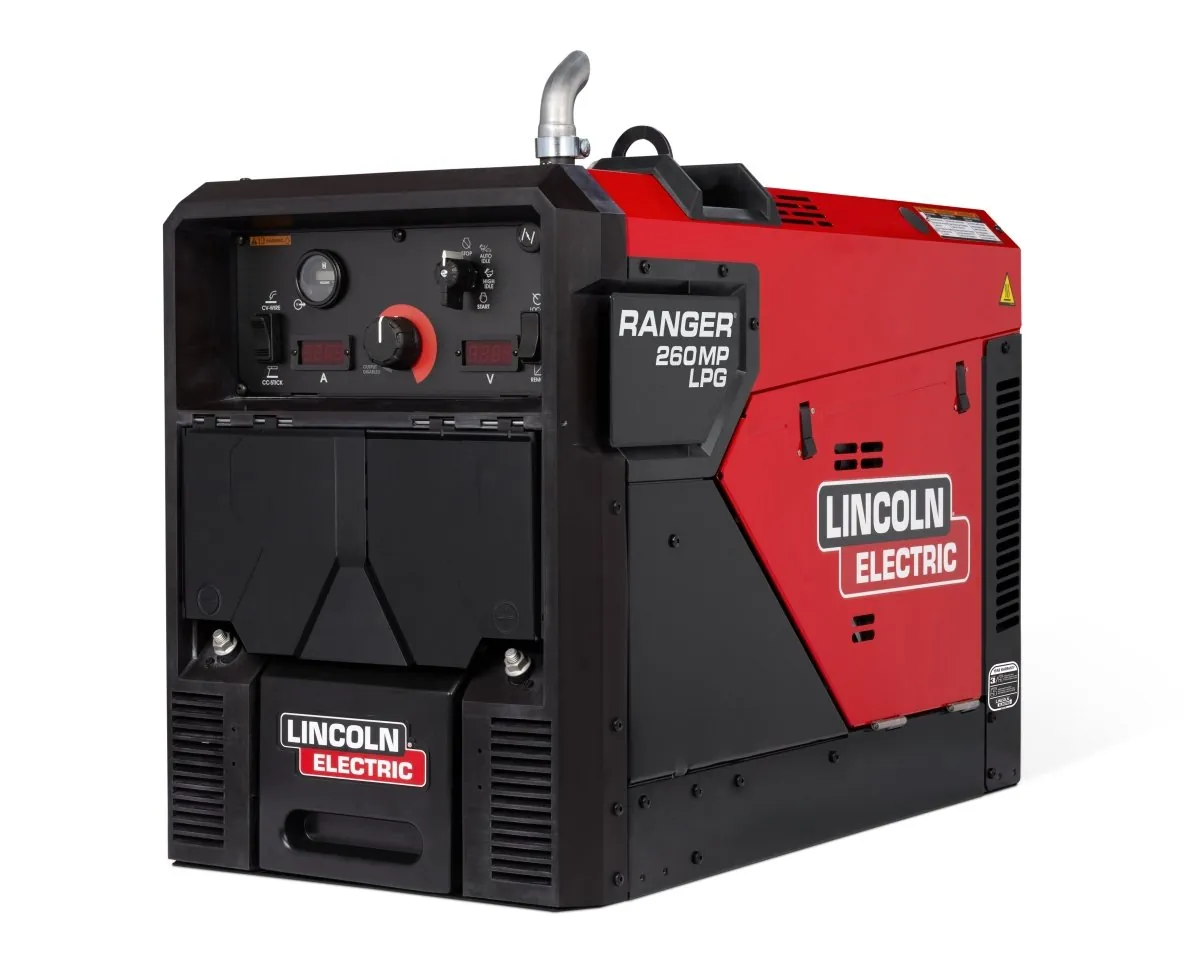
- A 120V portable welder handles roughly 1/8 inch (3 mm) steel on flux-core wire; 240V units go thicker.
- Duty cycle is the real limit: a 20% rating at 100 amps means a couple of minutes welding, then several minutes cooling.
- Inverter machines weigh 10–20 lb; older transformer units often run 40–90 lb.
- Gasless flux-core wire works outdoors in wind; MIG with shielding gas does not.
- Generator power needs a clean sine wave, or the welder’s electronics can fail.
- Check the data plate for input amps before you buy — a 15A household circuit trips fast.
Why portable welders have limits
Portable welders are small because they run on less input power, which means less welding current at the arc. A standard household outlet gives you only a limited amount of current to work with.
Heat builds up inside the case because the components are packed tight. The duty cycle is the manufacturer’s honest statement of how long the machine can run before it overheats. Push past it and a thermal cutout stops the arc mid-weld.
Weight is the other trade. A light inverter welder is easy to carry up a ladder, but it has less copper and thermal mass than a transformer unit.
When a portable welder isn’t the right tool

A portable welder is the wrong choice for continuous output, thick material, or code-qualified structural welds.
| Situation | What changes | What to do instead |
|---|---|---|
| Steel over 1/4 inch | Portable output can’t penetrate | Use a 240V machine or stick welder |
| Full day of welding | Duty cycle forces long stops | Rent a shop welder |
| Structural or code work | Needs certified procedure | Hire a qualified welder |
| Outside in strong wind | Shielding gas blows away | Switch to flux-core wire |
| Only a 15A circuit | Breaker trips at high amps | Use a 20A circuit or lower setting |
| Long cable runs | Voltage drop weakens the arc | Shorten the cable, thicker gauge |
Setting up a portable welder correctly
- Check the input voltage on the data plate and match it to your outlet; a 120V machine on a 240V supply will be destroyed.
- Set wire feed speed by starting low and increasing until the arc sounds like frying bacon, then fine-tune for 1/8 inch steel.
- Set voltage so the weld bead sits flat; too low and it crowns, too high and it spatters.
- Clean the metal to bare steel within 1 inch of the joint — mill scale and paint cause contamination and poor fusion.
- Clamp the ground close to the weld, on clean metal, so current has a short path back.
- Run a 2-inch test bead on scrap of the same thickness before you touch the real part.
- Watch the duty cycle clock; stop when you hit the rated minutes and let the fan run until it’s cool.
- Check the bead: if it’s flat, even, and fused at both edges, your settings are right.
Mistakes that ruin the weld
- Ignoring the duty cycle and welding past the rated time. The thermal cutout stops the arc mid-pass, and a half-finished weld on a loaded part can fail later.
- Using an extension cord that’s too thin or too long. Voltage drops, the arc gets weak, and the weld won’t fuse properly.
- Welding dirty or rusty metal. Contamination traps slag and gas inside the weld, which weakens the joint.
- Running flux-core wire without checking polarity. Wrong polarity gives a spattery, cold weld that’s weak, not just ugly.
- Buying on amp rating alone. A “200A” sticker on a 120V machine is a marketing peak, not a working number.
Frequently asked questions
Can a portable welder weld 1/4 inch steel?
Not well on 120V. A 120V flux-core machine tops out around 1/8 inch in a single pass. For 1/4 inch, you need a 240V machine or a stick welder, and even then you may need multiple passes.
How long can I weld before it overheats?
It depends on the duty cycle on your data plate. At a 20% rating and 100 amps, that’s a couple of minutes welding, then several minutes cooling.
Is it safe to run a portable welder off a generator?
Yes, if the generator puts out a clean sine wave and enough wattage. A modified sine wave generator can damage the welder’s electronics.
Does a portable welder work for car body repair?
Yes, it’s one of the best uses for one. Auto body panels are thin, usually under 1/16 inch, so a 120V machine has plenty of power.
What’s the difference between an inverter and a transformer welder?
An inverter welder is much lighter, often 10 to 20 lb. A transformer welder is heavier, sometimes 40 to 90 lb, but simpler and more durable.
Do I need gas with a portable welder?
No, not if it’s flux-core capable. Flux-core wire has its own shielding agent inside, so it works without a gas bottle.
Will a portable welder trip my house breaker?
It can. A 120V welder drawing high current will trip a smaller breaker at high settings. Check the input amps on the data plate; if it’s near or above your breaker size, use a larger circuit or turn the output down.
How much should I spend on a portable welder?
A basic 120V flux-core machine is inexpensive relative to a 240V inverter with MIG and gas capability.
Conclusion
Portable welders earn their place in a garage or truck for thin metal, quick repairs, and jobs with no outlet nearby. They won’t replace a shop machine on thick steel or long production runs. Match the duty cycle and input power to your real work, and you’ll get a machine that does exactly what you need.

Hi, I’m Zachary Ford. I’m passionate about welding and dedicated to helping both beginners and experienced welders make informed decisions. I research, test, and write about welding helmets, welding machines, safety equipment, and essential workshop tools. My goal is to provide honest reviews, practical buying guides, and easy-to-follow tutorials that help you weld more safely, work more efficiently, and choose the right gear with confidence.