
Using a portable welder means matching the machine to the job before you strike an arc — for a 120V flux-core unit on 1/8-inch steel, that’s about 15–20 minutes of setup and a 30–45 minute practice session. Check your machine’s duty cycle first, clamp your ground close to the work, then run short beads at the setting your manual gives for your metal thickness.
The most common mistake is starting on thin sheet metal. Start on 1/8-inch mild steel instead — it forgives a slow hand while you learn travel speed.
Steps to run a portable welder safely
-
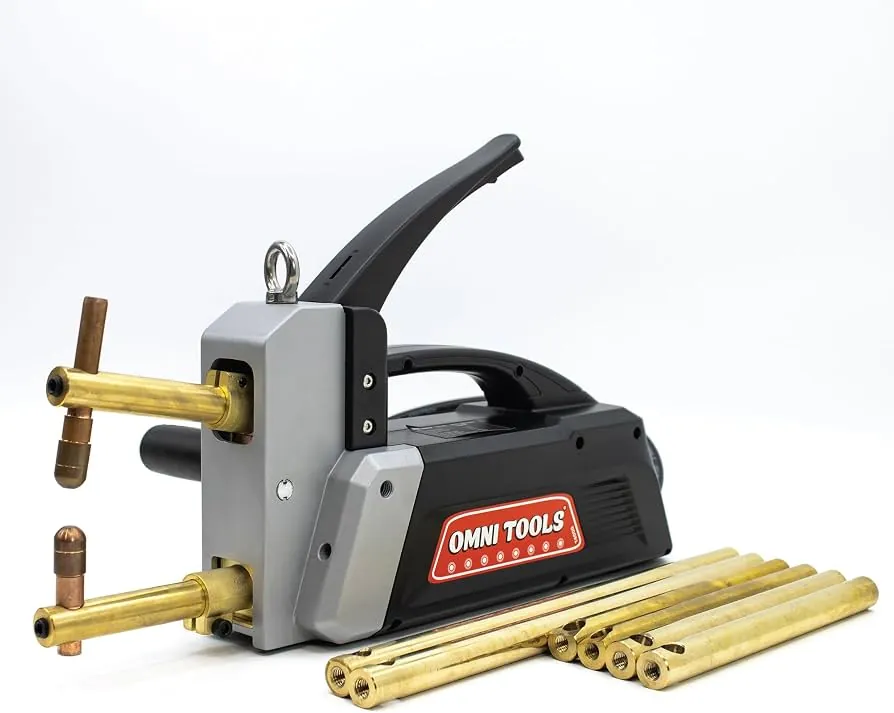
Pick the right process for your machine. A flux-core wire welder runs on 120V and needs no gas bottle, so it’s the simplest starting point. A MIG unit needs a shielding gas cylinder, and a stick welder uses coated electrodes. Check your manual for which one your machine supports.
-
Set the voltage and wire speed from the chart. Every machine prints a chart inside the side door. For 1/8-inch steel on a 120V flux-core unit, that’s usually the second-highest voltage tap and a wire speed around the middle of the dial. Start there, not at the top.
-
Clean the metal to bare steel. Grind off rust, paint and mill scale about 1 inch back from the joint. Dirty metal causes porosity — tiny holes in the weld — and no setting fixes that.
-
Clamp the ground clamp on clean metal, close to the joint. Within 12 inches is ideal. A ground clamp on painted or rusty steel gives you a weak, sputtering arc that looks like a machine fault.
-
Set your wire stick-out to about 3/8 inch and your travel angle to 10–15 degrees. Stick-out is the wire length past the contact tip. Too much and the arc wanders; too little and you’ll burn the tip.
Tip: Keep your helmet down before you pull the trigger. The arc flash can burn your eyes in a single second, and the pain shows up hours later.
-
Run 2-inch practice beads on scrap before touching your project. Watch the molten puddle, not the arc. Move at the speed that keeps the puddle the same width the whole way.
-
Let the machine cool between beads. Duty cycle is the share of a 10-minute window the machine can weld at a given output — a common rating for small 120V units is 20% at its top setting, meaning 2 minutes of welding and 8 minutes of cooling. That figure is on your data plate, not in this article. If you need a duty cycle this low, a 240V machine handles the same job better.
The Occupational Safety and Health Administration publishes welding safety and health rules you can check for free.
How long a portable welding job takes
Setup is quick, but the welding itself depends on thickness and bead length. The table below assumes 1/8-inch mild steel on a 120V flux-core machine at a mid-range setting, with the metal already clean.
| Situation | How long | What changes it | What to watch for |
|---|---|---|---|
| Setup and test beads | 15–20 min | Machine type, gas vs. flux | Weak arc from a bad ground |
| One 6-inch bead on 1/8-inch steel | 1–2 min | Travel speed, amperage | Burn-through on thin spots |
| Full practice session | 30–45 min | Your hand steadiness | Duty cycle overheating |
| Small repair (bracket, gate) | 20–40 min | Fit-up and cleanup time | Warping on long runs |
| Thicker steel (3/16 inch+) | 2–3x longer | Multiple passes needed | Machine hitting its limit |
If a job is running far past these times, stop and check your ground clamp and your wire speed first. Nine times out of ten the machine is fine and the setup is the problem.
Signs your portable weld is finished right
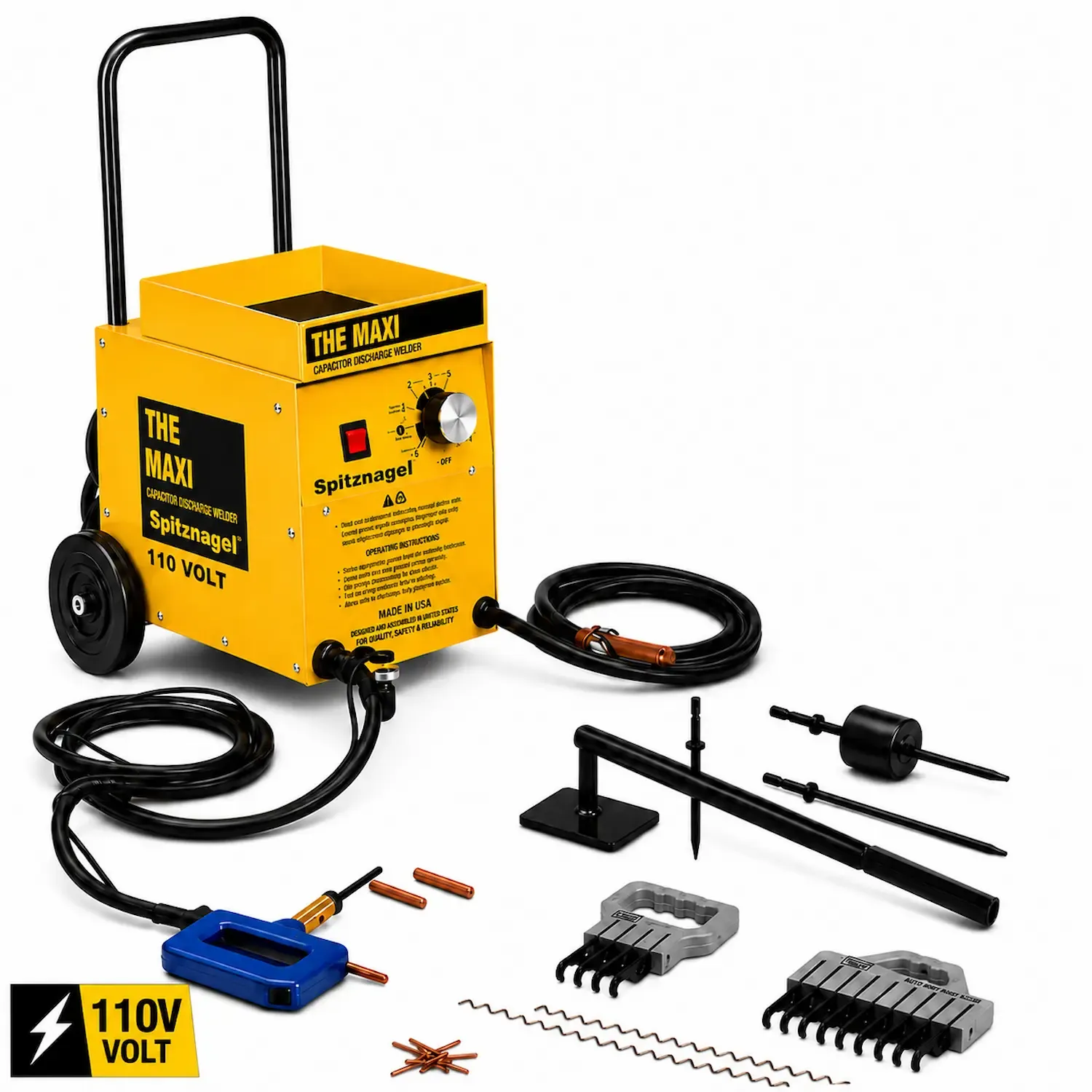
A finished weld looks like a row of even, overlapping ripples with no holes or craters.
The test that settles it’s a visual check after you chip off the slag. Look for undercut — a groove melted into the edge of the base metal — and for any spot where the weld sits on top of the metal instead of fusing into it. For structural work, the American Welding Society publishes the acceptance criteria inspectors use, and those are the standards to follow.
Mistakes that spoil a portable weld
-
Welding dirty or painted metal. Rust and paint burn into the puddle and leave porosity, which weakens the joint. Grind to bare steel first, every time.
-
Running the machine at its top setting for long beads. You’ll hit the duty cycle, the machine cuts out, and you lose the bead halfway. Weld in short runs and let it cool.
-
Dragging the gun instead of pushing it. Pushing gives you better visibility of the puddle and better gas coverage on MIG. Drag only when your manual says to.
-
Skipping the practice beads. Going straight to a finished part means you learn on the part, and a burned-through panel costs more to fix than scrap steel costs to buy.
-
Welding in a garage with the door shut. The fumes and the UV light both hurt you. Open the door, and wear a respirator if you’re welding galvanized or coated steel.
Frequently asked questions
Can I use a portable welder on a normal household outlet?
Yes, if it’s a 120V machine and you plug into a 20-amp circuit. Check the outlet’s breaker rating first. A 15-amp circuit will trip when you push the machine hard, and you’ll need a dedicated circuit or a 240V outlet instead.
Why does my portable welder keep cutting out?
Because you’ve hit its duty cycle. Small 120V machines often rate around 20% at their top setting, so the thermal protection trips after a couple of minutes. Let it cool for 8–10 minutes, then lower your voltage setting or switch to a thicker-rated machine.
How long should a portable welder last?
It depends on the brand and how hard you run it, so check the maker’s warranty page for its own figure. Most hobby-grade machines carry a 1–3 year warranty. Running inside the duty cycle and storing it dry is what stretches that life out.
Is it safe to weld in a garage?
Only with the door open and good airflow. Welding gives off metal fumes and UV light that harms eyes and skin.
What happens if I weld without a helmet?
You get arc eye — a painful burn on the surface of your eye that shows up 6–12 hours later. It feels like grit under the eyelid and it hurts to look at light. See a doctor if it happens, and always wear a shade 10 or darker lens.
How much does it cost to run a portable welder?
Electricity is cheap — a 120V machine draws about the same as a space heater while you’re welding. The real cost is consumables: wire, tips, and gas if you run MIG. Budget for those rather than the power bill.
Do I need a license to weld at home?
No, not for your own property in the US. Licenses and certifications apply to structural, pressure, and commercial work, set by your state and the code your job follows. Check with your local building department before welding anything structural.
Conclusion
Once you’re comfortable with basic beads, try a simple project like a small garden bracket or a repair on a lawn chair. You’ll learn faster by finishing something real, and you can always adjust your technique as you go. Keep practicing, and you’ll be surprised how quickly it starts to feel natural.
Hi, I’m Zachary Ford. I’m passionate about welding and dedicated to helping both beginners and experienced welders make informed decisions. I research, test, and write about welding helmets, welding machines, safety equipment, and essential workshop tools. My goal is to provide honest reviews, practical buying guides, and easy-to-follow tutorials that help you weld more safely, work more efficiently, and choose the right gear with confidence.