
As an Amazon Associate, we earn from qualifying purchases. This post contains affiliate links – if you buy through them, we may earn a commission at no extra cost to you.
If you’re shopping for an Eastwood portable welder, the first thing to know is that “portable” covers a wide range here. Some units run on a normal household outlet, and some need a 240-volt circuit. That single difference decides more than any other spec. For most people, the Eastwood 180 Amp MIG is the pick: it runs on both 120 and 240 volts and weighs under 26 pounds.
What Actually Matters
Power Source and Voltage
A 120-volt machine plugs into a standard household outlet. A dual-voltage unit gives you both: 120 volts for lighter work and 240 volts for more punch. Check your shop outlets before you order.
Duty Cycle and Thickness Rating
The thickness rating is often printed twice, once per voltage. A unit might handle 5/16″ on 240 volts but only 3/16″ on 120 volts. That gap matters if you plan to work on thicker steel. Read the thickness rating for the voltage you’ll actually use, not the bigger number on the box.
The Feature That Sells It but Rarely Gets Used
Multi-process means MIG, TIG, and Stick in one box. But most home welders do 90% of their work in MIG and never touch the other modes. You’re paying for modes you may never learn. If you already know you want TIG for aluminum, it’s worth it. If you’re just starting out, it’s weight you carry for nothing.
Wire Feed and Consumables
Wire feed quality decides how smooth your welds come out. A metal drive motor holds tension better than a plastic one over long sessions. Check what wire sizes and spool diameters the machine takes before you buy.
1. Eastwood 180 Amp MIG Welder Machine Dual Voltage 110V 220V

Best for: Most home shops and first-time buyers
This is the pick for most people because it runs on both 120 and 240 volts. On 240 volts it handles mild and stainless steel from 24 gauge up to 5/16″. On 120 volts that drops to 3/16″, which is the trade-off you accept for plugging into a household outlet. At under 26 pounds, it’s light enough to move around the shop or load into a truck.
The 30-180 amp range and IGBT inverter technology give fine control at the low end. The Tack Weld setting and 2T/4T modes help you hold a consistent bead on auto restoration or patch panels. It takes.023 to.035 wire in 4″ and 8″ spools, so common wire is easy to find. Aluminum needs a spool gun, sold separately here. This isn’t the machine for someone who wants TIG welding for aluminum right out of the box.
Pros
- Runs on both 120V and 240V power
- Welds 24 gauge to 5/16″ on 240V
- Under 26 lb, easy to move
- Tack Weld and 2T/4T modes included
- 3-year limited warranty, lifetime tech support
Cons
- Spool gun for aluminum sold separately
- Thickness drops to 3/16″ on 120V
2. Eastwood 180 Amp MIG Welder Machine Dual Voltage 110V 220V

Best for: Aluminum work right out of the box
This is the same machine as the standard MIG, but the spool gun comes in the box. That changes the math if aluminum is on your list. With the spool gun included, this welds aluminum from 14 gauge to 1/4″ and steel from 24 gauge to 5/16″ on 240 volts. For trailer repair, boat work, or any aluminum project, having the gun ready saves a separate purchase.
Everything else carries over: dual-voltage operation, the full output range, the metal drive motor, and IGBT inverter technology. If you only ever weld steel, the standard MIG gives you the same machine without the spool gun. This one isn’t for the buyer who knows they’ll never touch aluminum.
Pros
- Spool gun included for aluminum
- Welds aluminum 14 gauge to 1/4″
- Dual voltage, 120V and 240V
- Same 30-180 amp range as the base unit
- 3-year limited warranty
Cons
- Aluminum capability unused by steel-only buyers
- Still needs a 240V circuit for full thickness
3. Eastwood Elite MP140i DC Multi-Process Welder

Best for: Small shops and tight spaces
The MP140i is the compact option and runs on a standard 120V household outlet. That means no special wiring, no electrician, no dedicated circuit. It does MIG, high-frequency DC TIG, and Stick from one box.
The trade-off is power. The spool gun and TIG foot pedal are optional, so aluminum and advanced TIG control cost extra. The Smart Wire Feed technology is aimed at smoother starts, which matters most on thin sheet. This isn’t for the buyer who needs to weld 1/4″ steel all day.
Pros
- Runs on standard 120V outlet
- MIG, TIG, and Stick in one machine
- Synergic LCD simplifies setup
- Compact and easy to store
- Smart Wire Feed for smoother starts
Cons
- Limited to 120V power only
- Not built for thick material
4. Eastwood Elite MP200i DC Multi-Process Welder

Best for: Buyers who want one machine for everything
The MP200i adds dual voltage to the multi-process idea. It does MIG, high-frequency DC TIG, and Stick on both 120V and 240V.
Smart Wire Feed is here too, aimed at cleaner arc starts and easier wire loading. If you want the widest process range in one box and have 240 volts, this covers the most ground. It’s not for someone who only welds steel and wants the simplest possible setup.
Pros
- MIG, TIG, and Stick in one unit
- Dual voltage, 120V and 240V
- Synergic LCD suggests settings
- Smart Wire Feed for cleaner starts
- Optional spool gun and foot pedal expand it
Cons
- More processes than some buyers need
5. Eastwood TIG 220 AMP AC/DC TIG Welder and Stick Welding

Best for: Aluminum TIG work and precise control
This TIG-focused machine is built for buyers who need AC/DC TIG control. You can adjust the AC waveform, balance, frequency, pulse settings, and start/end amperage to dial in aluminum welds.
The package includes a WP-17F flex-head torch with a gas lens kit and a foot pedal for hands-free amperage control. It also comes with an auto-darkening helmet with a 4.57″ x 3.19″ viewing area and a true color lens that improves puddle clarity without the green tint. The trade-off is that this is a TIG and Stick machine, not a MIG unit, so wire-feed work isn’t part of the deal. It’s not for the buyer who wants to run MIG on sheet metal.
Pros
- AC/DC TIG plus Stick welding
- Adjustable waveform, balance, and pulse
- Welds 1/4″ and greater
- Flex-head torch with gas lens kit included
- Auto-darkening helmet included
Cons
- No MIG wire-feed capability
- Steeper learning curve than MIG
- Advanced settings take practice to use well
Also Worth Considering
The Eastwood Amp MIG Welder Machine is a 250 amp dual-voltage unit with heavy-duty inverter technology for DIY and mid-size sheet metal projects.
The Eastwood Welder Stick Welding Machine is an AC/DC digital TIG and Stick unit with a Vista-Arc panoramic view helmet.
The Eastwood MP200i Multi-Process AC/DC Welder is a 200 amp dual-voltage machine with high-frequency TIG start and a foot pedal.
Who Should Buy Which
The person who will use it hardest should look at the Eastwood TIG 220 for aluminum precision work, or the Eastwood Elite MP200i if they need MIG too. Replacing a machine that let you down? The Eastwood 180 Spool Gun gives you aluminum capability without a separate purchase.
Mistakes That Catch Buyers Out
- Judging a machine by its top thickness number without checking which voltage that number applies to.
- Paying for multi-process capability you’ll never learn, when MIG covers nearly all home work.
Frequently Asked Questions
Can I run these welders on a normal household outlet?
The Eastwood Elite MP140i runs on a standard 120V outlet. The dual-voltage machines run on 120V too, but they only reach their full thickness rating when connected to 240V power.
Do I need a spool gun to weld aluminum?
Yes, for the MIG machines. The Eastwood 180 Spool Gun comes with the spool gun included. On the other units the spool gun is optional. The Eastwood TIG 220 handles aluminum through TIG instead.
What safety gear do I need before I start welding?
The listings call for approved safety glasses, a welding helmet with the correct UV lens grade for MIG, leather welding gloves, and footwear with substantial uppers and rubber soles. Check the OSHA welding safety guidance for the full requirements.
What wire sizes do the MIG machines take?
The MIG machines take.023 to.035 wire in 4″ and 8″ spools. That covers the common sizes for sheet metal and general steel work, so finding wire locally is straightforward.
What does the warranty cover?
The MIG machines come with a 3-year limited warranty and a 90-day return window, plus lifetime technical support. The warranty terms are set by Eastwood, so read the details that ship with your machine.
Conclusion
The Eastwood MIG is the pick for most people, thanks to dual voltage and a 24 gauge to 5/16″ range. Before you order, check what outlets your shop has, because that decides whether you get the full thickness rating or the reduced 120V one.
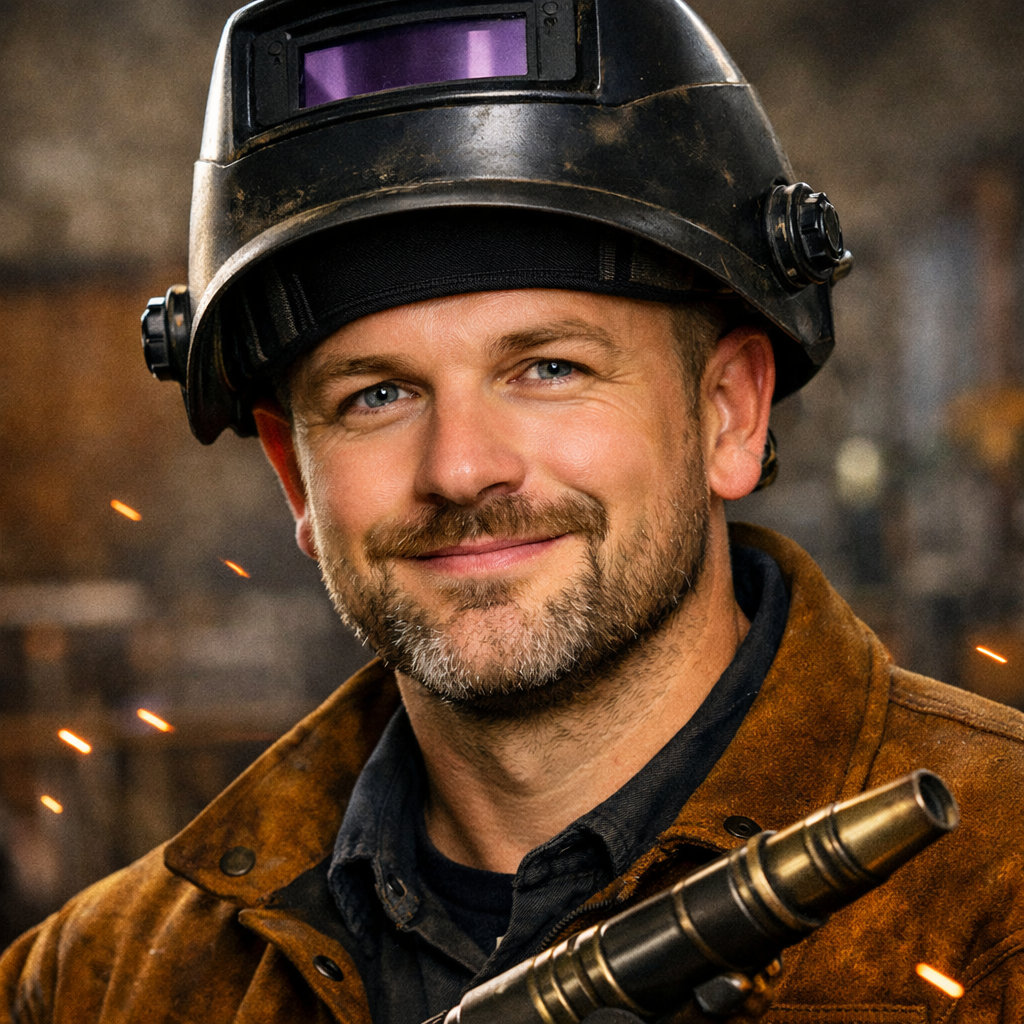
Hi, I’m Zachary Ford. I’m passionate about welding and dedicated to helping both beginners and experienced welders make informed decisions. I research, test, and write about welding helmets, welding machines, safety equipment, and essential workshop tools. My goal is to provide honest reviews, practical buying guides, and easy-to-follow tutorials that help you weld more safely, work more efficiently, and choose the right gear with confidence.