
A 140 amp welder can weld mild steel from about 18 gauge (0.048 in) up to roughly 1/4 inch (6.4 mm) with proper joint prep and multiple passes, and only on 240V power with the right process. On 120V household current, the same machine tops out near 3/16 inch (4.8 mm). Thicker steel needs beveling, multiple passes, or a bigger machine.
Quick answer: thickness chart
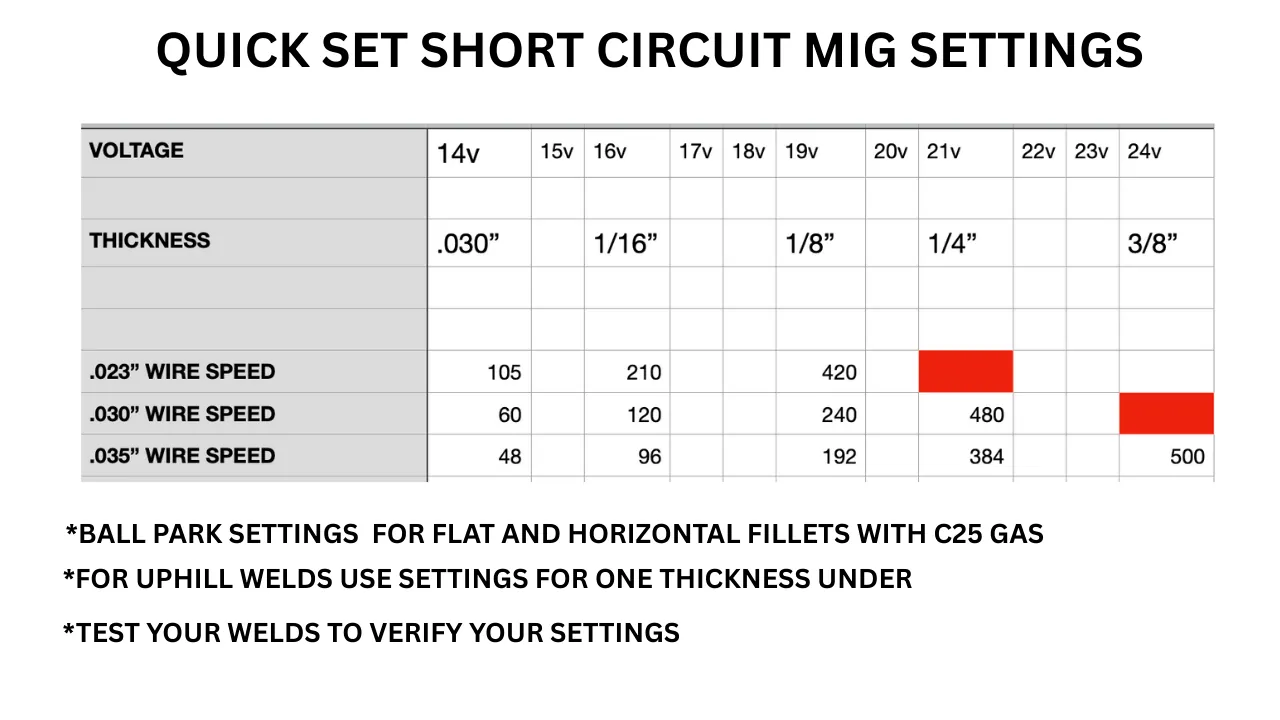
- 120V on 1/8 inch (3.2 mm) steel: comfortable, clean welds with solid wire and gas.
- 120V on 3/16 inch (4.8 mm): possible, but you’ll need flux-core wire and slow travel speed.
- 240V on 1/4 inch (6.4 mm): possible with a beveled joint, a root gap, and multiple passes.
- Anything past 1/4 inch: the welder can’t melt deep enough, so the weld sits on top instead of fusing.
- Duty cycle is the real limit: check your machine’s duty cycle at full power, and let it cool when the thermal overload trips.
- Aluminum and stainless: thickness drops fast — check your machine’s own chart, since ratings vary by brand.
Why thickness changes with power and voltage
A 140 amp welder melts metal by pushing current through the wire and into the workpiece.
Voltage matters because it sets the ceiling on amps.
Wire diameter plays a part too. Thicker wire carries more current, so 0.035 in wire penetrates deeper than 0.023 in wire at the same setting. Duty cycle also matters: welding at max amps heats the machine fast, and the thermal cutout will stop you before you finish a long joint. The American Welding Society publishes guidance on procedure qualification if you want the formal standards behind this.
When a 140 amp welder isn’t enough
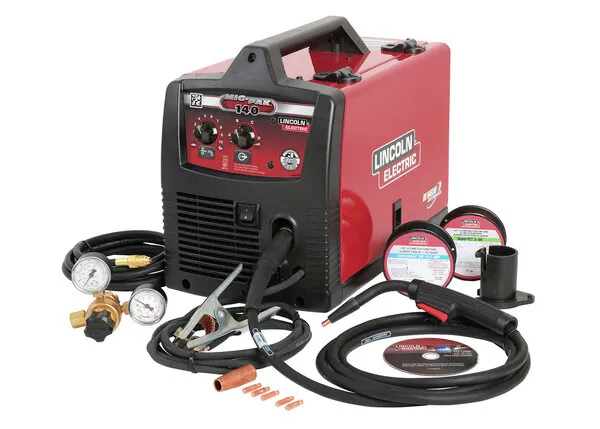
The simple answer breaks down in specific situations. Here’s what changes and what to do instead.
| Situation | What changes | What to do instead |
|---|---|---|
| Steel over 1/4 inch | No full penetration | Bevel the joint, run multiple passes |
| 120V outlet only | Output capped lower | Use flux-core wire, accept 3/16 inch max |
| Aluminum work | Needs more heat | Pre-heat the part, or use a spool gun |
| Long continuous welds | Duty cycle trips | Weld in short bursts, let it cool |
| Thin sheet under 22 gauge | Burns through easily | Switch to lower amps, use 0.023 in wire |
| Structural or load-bearing | Code may require certified welds | Hire a certified welder for the job |
How to weld thicker steel with 140 amps
You can push past the single-pass limit without buying a new machine. The trick is preparing the joint so the weld reaches full depth.
- Measure your steel first. Use calipers or a tape measure on the edge — if it reads over 1/4 inch (6.4 mm), you’ll need multiple passes.
- Bevel the edges at 30 to 37 degrees. Grind a V-groove on both pieces so the weld can reach the root of the joint.
- Set your machine to max amps for the wire size. For 0.035 in flux-core on 1/4 inch steel, that’s usually the top of the dial.
- Leave a root gap of about 1/16 inch (1.6 mm). This lets the first pass melt all the way through the bevel.
- Run the root pass slow and steady. Watch the puddle wet into both bevel faces — if it sits on top, you’re moving too fast.
- Clean the slag between passes. A wire brush and chipping hammer take about 30 seconds per pass; skip this and the next pass won’t fuse.
- Add fill passes until the groove is level. Several passes are usually needed to fill a 1/4 inch V-groove on a 140 amp machine.
- Check penetration on a test piece first. Cut the scrap weld in half and look for fusion at the root — that’s your proof it worked.
Mistakes that weaken the weld
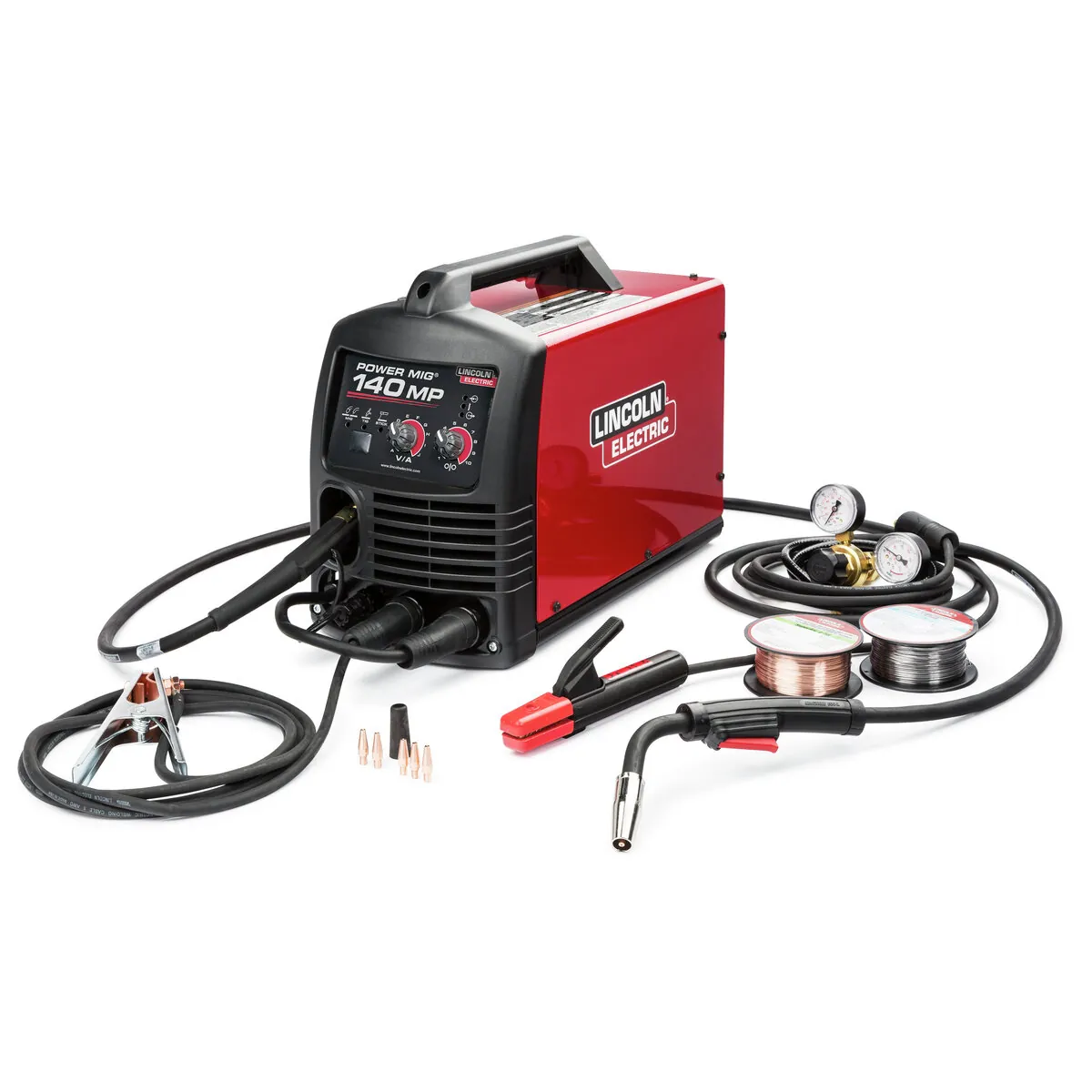
- Trusting the duty cycle label over your own timer. Welding past your machine’s rated duty cycle trips the thermal overload and stalls the arc mid-joint.
- Running 0.030 in wire on 1/4 inch steel. The wire can’t carry enough current to penetrate, so the weld sits on the surface and fails under load.
- Skipping the bevel on thick steel. Without a V-groove, even a hot pass can’t reach the root, and the joint cracks under stress.
- Using 120V on steel over 3/16 inch. The machine runs flat out, the arc sputters, and you get cold lap instead of fusion.
- Not cleaning mill scale or rust first. Contaminants burn into the weld and create porosity that weakens the joint.
Frequently asked questions
Can a 140 amp welder weld 1/4 inch steel?
Yes, on 240V power with 0.035 in flux-core wire, a beveled joint, and multiple passes. A single pass on 1/4 inch is at the very edge of what the machine can do, so prepping the joint properly is what makes it work.
How thick can a 140 amp welder weld on 120V?
About 3/16 inch (4.8 mm) is the practical limit on 120V household current. Beyond that, the machine can’t pull enough power to melt full penetration, and you’ll get a weld that sits on top of the steel.
Why does my 140 amp welder keep shutting off?
The thermal overload is tripping because you’ve hit the duty cycle limit. Check your machine’s rated duty cycle at max output and let it cool for the time specified in its manual.
Is it safe to weld 1/4 inch steel with a 140 amp welder?
It’s safe if the weld passes a penetration check. Cut a test piece in half and look for fusion at the root. If the weld sits on the surface without melting into the base metal, it isn’t safe for load-bearing work.
What wire size should I use for thick steel on a 140 amp welder?
Use 0.035 in flux-core wire for anything over 3/16 inch. The thicker wire carries more current, which gives you deeper penetration than 0.023 or 0.030 in wire at the same amperage setting.
How many passes does it take to weld 1/4 inch steel?
The number depends on your bevel angle and root gap — a wider bevel needs more fill. Start with a root pass and add fill passes until the groove is level.
Does a 140 amp welder work for aluminum?
Only on thin aluminum, usually under 1/8 inch, and only with a spool gun or aluminum-specific wire. Aluminum conducts heat away fast, so a 140 amp machine struggles to reach welding temperature on thicker sections.
What happens if I weld steel that’s too thick?
The weld won’t penetrate to the root, so it sits on the surface as a cold lap. The joint looks fine from the outside but fails under load, often cracking along the fusion line. Always test on scrap before trusting a thick joint.
Conclusion
A 140 amp welder handles most home and hobby work up to 1/4 inch on 240V, and 3/16 inch on 120V. The machine’s real limit isn’t the thickness number on the box — it’s whether your weld actually fuses to the root. Bevel thick steel, run multiple passes, and cut a test piece to check penetration before you trust the joint with any real load.

Hi, I’m Zachary Ford. I’m passionate about welding and dedicated to helping both beginners and experienced welders make informed decisions. I research, test, and write about welding helmets, welding machines, safety equipment, and essential workshop tools. My goal is to provide honest reviews, practical buying guides, and easy-to-follow tutorials that help you weld more safely, work more efficiently, and choose the right gear with confidence.