
When you’re fabricating large-diameter pipes or thick-walled pressure vessels and a single submerged arc pass leaves hidden lack-of-fusion zones that fail hydrostatic testing, the joint integrity is compromised before the project even leaves the shop.
Double submerged arc welding (DSAW) eliminates that risk by applying separate submerged arc passes on both the inside and outside of the seam, creating full-penetration welds with consistent fusion across the entire thickness.
This process matters because it directly determines whether a pipeline or vessel meets API 5L or ASME codes under high pressure and cyclic loading.
For professional welders, students learning automated processes, and fabricators making material decisions, DSAW parameters and setup choices separate reliable high-volume production from rework and downtime.
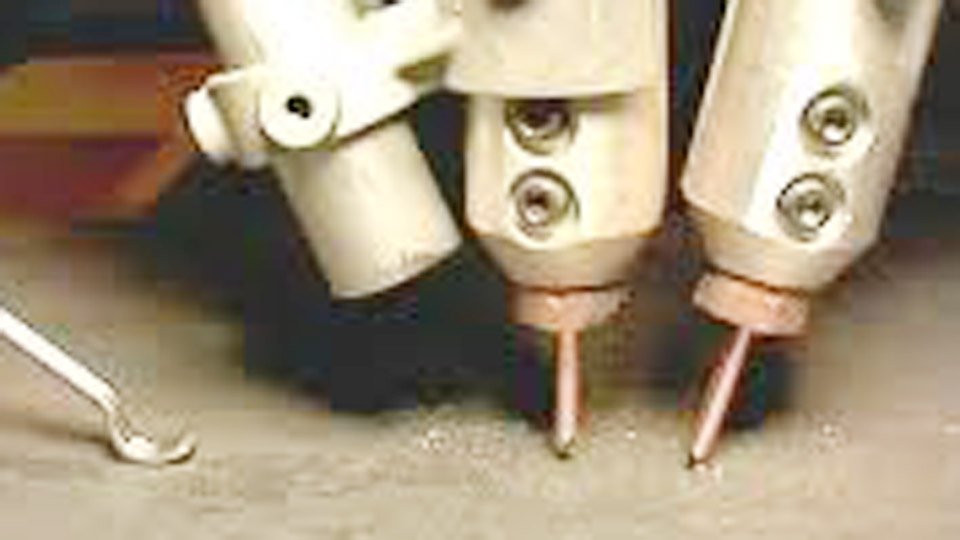
Image by arcspecialties
How Double Submerged Arc Welding Works in Practice
Plate Forming and Seam Preparation
Steel plate is formed into a cylindrical shape using UOE or JCOE presses for straight-seam DSAW or spiral forming for helical seams. Edges are trimmed and beveled into a double-V or X-groove configuration—typically 60–70° included angle with a 6–8 mm root face—to allow balanced fusion from both sides without excessive filler.
This preparation ensures the inner and outer passes meet at the root with at least 1/4 of wall thickness interpenetration, critical for thick sections over 20 mm.
Inner and Outer Welding Head Coordination
Two independent SAW heads operate in tandem: one inside the pipe for the root or first pass and one outside for the cap or second pass. The heads maintain synchronized travel speeds and identical polarity (usually DC+ on the electrode). Flux is delivered continuously ahead of each arc, submerging it completely.
The inside head often uses a smaller wire or adjusted parameters to control heat input and prevent burn-through, while the outside pass fills and caps the joint. Coordination prevents misalignment and ensures the slag from the first pass does not interfere with the second.
Flux Dynamics and Arc Protection
Granular flux blankets the arc, decomposing under heat to form a protective gas shield and molten slag layer. This isolates the weld pool from oxygen and nitrogen, allowing currents up to 1000 A without oxidation. Flux also scavenges impurities and alloying elements into the weld metal.
In DSAW, flux consumption runs roughly 1–1.5 kg per kg of electrode deposited, depending on voltage and speed. Neutral or slightly active fluxes (basicity index 1.0–2.5) are standard for multi-pass work on carbon and low-alloy steels to maintain toughness.
What Makes DSAW Different from Single Submerged Arc Welding
Penetration Depth and Fusion Characteristics
Single SAW relies on one-side access and often requires back gouging or a second process to achieve full penetration. DSAW builds the weld from both sides simultaneously or sequentially, delivering deeper, more uniform fusion without gouging.
For a 25 mm wall, a single pass might achieve only 12–15 mm penetration at 750 A, while DSAW inner and outer passes combine for complete through-thickness fusion with minimal dilution variation.
Deposition Rates and Productivity Impacts
Single-wire SAW deposits 10–20 lb/hr. DSAW setups frequently incorporate tandem or multi-wire heads, pushing rates to 30–45 lb/hr per seam. Travel speeds reach 1.5–2 m/min on longitudinal seams, versus slower single-pass work.
The double-sided approach reduces total heat input per unit length when parameters are balanced, lowering distortion in large-diameter pipes (OD > 36 in.).
Weld Metal Properties and Code Compliance
Double passes create a refined microstructure with better impact toughness because the second pass tempers the heat-affected zone of the first. This routinely achieves CVN values above 50 J at –40 °C on X70-grade pipe—performance single-pass welds struggle to match without additional alloying or post-weld heat treatment.
Essential Parameters That Control DSAW Performance
Current, Voltage, and Travel Speed Combinations
Current controls penetration and deposition. Voltage controls arc length and bead width. Travel speed balances heat input. Typical ranges for carbon-steel pipe (based on 3–5 mm wire):
| Plate/Wall Thickness (mm) | Wire Diameter (mm) | Inner Pass (A / V / cm/min) | Outer Pass (A / V / cm/min) | Approx. Heat Input (kJ/mm) |
|---|---|---|---|---|
| 12–16 | 4 | 650–750 / 30–32 / 45–55 | 700–800 / 32–34 / 45–55 | 1.8–2.2 |
| 18–25 | 4–5 | 700–850 / 32–34 / 35–45 | 800–950 / 33–36 / 35–45 | 2.0–2.5 |
| 28–40 | 5–6 | 850–1000 / 34–36 / 25–35 | 950–1100 / 35–37 / 25–35 | 2.3–2.8 |
Higher current deepens penetration but risks undercut if voltage is too low. Voltage above 35 V widens the bead and improves slag release but can flatten the profile and increase flux consumption. Travel speed must be synchronized between heads; mismatches create uneven root fusion.
Wire Diameter and Electrode Selection
3/32 in. (2.4 mm) wire suits root passes on thinner walls for precise control. 5/32 in. (4.0 mm) or larger maximizes deposition on thick sections. Electrodes are usually EM12K or similar neutral types matched to flux for low-hydrogen deposits.
Stick-out (contact-tip-to-work distance) is held at 25–38 mm; longer stick-out reduces current at constant wire feed speed, useful for capping passes to limit heat.
Flux Selection and Its Influence on Weld Chemistry
Neutral fluxes (basicity ~1.0–1.5) provide excellent slag release and minimal chemistry change—ideal for multi-pass DSAW. Active fluxes add manganese and silicon for deoxidation on lightly scaled plate but are limited to fewer passes.
For low-temperature service, choose high-basicity agglomerated fluxes (index >2.5) to achieve superior toughness. Flux must be baked or stored at 250–350 °F to prevent moisture pickup and hydrogen cracking.
Material and Thickness Ranges Where DSAW Delivers Results
Carbon and Low-Alloy Steels in Heavy Fabrication
DSAW excels on API 5L X52–X80 grades and ASTM A516/A572 plate. It handles carbon equivalents up to 0.45 without preheat above 100 °C on thicknesses 12–50 mm. Higher-alloy materials require flux-wire combinations that compensate for alloy burn-off.
Wall Thickness Considerations in Real Applications
Below 12 mm, single SAW or other processes are faster and cheaper. DSAW becomes the economic choice above 16 mm where full penetration without back gouging is mandatory.
For 40 mm walls, multi-pass DSAW with three or four wires per head maintains productivity while keeping interpass temperatures below 250 °C to preserve toughness.
Real-World Applications and Decision Factors for Specifying DSAW
Oil and Gas Pipeline Construction Choices
Longitudinal DSAW pipe (often called LSAW-DSAW) is standard for diameters 24–60 in. and wall thicknesses >20 mm in high-pressure transmission lines. The double-sided seam provides the 0.95 joint efficiency factor required by ASME B31.3 and B31.4—higher than ERW (0.85).
Fabricators choose DSAW when hydrostatic test pressures exceed 80 % of SMYS or when sour service demands low-hardness weld metal.
Pressure Vessels and Structural Steel Decisions
In vessel shells and heavy structural box sections, DSAW longitudinal seams allow faster throughput than manual processes while meeting Section VIII toughness requirements.
Decision point: if the component sees external loads or fatigue, DSAW’s refined HAZ outweighs the higher initial setup cost versus single-pass alternatives.
Equipment Choices for DSAW Setups
Power Sources and Multi-Head Configurations
Constant-voltage DC or AC power sources rated 1000–2000 A per head are required. Modern digital inverters allow independent control of each arc in tandem setups. Inside-pipe heads use compact torches with magnetic or mechanical tracking; outside heads mount on gantries or pipe rotators.
Automation Levels for Shop vs. Mill Environments
Pipe mills use fully automated lines with laser seam tracking and real-time parameter logging. Smaller fabrication shops adapt DSAW with semi-automatic heads on turning rolls for circumferential seams or straight-track systems for plate. Flux recovery systems (vacuum or magnetic) recycle 80–90 % of unfused flux, cutting costs on long runs.
Challenges in DSAW Implementation and Process Controls
Distortion Management in Large-Diameter Pipes
Sequential inner-then-outer welding minimizes distortion better than simultaneous passes on thin walls. Clamping fixtures and balanced heat input (inner pass slightly lower current) keep ovality under 1 %. Post-weld expansion or roller straightening corrects residual stresses.
Quality Assurance Through NDT Integration
DSAW seams lend themselves to automated ultrasonic testing immediately after welding. Real-time radiography or phased-array UT verifies root fusion. Process monitoring of voltage, current, and speed deviations greater than 5 % triggers alarms to prevent defects.
Performance-Based Takeaway
When your project demands weld joint efficiency of 0.95 or higher, minimal distortion on thick sections, and toughness that survives –40 °C service, DSAW is the process that consistently delivers without back gouging or excessive filler.
The double-sided approach balances productivity with mechanical reliability that single-pass or alternative arc processes cannot match at scale.
Final Thoughts
The advanced welding insight professionals use: modern tandem four-wire DSAW configurations on 30 mm+ walls achieve deposition rates exceeding 40 lb/hr while maintaining heat inputs below 2.5 kJ/mm—allowing X80 pipe to retain CVN values over 80 J at –20 °C without PWHT.
Mastering parameter synchronization across heads turns DSAW from a high-volume pipe process into a competitive edge in any heavy fabrication shop.

Hi, I’m Zachary Ford. I’m passionate about welding and dedicated to helping both beginners and experienced welders make informed decisions. I research, test, and write about welding helmets, welding machines, safety equipment, and essential workshop tools. My goal is to provide honest reviews, practical buying guides, and easy-to-follow tutorials that help you weld more safely, work more efficiently, and choose the right gear with confidence.