
Wire feed issues in a Hobart MIG welder aren’t just inconvenient, they directly impact arc stability, penetration, and weld consistency. If you’re dealing with erratic feeding, burnbacks, or inconsistent wire speed, understanding How To Fix Hobart Welder Wire Feed Problems becomes critical to maintaining weld quality and avoiding costly rework.
Poor wire delivery can lead to cold welds, excessive spatter, or even complete arc failure, especially under variable amperage or when working with different material thicknesses.
In real shop conditions, even a minor feed interruption can compromise structural integrity or slow production. These problems often stem from worn drive rolls, liner blockages, incorrect tension settings, or electrical inconsistencies. Identifying the exact cause quickly is essential for restoring smooth, controlled wire feeding.
I’ll focuses on practical fixes and diagnostic steps to help you correct feed issues efficiently and get your Hobart welder back to producing clean, reliable welds.
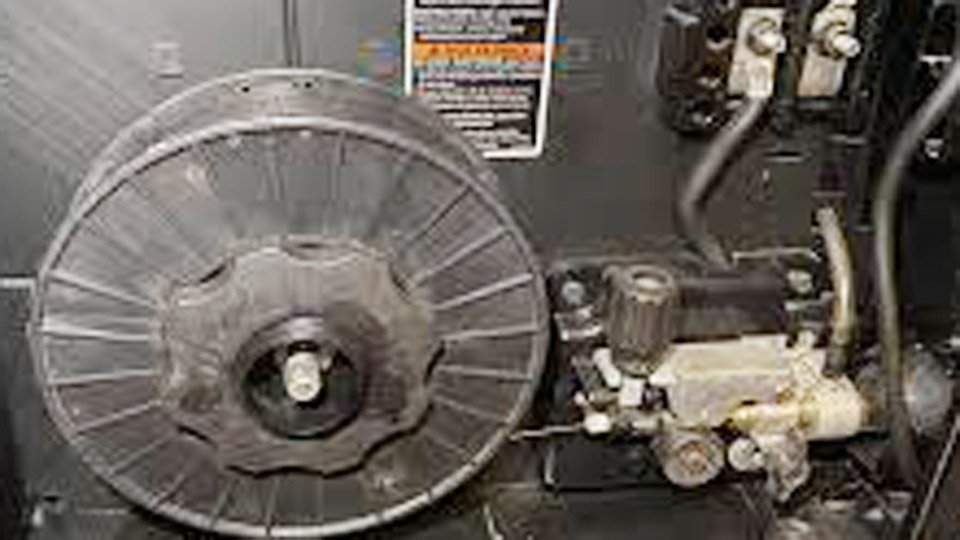
Image by I See You Don’t Know Shit About Welding
Common Symptoms of Wire Feed Malfunctions in Hobart MIG Welders
Wire feed failures manifest in distinct patterns tied directly to mechanical resistance, electrical output, or component wear. Recognizing the exact symptom narrows the root cause faster than random part swapping.
Complete Loss of Wire Feed
No wire emerges when the gun trigger pulls, even though the fan runs and gas solenoid clicks. In Handler models, this often traces to open trigger leads, a seized drive motor, or blocked path from inlet guide to contact tip. Voltage at the motor pins drops to zero if the control board’s PTC thermistor has tripped from repeated overloads caused by dirty liners.
Intermittent or Pulsing Feed Rates
Wire surges then stalls, creating uneven bead profiles and burn-back into the tip. Pulsing links to inconsistent drive roll grip, voltage spikes on the speed control potentiometer, or partial liner restrictions that build friction until the motor bogs down. On 115V units, household circuit voltage sag under load amplifies the issue.
Bird Nesting at the Drive Rolls
Wire tangles into a compressed ball behind the rolls instead of advancing. This occurs when roll pressure exceeds the liner’s ability to accept the wire, or when spool drag fights the feed motor. Flux-cored wire amplifies it due to higher stiffness and the need for VK-groove rolls.
Excessive Wire Slippage or Over-Speed
Rolls spin but wire barely moves, or it shoots out too fast regardless of the speed dial. Slippage stems from under-tensioned rolls or mismatched groove size, while over-speed points to a failed potentiometer or shorted speed control transistor allowing full voltage to the motor.
Verifying Drive Roll Compatibility and Condition
Drive rolls must match wire diameter and type exactly—mismatches create 80% of feeding complaints on Hobart handlers. Incorrect grooves crush solid wire or fail to grip flux-cored.
Selecting the Correct Groove and Roll Type for Your Wire
Use V-groove rolls for solid wire (.023–.035 in.) and VK-knurled grooves for flux-cored (.030–.045 in.). Handler 190 and 140 models ship with dual-groove rolls stamped .030/.035; flip the roll 180° after loosening the tension arm to switch grooves.
Aluminum demands U-groove to prevent surface marking. Always confirm the stamped size faces outward after installation: push the roll onto the retaining pin, rotate ¼ turn to lock.
| Wire Type | Diameter | Recommended Groove | Notes |
|---|---|---|---|
| Solid Steel | .023–.025 in. | V-groove | Light pressure; no crushing |
| Solid Steel | .030–.035 in. | V-groove | Standard for most MIG jobs |
| Flux-Cored | .030–.035 in. | VK-knurled | Higher tension (1.5–2 turns) |
| Flux-Cored | .045 in. | VK-knurled | Heavier pressure; check liner |
| Aluminum | .030–.035 in. | U-groove | Polished rolls; minimal tension |
Inspecting for Wear, Debris, and Misalignment
Remove the inlet guide and inspect rolls for flat spots, embedded wire fragments, or groove widening beyond 0.002 in. over spec. Debris from crushed wire or flux accumulates in the guide tubes; blow out with 90–100 psi compressed air. Realign the inlet guide within ⅛ in. of the rolls—any gap lets wire buckle on startup.
Adjusting Drive Roll Tension for Consistent Feeding
Tension balances grip against wire deformation. Official Handler manuals specify 1-½ to 2 on the pressure indicator for flux-cored; solid wire runs lighter.
Fully loosen the tension knob. Thread wire through the inlet guide and drive rolls with the gun cable straight. Set wire feed speed to 40–50% and pull the trigger while holding moderate hand resistance on the wire end (equivalent to 10–15 lb pull).
Tighten until rolls stop slipping but still allow the wire to stall if you pinch it firmly. Add no more than ¼ turn past this point—over-tension flattens the wire, sheds copper dust into the liner, and shortens tip life by 50%. Test by feeding 12 in. of wire into a rag; smooth advancement without hesitation confirms correct pressure.
Cleaning and Maintaining the Wire Path Components
Contaminants in the feeder housing create drag that compounds over time. Every 50 lb of wire or quarterly, perform full cleaning.
Removing and Inspecting Drive Roll Guides
Disassemble the pressure arm and inlet/outlet guides. Wire brush any embedded particles; replace guides showing oval wear holes. Reinstall with the inlet guide as close as possible to the rolls without contact—gaps here cause initial buckling.
Blowing Out Debris from the Feeder Housing
Remove the drive roll assembly and use compressed air to clear dust from the motor shaft and bearings. Vacuum the spool hub area; flux-cored residue builds fastest here. Lubricate only the hub bearing per manual—never grease the drive rolls.
Diagnosing and Repairing Liner and Gun Issues
The gun and liner account for the majority of persistent feed problems once mechanical checks pass. Restrictions here multiply motor load until the PTC trips.
Checking Liner Length, Fit, and Internal Restrictions
Liner length must seat flush in the diffuser with zero gap—too short allows wire to buckle; too long kinks at the connection. For standard 10–12 ft guns, cut new steel liners square and deburr ends. Push a clean wire through by hand; resistance indicates internal copper buildup or kinks. Replace every 100–150 lb of solid wire or 50 lb of flux-cored.
Replacing Worn Contact Tips and Diffusers
Match tip bore exactly to wire diameter: a .035 tip for .035 wire. Worn bores become oblong (“keyholing”), causing arcing inside the tip and burn-back. Remove nozzle, unscrew tip, and inspect diffuser O-rings for cracks. Install new tip hand-tight plus ¼ turn; apply anti-spatter sparingly inside the nozzle only.
Straightening Gun Cable and Verifying Connections
Lay the cable flat and check for kinks or sharp bends that increase friction. Disconnect the gun power pin at the machine and inspect for corrosion. Re-seat firmly; loose pins create intermittent contact that mimics motor failure.
Addressing Electrical Control Failures in Hobart Handlers
When mechanical and gun checks pass but feed remains erratic, the issue shifts to the speed control board or trigger circuit—common on older Handler 135/140/175 units.
Testing Trigger Circuit Integrity
Unplug the two trigger leads at the machine and short them with the power on. If wire feeds normally, the gun switch or cable is faulty. Measure continuity across the gun trigger while pulling; infinite resistance means replace the switch assembly.
Common Speed Control Board Repairs (PTC, Transistor)
Intermittent slowdown followed by complete stop often indicates a tripped PTC thermistor or failed drive transistor (TIP142 on many boards).
Test motor directly with 12V DC across the terminals—if it runs smoothly, replace the board components or the entire board (kits cost under $20). Avoid repeated resets; address the root cause (usually restricted liner) first.
Overheat Protection and Power Supply Checks
Handler transformers include thermal protection that cuts feed during overload. Confirm the voltage selector switch sits fully in one detent. On 115V models, verify outlet delivers stable 110–120V under load—brownouts drop motor torque dramatically.
Optimizing Wire Spool Setup and Material Choices
Spool-related drag compounds every other variable. Proper hub tension prevents backlash without fighting the motor.
Matching Wire Diameter, Type, and Spool Size
Use 4 in. or 8 in. spools with the correct adapter ring. Larger 10–12 lb spools require slightly higher hub tension to control inertia. Always match wire to machine capacity: Handler 190 handles up to .045 in. flux-cored at full duty cycle when everything else is tuned.
Setting Spool Hub Tension Correctly
Tighten the spool brake until the spool requires slight finger force to rotate by hand but coasts no more than ½ turn when spun. Excessive brake creates bird nests; too loose lets the spool overrun during stops.
When to Escalate to Professional Repair or Replacement
After verifying all mechanical, gun, and basic electrical points, direct-test the feed motor with 3V DC applied to its leads. No rotation means motor replacement.
Persistent board failures on high-duty-cycle work justify upgrading to a newer Handler MVP or outsourcing board service. Track wire consumption per tip and liner change to predict failures before they halt production.
Final Thoughts
Consistent Hobart wire feed depends on matching every component—drive roll groove to wire type, tension to application, and liner length to gun—while keeping electrical variables stable. Prioritize mechanical and gun checks; they resolve 85% of cases without tools or parts.
The advanced insight: treat liner wear as a consumable tied to wire volume, not calendar time. In high-production or multi-shift environments, pre-cut and pre-install replacement liners every 75 lb of flux-cored wire to eliminate unplanned downtime and maintain constant tip-to-work distance for repeatable penetration.
Frequently Asked Questions
Why does my Hobart Handler 140 wire feed stop intermittently even after cleaning the liner?
Intermittent stops usually trace to a failing speed control transistor or tripped PTC on the board after repeated overloads from partial restrictions. Test by shorting the trigger leads; if feed returns consistently, replace the gun switch or control board components rather than the liner again.
How do I know when to replace the drive rolls on my Hobart MIG welder?
Replace when grooves show measurable wear (over 0.002 in. widening), flat spots appear, or wire consistently slips at proper tension. Dual-groove rolls on Handler models last 200–300 lb of wire before performance drops.
What causes bird nesting specifically on flux-cored wire in Hobart welders?
Bird nesting on flux-cored wire results from excessive drive roll pressure combined with a slightly oversized or dirty liner. Use VK-knurled grooves, set tension to 1.5–2 on the indicator, and ensure liner ID matches the wire diameter exactly.
Can voltage fluctuations at home affect Hobart welder wire feed speed?
Yes—115V models lose torque when outlet voltage drops below 110V under load, causing the motor to slow or stall. Use a dedicated 20A circuit and confirm stable voltage with a multimeter during trigger pull to rule out household wiring issues.

Hi, I’m Zachary Ford. I’m passionate about welding and dedicated to helping both beginners and experienced welders make informed decisions. I research, test, and write about welding helmets, welding machines, safety equipment, and essential workshop tools. My goal is to provide honest reviews, practical buying guides, and easy-to-follow tutorials that help you weld more safely, work more efficiently, and choose the right gear with confidence.