
You’re midway through a structural repair on heavy equipment when the weld bead cracks along the toe under light vibration. Or you’re tacking thin sheet metal for a custom bracket and the arc wanders, leaving undercut and porosity.
In both cases, the root cause is almost always the wrong choice among the different types of welding rods. These consumables—whether flux-coated electrodes for SMAW or bare filler rods for TIG—control arc stability, penetration, slag behavior, hydrogen levels, and final mechanical properties.
Pick incorrectly and you lose strength, face rework, or fail code requirements. Pick correctly and you achieve consistent, code-compliant welds on mild steel, stainless, aluminum, or cast iron using whatever power source sits in your shop.
This guide delivers the technical details welders actually need: AWS classifications decoded, real amperage ranges by diameter, polarity requirements, position limitations, and decision criteria tied directly to base metal, joint design, and equipment. No fluff—just the data that drives better decisions on the bench or in the field.
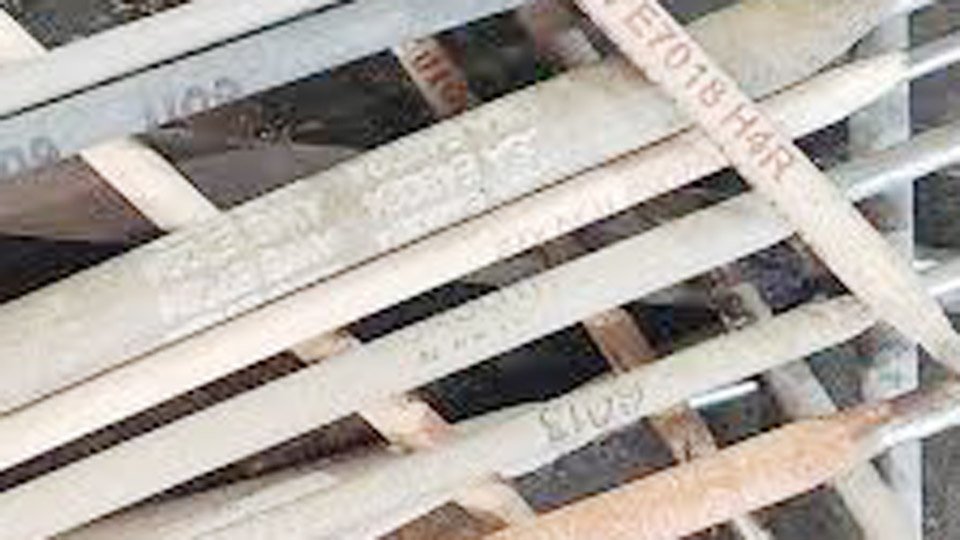
Image by canadianmetalworking
Decoding AWS Classifications for Welding Rods
Every electrode or filler rod follows a standardized AWS numbering system that packs critical performance data into a short code. Understanding it eliminates guesswork when matching rod to job.
What the EXXXX Code Actually Tells You
The letter E confirms it is an electrode (consumable and carries current). The first two digits give minimum tensile strength in ksi—for example, 60 equals 60,000 psi, 70 equals 70,000 psi.
The third digit defines usable positions: 1 means all positions (flat, horizontal, vertical, overhead), 2 limits to flat and horizontal, and 4 adds vertical-down capability.
The final digit or digits specify coating type, polarity, and operating characteristics. Suffixes like -1 add improved toughness, -H4 caps diffusible hydrogen at 4 ml/100 g, and L indicates low carbon to reduce sensitization in stainless.
Coating Types and Their Impact on Arc Behavior
Cellulose coatings (E6010, E6011) generate high gas volumes for deep penetration and a digging arc that cuts through mill scale or light rust. Rutile coatings (E6013) produce a smooth, stable arc with easy slag release and minimal spatter—ideal when appearance and ease matter more than penetration.
Low-hydrogen coatings (E7018 series) minimize moisture-related cracking by keeping diffusible hydrogen low; they require strict storage but deliver superior ductility and toughness on thick sections or high-restraint joints. Iron-powder additions (E7024) boost deposition rates up to 30 % higher than standard rods while maintaining medium penetration.
These distinctions dictate everything from travel speed to post-weld heat treatment requirements.
Cellulose-Coated Rods: E6010 and E6011 for Maximum Penetration
When joint access is limited or the root pass must fuse completely into the back side, cellulose rods deliver the forceful arc needed.
E6010 Performance on DC Power Sources
E6010 runs exclusively on DCEP (DC electrode positive). Its sodium-based cellulose flux creates a tight, forceful arc with deep penetration and fast-freeze characteristics. Use it for open-root pipe welds, root passes on plate, or any joint where complete fusion without backing is mandatory.
Typical tensile strength reaches 60 ksi minimum. On 1/8-inch diameter, set 90–130 A; on 5/32-inch, 140–190 A. Maintain a 1/8- to 3/16-inch arc length and use a whipping or back-step motion to control the puddle and prevent slag inclusions. It excels on mild steel but leaves a thin, friable slag that removes easily.
E6011 as the AC-Compatible Field Option
E6011 adds potassium to the cellulose coating, allowing stable operation on AC or DCEN. Penetration remains deep, but the arc is slightly less digging than E6010. It shines on farm equipment repairs, outdoor maintenance, or when your machine lacks DC output.
Amperage ranges overlap E6010: 85–125 A for 1/8-inch rod. Slag is similar but slightly heavier; drag the electrode at a 10–15° trailing angle for best results. Both rods tolerate light contaminants better than low-hydrogen types but produce more spatter, requiring post-cleaning before multi-pass work.
Choose E6010 when DC is available and maximum root penetration is non-negotiable. Switch to E6011 only when AC is the only option or portability limits power-source choice.
Rutile Rods for Easy Operation and Thin Materials
When the priority is a forgiving arc, clean bead appearance, and minimal post-weld cleanup, rutile electrodes outperform cellulose types.
E6013 on Sheet Metal and Light Fabrication
E6013 uses a potassium rutile coating that produces a soft, stable arc with light to medium penetration and fast-freeze slag. It runs on AC or DC (either polarity) and works well in all positions. On material under 3/16 inch thick, it prevents burn-through where E6010 would blow holes.
For 3/32-inch rod, dial 40–70 A; for 1/8-inch, 70–110 A; for 5/32-inch, 110–150 A. Drag technique with a 10–20° angle yields flat beads and easily removable slag. Tensile strength meets 60 ksi. It is the go-to rod for auto body panels, light structural frames, or hobby projects where appearance matters more than ultimate strength.
Avoid E6013 on thick sections or high-restraint joints—its lower penetration and moderate strength limit load-carrying capacity compared with E70XX rods.
Low-Hydrogen Electrodes for Structural and Critical Applications
E7018 series rods dominate structural steel, pressure vessels, and any weld subject to vibration, impact, or code inspection.
E7018 Characteristics and Storage Requirements
The low-hydrogen potassium coating with iron powder (designator 8) delivers medium penetration, smooth arc, and low spatter. Minimum tensile strength is 70 ksi with excellent ductility and toughness. It runs on AC or DCEP. For 1/8-inch diameter, use 90–150 A; 5/32-inch runs 130–220 A.
A slight drag technique (electrode touching the plate) keeps the arc stable and slag fluid. Store rods in a 250–300 °F rod oven; once exposed, re-bake at 500–800 °F for 1–2 hours if hydrogen cracking risk exists. Suffixes like E7018-1 add extra toughness for low-temperature service; E7018-H4 limits hydrogen even further for critical work.
When to Upgrade from E60XX to E70XX
Switch to E7018 when base metal exceeds 3/8 inch thick, when joints experience cyclic loading, or when AWS D1.1 structural code applies. The higher strength and low-hydrogen deposit prevent delayed cracking that E6013 cannot resist. On multi-pass welds, maintain interpass temperature below 350 °F and clean slag between passes to avoid inclusions.
High-Deposition Rods for Flat and Horizontal Production Welding
E7024 electrodes maximize pounds of weld metal per hour when position allows flat or horizontal work.
Iron-powder additions to the rutile coating increase deposition rates while keeping the arc smooth. Use on heavy plate fabrication, shipbuilding, or any high-volume fillet welds. Amperage runs higher: 1/8-inch at 100–160 A, 5/32-inch at 150–250 A.
Travel speeds increase 20–30 % over standard rods. Slag is voluminous but peels cleanly. Tensile strength meets 70 ksi. Limit use to flat and horizontal fillets—out-of-position capability drops sharply.
Welding Rods for Stainless Steel: Matching Chemistry to Base Metal
Stainless applications demand exact alloy matching to preserve corrosion resistance and avoid cracking.
E308L and E316L SMAW Electrodes
E308L suits 304/304L base metal; E316L pairs with 316/316L. The L suffix keeps carbon below 0.03 % to prevent carbide precipitation and sensitization in the heat-affected zone. Both run on AC or DCEP with low-hydrogen coatings.
Typical amperage for 1/8-inch rod is 70–120 A. Use stringer beads with minimal weave to control heat input below 1.5 kJ/mm. Post-weld cleaning with stainless wire brush or pickling paste restores the passive layer.
TIG Filler Rods for Stainless: ER308L and ER316L
For GTAW, select bare ER308L or ER316L rods (AWS A5.9). Diameters range from 1/16 to 3/32 inch. Feed manually at 1–2 inches per second while maintaining 1/8-inch arc length.
Argon shielding at 15–20 CFH prevents oxidation. These fillers match SMAW chemistry but produce cleaner, lower-heat welds ideal for thin stainless or food-grade applications.
Aluminum Welding Rods: Addressing Oxide Layer and Heat Sensitivity
Aluminum requires fillers formulated to break the tenacious oxide layer and match alloy strength.
ER4043 vs ER5356 Filler Selection
ER4043 (5 % silicon) offers excellent fluidity and crack resistance for 6xxx series alloys and castings. Use it when appearance and ease of welding matter. ER5356 (5 % magnesium) delivers higher tensile strength and better corrosion resistance in marine environments but is more prone to hot cracking if dilution is high.
Both run in TIG or MIG. For TIG, 1/16-inch rod at 80–120 A with AC balance set to 70 % EN cleans the oxide effectively. Pure argon or argon-helium mixes improve puddle control on thicker sections.
Keep heat input low—aluminum conducts heat rapidly and distorts easily. Back-purge with argon on pipe or tank welds to prevent oxide formation on the root side.
Specialty Rods for Cast Iron and Hardfacing
Cast iron demands nickel-based or high-nickel rods to accommodate expansion differences and prevent cracking.
ENi-CI (pure nickel) or ENiFe-CI (nickel-iron) electrodes produce machinable welds with minimal preheat (200–400 °F). Short stringer beads and peening while hot reduce residual stresses.
For hardfacing, select chromium-carbide or cobalt-based rods matched to abrasion or impact requirements—amperage typically 20 % higher than standard mild-steel rods.
Practical Comparison Table for Common Welding Rods
| Rod Type | AWS Class | Tensile (ksi) | Polarity | Positions | Typical Amperage (1/8″) | Best For | Key Limitation |
|---|---|---|---|---|---|---|---|
| Cellulose | E6010 | 60 | DC+ | All | 90–130 | Root passes, pipe | DC only, higher spatter |
| Cellulose | E6011 | 60 | AC/DC | All | 85–125 | Field repairs, dirty metal | Slightly less penetration |
| Rutile | E6013 | 60 | AC/DC | All | 70–110 | Thin sheet, general fabrication | Lower strength on thick plate |
| Low-Hydrogen | E7018 | 70 | AC/DC+ | All | 90–150 | Structural, high-restraint | Moisture sensitive |
| High-Deposit | E7024 | 70 | AC/DC | Flat/Horiz | 100–160 | Production fillets | Poor out-of-position |
| Stainless | E308L | 75 | AC/DC+ | All | 70–120 | 304 series | Heat control critical |
Use this table as your quick-reference decision tool before striking an arc.
Real-World Decision Framework for Rod Selection
Match rod tensile strength to or above base metal. On mild steel under 3/8 inch with clean surfaces and AC power, start with E6013. On thicker material or when code requires 70 ksi minimum, move to E7018.
For stainless or aluminum, chemistry match overrides strength numbers. Always verify power-source output against recommended polarity and amperage—undercurrent causes lack of fusion; overcurrent causes burn-through or excessive spatter.
Decision-Making Summary and Pro-Level Takeaway
Choose welding rods by first confirming base-metal grade and thickness, then matching AWS classification to required tensile strength, position, and power source.
Cellulose rods solve penetration problems on root passes; rutile rods deliver speed and appearance on light work; low-hydrogen rods provide the toughness critical welds demand. Store low-hydrogen electrodes properly and maintain strict interpass cleaning on multi-pass joints.
The advanced insight that separates consistent pros from weekend welders is this: treat every rod as a metallurgical bridge between base metals.
When chemistry, hydrogen control, and heat input align exactly with service conditions—whether cyclic loading at -40 °F or corrosive exposure in a chemical plant—your welds achieve not just code compliance but true engineered performance that outlasts the material itself.
FAQ
What is the main difference between E6010 and E7018 welding rods?
E6010 provides deep penetration and fast-freeze characteristics for root passes but only 60 ksi tensile strength and runs on DC+ only. E7018 delivers 70 ksi strength, low-hydrogen deposits, and superior toughness for structural work while allowing AC or DC+ operation.
Can E7018 rods be used on an AC-only welder?
Yes—most modern E7018 electrodes are formulated for AC or DCEP. Check the manufacturer data sheet; if the last digit is 8, AC capability is built in. Maintain proper amperage and use a slight drag technique.
How do I select amperage for different diameter welding rods?
Start with the manufacturer’s range for the specific rod and diameter, then adjust ±10 % based on material thickness and joint fit-up. A reliable baseline is approximately 1 amp per 0.001 inch of rod diameter, fine-tuned by watching puddle fluidity and travel speed.
What welding rod works best on rusty or dirty mild steel?
E6011 cellulose rods handle light rust, oil, and mill scale better than most because of their forceful digging arc and gas shield. Clean heavy scale first for optimal results, but E6011 forgives more contamination than rutile or low-hydrogen types.

Hi, I’m Zachary Ford. I’m passionate about welding and dedicated to helping both beginners and experienced welders make informed decisions. I research, test, and write about welding helmets, welding machines, safety equipment, and essential workshop tools. My goal is to provide honest reviews, practical buying guides, and easy-to-follow tutorials that help you weld more safely, work more efficiently, and choose the right gear with confidence.