
Can You Plasma Cut Galvanized Steel? Yes, but doing it correctly requires understanding how the zinc coating behaves under high heat. Plasma cutting easily penetrates galvanized steel, but the process vaporizes the zinc layer, which introduces safety risks, cut quality issues, and potential rework if not controlled.
In real welding and fabrication environments, improper handling can lead to excessive dross, poor edge finish, and contamination that affects downstream welding performance and arc stability.
This topic matters because galvanized materials are widely used in structural, automotive, and outdoor applications, where maintaining corrosion resistance is critical. Removing or damaging the coating during cutting can create long-term durability problems if not addressed properly.
In this guide, you’ll learn what actually happens when plasma meets galvanized steel, the key risks involved, and how to control cut quality, safety, and post-cut preparation for reliable results.
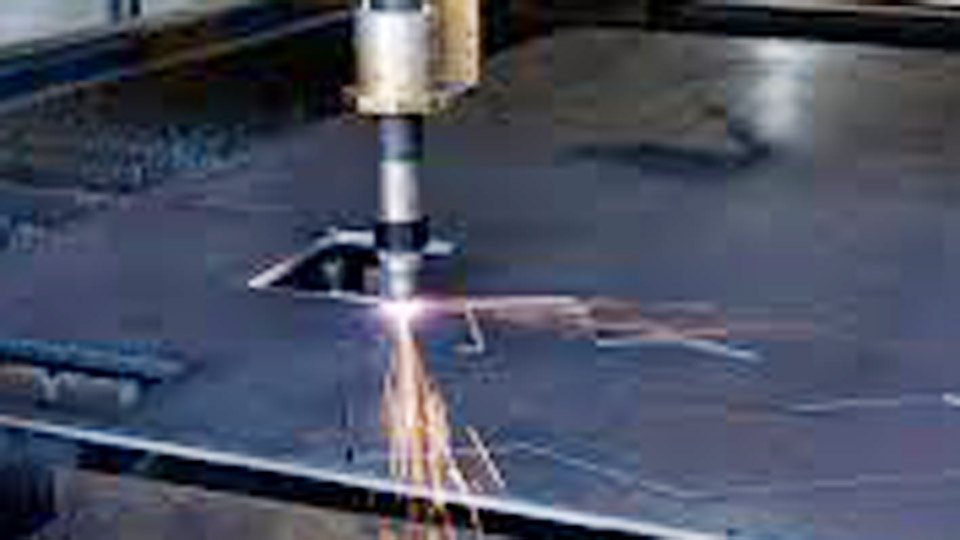
Image by umetalsandparts
Why Galvanized Steel Demands Special Plasma Cutting Handling
Galvanized steel carries a hot-dip zinc layer (typically G60 to G90, equating to 0.8–1.25 oz/ft² or roughly 0.001–0.002 in. per side) that protects against corrosion but vaporizes instantly under the 20,000–30,000 °F plasma arc. That vapor becomes zinc oxide fume—the primary driver of metal fume fever.
Shops producing galvanized HVAC ductwork or agricultural equipment plasma cut thousands of linear feet weekly using downdraft tables that capture 99 % of the particulate.
The process works because the zinc layer is thin enough that it does not drastically alter arc voltage or travel speed compared with bare mild steel of the same thickness. However, the vaporized zinc increases dross adhesion and requires tighter standoff control to prevent nozzle spatter.
How the Zinc Coating Interacts with the Plasma Arc
The plasma arc ionizes air (or nitrogen) to create a conductive column that melts the steel substrate. Zinc, with its lower melting point (787 °F) and boiling point (1,665 °F), flashes off first, creating a localized cloud of metal vapor that cools into fine oxide particles.
These particles raise the local conductivity slightly, which can widen the kerf by 0.005–0.010 in. on thin sheet and promote top-side spatter.
On thicker material (¼ in. and above), the zinc effect is negligible because the arc energy overwhelms the coating volume. Real-world testing on Powermax and similar systems shows arc voltage rises only 2–4 V higher than mild steel when cutting new galvanized sheet, confirming the process remains stable once you dial in standoff.
Critical Safety Considerations Before You Power Up
Zinc Fume Hazards and Metal Fume Fever
Zinc oxide fume is the dominant exposure risk. Inhaling it triggers metal fume fever—flu-like symptoms (fever, chills, muscle aches, metallic taste) that appear 4–12 hours after exposure and resolve in 24–48 hours with fresh air. Chronic overexposure irritates the respiratory tract and can exacerbate asthma.
OSHA sets the permissible exposure limit (PEL) for zinc oxide fume at 5 mg/m³ as an 8-hour time-weighted average. Plasma cutting galvanized sheet in an unventilated shop routinely exceeds this within minutes because the operator stands directly in the plume.
Ventilation and Extraction Requirements
Downdraft tables rated for at least 1,200–1,500 cfm per linear foot of table width are the industry standard for production cutting. The system must pull fumes downward through the slats before they rise into the breathing zone. For handheld work, position a portable fume extractor arm within 12 in. of the torch and maintain 800–1,000 fpm capture velocity.
Outdoors, a strong cross-breeze or box fan blowing fumes away from you is acceptable for short runs; indoors, mechanical ventilation is mandatory. Never rely on a respirator alone—use it as backup when extraction cannot achieve full capture.
PPE and Respiratory Protection for Plasma Operators
Minimum PPE includes shade 5–6 auto-darkening helmet, flame-resistant gloves, and leather sleeves. For galvanized specifically, add a P100 or NIOSH-approved respirator with metal-fume-rated cartridges whenever local exhaust cannot keep levels below 5 mg/m³.
Full-face supplied-air respirators are required in confined spaces or when cutting large volumes without downdraft. Monitor air quality with a real-time particulate meter during the first few cuts of a new job to confirm controls are effective.
Optimizing Plasma Cutter Settings for Galvanized Steel
Baseline Settings from Mild Steel Charts
Start with your machine’s mild-steel cut chart and treat galvanized as equivalent thickness. The zinc layer adds negligible thermal mass. Example baseline values (derived from Hypertherm Powermax-style charts for air plasma, shielded consumables):
| Thickness | Amperage | Torch-to-Work Distance | Initial Pierce Height | Pierce Delay (sec) | Best-Quality Cut Speed (ipm) | Kerf Width (in.) |
|---|---|---|---|---|---|---|
| 16 ga (0.060 in.) | 45 A | 0.06 in. | 0.15 in. | 0.1 | 220–280 | 0.055 |
| 14 ga (0.075 in.) | 45–65 A | 0.06–0.08 in. | 0.20 in. | 0.2 | 180–240 | 0.060 |
| ⅛ in. (0.125 in.) | 65 A | 0.08 in. | 0.25 in. | 0.3 | 90–120 | 0.065 |
| ¼ in. (0.250 in.) | 85 A | 0.10 in. | 0.30 in. | 0.5 | 45–55 | 0.075 |
These are starting points. Actual performance depends on machine model, consumable condition, and input air quality (dry, 90–110 psi).
Adjustments for Coating Thickness and Dross Control
Newly galvanized sheet often produces 20–30 % more bottom dross than bare mild steel because vaporized zinc re-condenses and sticks to the cut edge. Increase travel speed by 5–10 % over mild-steel recommendations to shear the molten pool before it solidifies.
Drop amperage one step (e.g., 45 A instead of 65 A on ⅛ in. material) when using fine-cut consumables for thinner gauges—this reduces heat input and minimizes top spatter. Maintain exact standoff; even 0.020 in. variation widens the kerf and drags dross.
For heavily rusted or weathered galvanized, grind the coating in the pierce zone only—full-surface grinding is unnecessary and wastes time.
Amperage, Speed, and Gas Flow Recommendations by Thickness
On 16–18 ga sheet, run 40–45 A with fine-cut nozzles and 150–200 ipm to achieve near dross-free edges. At ⅛–¼ in., shift to 65–85 A and 50–90 ipm while keeping air flow at manufacturer spec (typically 300–400 scfh). Higher gas flow (if your machine allows) helps blow zinc vapor clear of the kerf.
Always perform a test cut on scrap from the same heat and coating batch; adjust speed in 10 ipm increments until the bottom edge shows clean separation with minimal hanging slag.
Troubleshooting Cut Quality Issues Specific to Galvanized Steel
Managing Increased Dross Formation
Low-speed dross appears as thick, bubbly beads along the bottom edge when travel speed is too slow for the amperage. Raise speed until sparks exit straight down and the cut line shows a slight backward drag angle (3–5°).
High-speed dross shows as a thin, hard bead on the bottom when speed exceeds the arc’s ability to melt through—slow down 10–20 ipm and verify pierce delay. Top spatter is almost always standoff-related; lock the torch height rigidly on CNC tables or use a drag shield on hand torches.
Achieving Consistent Edge Quality Across Thicknesses
Galvanized sheet thickness tolerance (±0.005 in.) and coating variation can shift optimal speed by 15 ipm. Run a series of test strips at 10 ipm increments across the sheet and record the speed that delivers the smallest kerf taper (under 3°) and least dross.
On CNC tables, program a “galvanized offset” recipe that automatically adds 5–8 % speed and 0.010 in. extra cut height compared with mild steel. Inspect every 10 linear feet; consumables wear 10–15 % faster on galvanized due to zinc vapor abrasion.
Preparing Plasma-Cut Galvanized Edges for Welding
Removing Zinc Residue Effectively
The cut edge retains a thin zinc oxide layer and some embedded zinc that will vaporize during welding, causing porosity in MIG or TIG beads. Grind or flap-disc the cut edge and a ¼ in. band on both faces back to bright steel using 80-grit abrasive.
For production, a pneumatic needle scaler or wire wheel on an angle grinder removes the coating in seconds without removing base metal. Avoid chemical strippers—they leave residues that contaminate the weld pool.
Impact on Weld Integrity and Porosity Prevention
Zinc in the weld pool creates gas pockets that appear as wormhole porosity or undercut. Removing the coating within ½ in. of the joint eliminates 95 % of this risk. When welding must occur over residual zinc (field repairs), use E7018 electrodes or ER70S-6 wire with higher manganese content to tie up zinc oxides.
Preheat to 200–300 °F on thicker sections to drive off moisture and residual zinc vapor before the puddle solidifies. Post-weld, the heat-affected zone will lose galvanizing protection—apply cold galvanizing compound or zinc-rich paint immediately to restore corrosion resistance.
When Plasma Cutting Isn’t the Optimal Choice for Galvanized Steel
Comparing to Laser, Oxy-Fuel, and Mechanical Methods
Fiber laser cutting produces superior edge quality on galvanized sheet with minimal dross and narrower kerf, but the zinc vapor still requires extraction and the machine cost is significantly higher. Oxy-fuel is slower, introduces more heat distortion, and still generates zinc fumes—avoid it for material under ⅜ in.
Mechanical methods (shear, punch, or abrasive saw) eliminate fumes entirely and are preferred for straight cuts on 16 ga and thinner where plasma’s speed advantage is marginal.
Application-Specific Decision Factors
Choose plasma when you need irregular contours, holes, or bevels on material ⅛ in. and thicker, or when shop volume justifies the fume-control investment. For one-off DIY projects without extraction, shear or saw the parts and skip plasma entirely.
In high-production HVAC or agricultural fabrication, plasma remains the most economical once downdraft tables and proper PPE are in place.
Wrapping Up
Plasma cutting galvanized steel is a routine, high-productivity operation when you treat the zinc coating as a process variable rather than an afterthought. Match your settings to the material thickness using mild-steel charts as the foundation, enforce rigorous fume extraction to stay under the 5 mg/m³ PEL, and always grind the cut edges before welding.
Shops that follow these exact parameters achieve clean, dross-minimal edges and zero downtime from fume-related health complaints. The advanced insight that separates pros from hobbyists: the same zinc vapor that creates the hazard also acts as a visual indicator—watch the color and density of the plume rising from the kerf.
A tight, white-to-gray stream means your extraction is winning; a diffuse blue haze means you need to stop, adjust capture velocity, and re-test before continuing. Master that visual cue and you’ll cut galvanized faster, cleaner, and safer than 90 % of the industry.
FAQs
Does plasma cutting galvanized steel require different consumables than mild steel?
No. Standard air-plasma shielded or fine-cut consumables work identically. The zinc simply accelerates electrode and nozzle wear by 10–15 %, so plan on changing them 10–20 % sooner than mild-steel schedules.
Can I weld directly on plasma-cut galvanized edges without grinding?
You can, but expect porosity and undercut. Grind or wire-brush the joint area to bright metal first—30 seconds of prep prevents hours of rework or weld failure.
Is it legal to plasma cut galvanized indoors without fume extraction?
Only if monitoring proves exposure stays below OSHA’s 5 mg/m³ PEL. Most inspectors require local exhaust or supplied-air respirators for any sustained cutting of zinc-coated material indoors.
How much faster is plasma than mechanical cutting on galvanized sheet?
Plasma is 5–10× faster on complex shapes and 2–3× faster on straight cuts versus abrasive saws. The real bottleneck is usually post-cut cleanup and fume management time, not the cut itself.

Hi, I’m Zachary Ford. I’m passionate about welding and dedicated to helping both beginners and experienced welders make informed decisions. I research, test, and write about welding helmets, welding machines, safety equipment, and essential workshop tools. My goal is to provide honest reviews, practical buying guides, and easy-to-follow tutorials that help you weld more safely, work more efficiently, and choose the right gear with confidence.