
As an Amazon Associate, we earn from qualifying purchases. This post contains affiliate links – if you buy through them, we may earn a commission at no extra cost to you.
Finding the right spot welding clamps can be confusing because the market is filled with specialized tools for very different jobs. Some are meant for holding thin sheet metal edges, while others are designed for heavy-duty battery assembly or electrical shunting. The following sections detail which tool matches your task. We examine materials, capacity, and features to help you choose.
What Actually Matters
Clamping Capacity
This is the maximum material thickness the tool can hold. You must match the clamp to your workpiece. If the tool is too small, you can’t bridge the gap; if it’s too large, it may not apply enough pressure for a precise, clean weld.
Material Construction
Welding tools face intense heat and stress. Look for high-grade steel or carbon steel for durability. Some specialized clamps include copper or alloy components to resist weld spatter, which keeps the tool clean and ensures the clamping mechanism doesn’t seize up after repeated use.
Specialized Functionality
Some clamps also create electrical paths. Certain models are designed to create a specific electrical path or shunt current to improve weld nugget formation. You should consult I-CAR repair guidelines to ensure your equipment meets the necessary standards for structural vehicle repairs.
Ease of Adjustment
A good clamp allows quick, secure adjustments. Look for features like wing nuts, hex key holes, or swivel pads. These allow you to fine-tune pressure and alignment to prevent shifting during welding.
1. Butt Welding Clamps

Best for: Sheet Metal
These clamps are built from carbon steel and are designed to hold two metal panels edge-to-edge. The adjustable clamp block allows for a 0.4-inch gap, which helps when you need to align panels for patch repairs. The 24-pack is effective for holding multiple points simultaneously.
Pros
- Large pack size for multi-point holding
- Adjustable clamp block for precise gaps
- Hard and rust-proof carbon steel
- Convenient individual packaging
Cons
- Limited to thin sheet metal
- Not for structural bar stock
2. IRWIN VISE-GRIP Welding Clamp

Best for: Locking Pliers
The U-shaped jaw offers better visibility and space. The hex key hole allows precise pressure adjustment.
Pros
- U-shaped jaw for better visibility
- Precise pressure adjustment via hex key
- Durable heat-treated alloy steel
- Guarded trigger release for safety
Cons
- No copper-plated swivel pads
- Not for small battery jigs
3. Klutch 3-Pc. Spot Welding Clamp Set

Best for: Plug Welding
This set includes a plug weld plier and a claw clamp. Copper-plated swivel pads resist weld spatter buildup.
Pros
- Set includes three different clamp types
- Copper-plated pads resist spatter
- Designed for plug and spot welding
- Versatile claw clamp capacity
Cons
- Not for electrical shunting
- Limited battery assembly use
4. Shunting Pliers Clamp

Best for: Panel Bonding
This clamp is for squeeze-type resistance spot welding. Dual non-conductive washers ensure current flows through electrode contacts. The 150-amp rating makes it a specialized tool for professional auto body work.
Pros
- Rated for 150 Amps
- I-Car compliant design
- Non-conductive washers for safety
- Heavy-duty 20mm swivel pads
Cons
- Not for general hobby welding
- Specialized for specific welding types
5. Heltec Adjustable Battery Welding Fixture
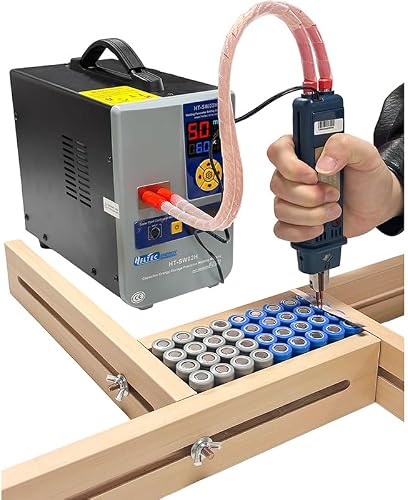
Best for: Battery Packs
This fixture uses a modular wooden design to hold cylindrical lithium batteries in place. It prevents shifting during welding, essential for maintaining alignment in large battery packs. It’s adjustable for various cell sizes, making it highly flexible for DIY energy projects.
Pros
- Adjustable for multiple battery sizes
- Stable positioning prevents shifting
- Durable wooden material
- Easy to assemble and configure
Cons
- Not for metal fabrication
- Wood material limits use
Who Should Buy Which
For general sheet metal fabrication, the Butt Welding Clamps are the most practical choice. Those assembling lithium battery packs should choose the Heltec Battery Welding Fixture. If you need a versatile set for plug welding and general clamping, the Klutch Plug Weld Pliers offer the best variety.
Mistakes That Catch Buyers Out
- Assuming a general-purpose clamp can safely replace a specialized electrical shunting tool for structural repairs.
- Focusing only on the number of clamps in a set rather than the specific material capacity needed for your project.
- Expecting a sheet metal clamp to provide the same stability as a heavy-duty locking plier when working with bar stock.
The Butt Welding Clamps are the most versatile for general sheet metal work, but always measure your material thickness before ordering to ensure the clamp gap is sufficient for your specific panels.
Related guides
- What is Gas Metal Spot Welding Typically Used for
- How to Weld Thin Metal With Flux Core
- What is Spot Welding? A Complete Guide
Frequently Asked Questions
Can I use these clamps for TIG welding?
Yes, most steel clamps work for TIG welding. However, avoid using clamps with plastic components near the arc, as the heat may damage them. Always prioritize all-metal construction for high-heat environments.
How do I prevent rust on my steel clamps?
Keep your clamps clean and dry after every use. A light coating of machine oil on the threads and moving parts can prevent rust and keep the adjustment mechanism moving smoothly.
What is the advantage of copper-plated pads?
Copper-plated pads are excellent for welding because they resist sticking to the weld spatter. This makes it much easier to clean the clamp and keeps the contact surface flat and consistent.
Can I use the battery fixture for other projects?
No, the battery welding fixture is designed specifically for cylindrical cells like 18650s. It lacks the clamping force and material strength required for metal fabrication or standard automotive repair tasks.
Do I need a shunt for all spot welding?
Not always, but shunting is vital for specific squeeze-type resistance spot welding to ensure current flows through the panel correctly. If your repair manual requires it, you must use a compliant tool.
Conclusion
Selecting the right equipment shouldn’t feel like a chore once you understand your specific project needs. Take a moment to inspect your workbench and identify which parts you’ll be joining first. You’ll find that having the proper tool makes your work safer and far more precise, so don’t hesitate to upgrade today.

Hi, I’m Zachary Ford. I’m passionate about welding and dedicated to helping both beginners and experienced welders make informed decisions. I research, test, and write about welding helmets, welding machines, safety equipment, and essential workshop tools. My goal is to provide honest reviews, practical buying guides, and easy-to-follow tutorials that help you weld more safely, work more efficiently, and choose the right gear with confidence.