
You’ve just positioned your electrode, tapped or scratched it on the workpiece, and nothing happens, no arc, no heat, just the rod freezing against cold metal or complete silence from the machine.
If you’re wondering why is my stick welder not arcing, the issue almost always traces to a broken circuit, insufficient energy delivery, or mismatched setup rather than a total machine failure.
This problem stops welds dead in their tracks for hobbyists running small 120V units and pros on 240V inverters alike. Resolving it quickly restores productivity and prevents wasted electrodes, but it demands checking electrical paths, settings, and consumables in the right order.
Proper arc initiation in shielded metal arc welding (SMAW) relies on 50–80V open-circuit voltage (OCV) to ionize the air gap, followed by sustained current flow once the arc stabilizes. Miss any link in that chain and the welder stays silent.
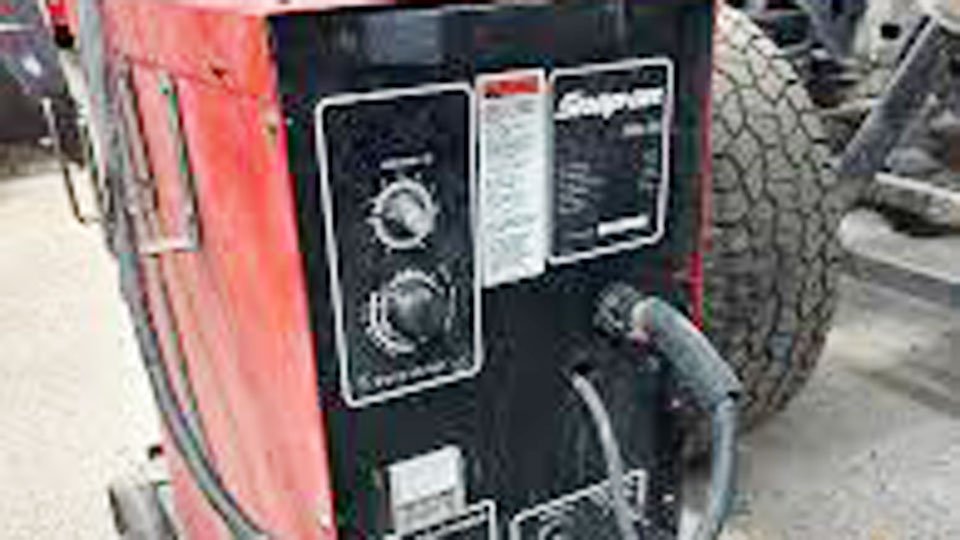
Image by Snap-on Tool Box Fans
Electrical Circuit Failures: The Most Common No-Arc Culprits
Most no-arc scenarios stem from incomplete current return paths rather than complex internal faults. The welder outputs voltage between electrode and ground, but without a low-resistance loop through the workpiece, no current flows and no plasma arc forms.
Ground Clamp Contact and Workpiece Surface Resistance
Start here because 70% of reported no-arc cases resolve with better grounding. The ground clamp must make direct, low-resistance contact with clean, bare metal. Rust, mill scale, paint, or oil creates high electrical resistance that prevents the initial current surge needed for arc initiation.
Scrape or grind a 2–3 inch spot at the clamp location until bright metal shows, then position the clamp as close as possible to the weld zone—ideally within 12–18 inches. On painted or galvanized steel, failure to remove coatings blocks electron flow entirely.
Test by attempting to strike an arc directly on the ground clamp jaws themselves; if it sparks there but not on the workpiece, the clamp-to-metal interface is the bottleneck.
Tighten the clamp jaws or replace if springs are weak—corroded clamps lose grip pressure over time and increase contact resistance above 0.1 ohms, enough to kill arc formation.
Cable Connections, Terminals, and Insulation Breaks
Loose Dinse connectors, frayed cable ends, or oxidized terminals create voltage drops that reduce available OCV below the 40–50V threshold needed for reliable starts. Inspect every connection from machine output studs to electrode holder and ground clamp.
Torque terminal nuts to manufacturer specs—typically 20–30 ft-lbs on mid-size machines. On older transformer units, check for broken strands inside the cable jacket; even 20% strand loss raises resistance dramatically.
Extension cords exacerbate this: a 50-foot 12-gauge cord on a 120V 80A welder drops 5–8V under load, pushing effective OCV too low for 1/8-inch rods. Use only dedicated 10-gauge or heavier cords rated for the full machine amperage, and keep runs under 25 feet when possible.
Power Source and Machine Configuration Problems
Once the circuit is complete, the machine itself must deliver the right voltage and current profile. Small inverter or 120V transformer machines often struggle here due to inherent design limits.
Amperage Selection Relative to Electrode Diameter and Type
Insufficient amperage is the top setting-related cause of no-arc or immediate sticking. The electrode core must reach melting temperature instantly upon contact; too-low current leaves the tip solid and fuses it to the plate.
Use these real-world amperage ranges for common mild-steel electrodes on 1/4-inch plate (adjust ±10A for thinner or thicker material):
| Electrode Type | Diameter (inches) | Typical Amperage Range (DCEP) |
|---|---|---|
| E6010 / E6011 | 3/32 | 40–85 |
| E6010 / E6011 | 1/8 | 75–125 |
| E6010 / E6011 | 5/32 | 110–160 |
| E6013 | 3/32 | 40–90 |
| E6013 | 1/8 | 70–120 |
| E7018 | 3/32 | 70–110 |
| E7018 | 1/8 | 110–150 |
| E7024 | 1/8 | 120–160 |
Dial the machine to the upper third of the range for easier starts, especially on cold metal or with new electrodes. On 120V machines limited to 80–100A output, restrict yourself to 3/32-inch rods—larger diameters simply demand more current than the supply can sustain without voltage sag.
Polarity and Process Mode Selection
Wrong polarity prevents stable arc formation because it alters heat distribution and ionization characteristics. Most common electrodes (E6010, E6011, E7018) require DCEP (electrode positive, reverse polarity)—current flows from workpiece to electrode, concentrating 70% of heat at the rod tip for proper flux melting and arc drive.
DCEN (straight polarity) works on a few electrodes like certain E6013 variants but produces a colder arc and poor penetration on others. AC works on many but delivers less forceful starts than DC. Double-check the machine’s polarity switch and electrode holder cable connection.
If the welder is accidentally left in TIG or MIG mode, the output characteristics change entirely—no constant-current behavior means no arc. Verify the process selector matches SMAW before every session.
Open Circuit Voltage (OCV) and Machine Capability Limits
OCV is the no-load voltage present at the terminals before striking. Machines below 50V OCV struggle to ionize the air gap, especially with larger rods or contaminated surfaces. Reputable inverters list 60–80V OCV for excellent starts; budget 120V units often hover at 40–55V and fail on anything beyond 3/32-inch E6013.
Engine-driven generators or older transformers may drop OCV further under load or with worn brushes. If your welder arcs on scrap but not on the actual job, voltage drop in long cables is usually the cause. Higher OCV machines (70V+) allow longer arc lengths and easier restarts mid-weld.
Electrode Condition and Storage Issues
Even perfect settings fail with compromised rods. The flux coating must provide gas shielding and ionization; any degradation stops the process.
Moisture Absorption and Proper Storage Requirements
Low-hydrogen E7018 electrodes absorb atmospheric moisture within hours of exposure, creating a high-resistance coating that refuses to conduct. Store them in a rod oven at 250–300°F or sealed containers with desiccant. Damp rods produce a hissing, unstable arc or none at all.
Quick test: if the flux feels chalky or leaves white residue when struck, replace the electrode. For general-purpose E6013 or E6011, moisture is less critical but still causes erratic starts after prolonged exposure.
Flux Coating Damage and Recessed Core Problems
New or partially used rods sometimes show the metal core recessed inside the flux—common after high-amperage runs that burn the core faster than the coating. The flux overhang prevents direct metal-to-metal contact needed for initial current flow.
Break off 1/8–1/4 inch of flux with pliers or strike the rod end sharply on a clean plate to expose fresh core. On cheap imported rods, manufacturing inconsistencies create uneven coatings that exacerbate this.
Striking Techniques and Machine Assist Features
Arc initiation is part electrical, part mechanical. Poor technique turns marginal settings into complete failures.
Scratch Versus Tap Methods for Consistent Starts
The scratch method (dragging the rod like a match) works best for cellulose rods (E6010/11) on machines with moderate OCV because it creates a longer initial contact area. The tap method suits low-hydrogen rods but requires quicker withdrawal—hesitate even half a second and the rod freezes.
Practice on scrap: maintain a 10–15° travel angle and pull away 1/8 inch immediately after contact. On vertical or overhead positions, the scratch method reduces sticking risk.
Hot Start, Arc Force, and Anti-Stick Controls on Modern Inverters
Many inverter machines include adjustable features that solve no-arc issues automatically. Hot start delivers a 20–50% current boost for 0.5–2 seconds at ignition to melt the electrode tip instantly—set it to 30–50% for difficult starts.
Arc force (also called dig or arc control) senses voltage drops during welding and injects extra amperage to prevent the electrode from shorting out mid-bead; 20–40% is typical for 1/8-inch rods. Anti-stick cuts output if the rod stays shorted longer than 1–2 seconds, preventing it from welding itself to the plate.
Consult your manual for exact percentages—overdoing arc force creates excessive spatter while under-setting mimics low-amperage behavior.
Advanced Diagnostics: Differentiating Machine Types and Internal Faults
Transformer machines hum loudly but deliver steady current; inverters are silent until the arc strikes. If your inverter shows normal LED indicators yet produces no output, check input voltage—many require 220–240V for full performance and drop to half output on 120V. On generator-driven units, inspect slip rings and brushes for wear; carbon dust buildup prevents proper excitation.
Persistent no-arc across multiple electrodes and workpieces points to internal diode or capacitor failure on inverters or shorted windings on transformers. At that stage, professional service is required—do not open the case yourself.
Real-World Decision Framework for Getting Back to Welding
Prioritize checks in this sequence: ground clamp and workpiece cleanliness first (90% of fixes), then amperage and polarity, electrode condition, and finally technique or machine features. For a 1/8-inch E7018 job on mild steel, clean the plate, set 125A DCEP, use dry rods from the oven, enable 40% hot start, and scratch-start with immediate lift.
This combination delivers reliable arc initiation even on marginal power supplies. The advanced insight pros rely on is understanding that OCV and arc force together determine start reliability more than raw amperage—invest in an inverter with 70V+ OCV and adjustable dig if you weld frequently, because it turns marginal setups into production-ready performance without constant fiddling.
FAQs
How do I fix a stick welder that arcs on scrap but not on the actual workpiece?
Clean a fresh spot for the ground clamp directly on bare metal and move the clamp closer to the weld zone. Voltage drop through dirty or distant ground paths kills the arc on real jobs even when test pieces work.
Can extension cords cause my stick welder to stop arcing completely?
Yes—long or undersized cords create voltage drop that lowers effective OCV below the ionization threshold. Use dedicated 10-gauge cable or shorter runs; never daisy-chain household extensions.
Why does my E7018 rod refuse to arc even at correct amperage?
Moisture in the coating is the usual suspect. Bake the rods or switch to fresh stock from a sealed container. Damp low-hydrogen electrodes lose their ability to ionize properly.
What machine settings help when a new inverter welder won’t strike an arc?
Increase hot start to 40–60% and arc force to 30–50%. These features compensate for marginal OCV and cold starts that basic transformer machines handle through sheer mass.
Hi, I’m Zachary Ford. I’m passionate about welding and dedicated to helping both beginners and experienced welders make informed decisions. I research, test, and write about welding helmets, welding machines, safety equipment, and essential workshop tools. My goal is to provide honest reviews, practical buying guides, and easy-to-follow tutorials that help you weld more safely, work more efficiently, and choose the right gear with confidence.