
Welders frequently discover that freshly painted galvanized structures begin peeling or blistering within months, especially in outdoor or humid environments.
The zinc coating reacts with moisture and contaminants to form oxides and hydroxides that destroy mechanical and chemical bonds between the metal and paint.
Learning how to clean galvanized metal before painting eliminates these failures by removing oils, passivators, zinc oxides, and weld residues while creating the precise surface profile needed for long-term adhesion.
Proper preparation turns a standard paint job into a high-performance duplex coating system that extends service life by 1.5 to 2.7 times compared to galvanizing or painting alone.
This guide delivers the exact technical decisions, material ratios, and sequencing that professional fabricators and field welders use to achieve consistent results across shop projects and structural repairs.
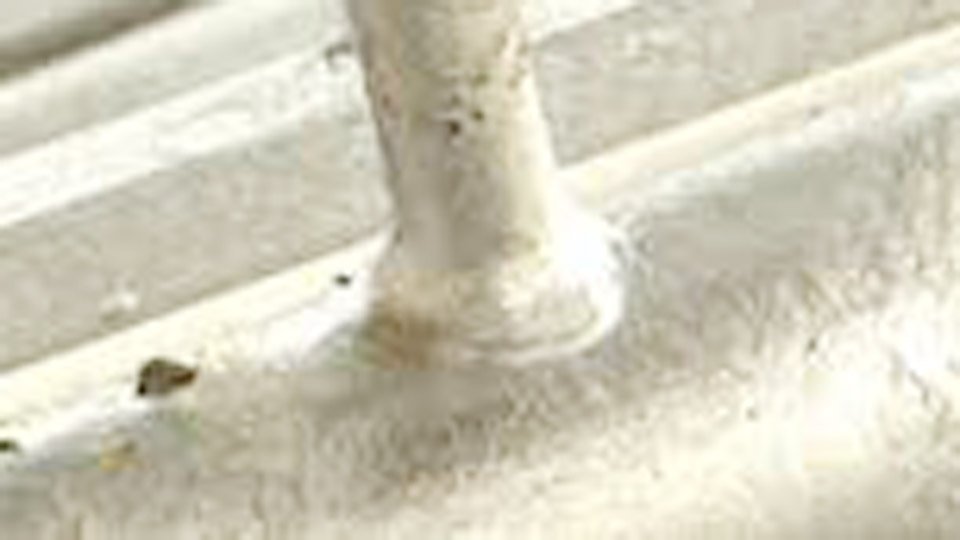
Image by galvanizeit
Why Galvanized Surfaces Require Specialized Cleaning Before Painting
Galvanized steel presents a unique substrate because the zinc layer actively corrodes to protect the underlying steel, creating compounds that interfere with paint chemistry. Standard carbon steel prep techniques fail here because zinc is softer (Mohs hardness around 2.5) and more reactive than iron.
Without targeted cleaning, paint films delaminate through saponification—where alkaline zinc surfaces break down ester-based binders—or through osmotic blistering from trapped moisture under poorly bonded coatings.
The Chemistry of Zinc Coating and Paint Adhesion Failures
Freshly galvanized surfaces emerge with a thin layer of zinc oxide and often a chromate or organic passivator applied by the galvanizer to prevent early white rust. These films prevent wetting by most paint resins.
Within 48 hours of exposure, zinc hydroxide forms if moisture is present; after weeks to months, it converts to stable zinc carbonate.
Each stage demands different removal strategies because zinc carbonate bonds well to paint while zinc hydroxide does not. In welded fabrications, heat from the arc vaporizes zinc locally, leaving porous, oxidized zones that accelerate failure if not mechanically profiled and chemically neutralized.
How Contaminants Compromise Duplex Coating Performance
Organic residues like rolling oils, welding anti-spatter compounds, and atmospheric dust create fisheyes and poor wetting. Zinc corrosion products (white rust) are hygroscopic and expand under paint films, causing delamination at stresses as low as 500 psi.
In corrosive environments (coastal or industrial), unaddressed contaminants reduce duplex system longevity from an expected 50+ years to under 10.
Cleaning restores the metallurgical bond potential while preserving at least 90% of the original zinc thickness—critical because every mil removed shortens cathodic protection life proportionally.
Assessing Your Galvanized Metal’s Surface Condition
Surface age and exposure dictate the cleaning intensity required. Misjudging this leads to over-etching (zinc loss) or under-prep (adhesion failure). Welders must evaluate within minutes of starting prep because new oxides form rapidly in humid shop air.
Distinguishing Between New, Partially Weathered, and Fully Weathered Galvanized Steel
Newly galvanized steel (exposed less than 48 hours) appears bright or spangled with minimal oxides and a smooth finish requiring profiling for mechanical keying.
Partially weathered material (48 hours to one year) shows dull gray tones, white powdery deposits, and electrostatic-bound organics— the most common condition in fabrication shops and the most demanding to prepare.
Fully weathered steel (over one year) develops a stable, adherent zinc carbonate patina that accepts paint after light cleaning only; aggressive abrasion here removes the protective layer unnecessarily.
Use a simple water-break test: clean water should sheet evenly across a properly prepared surface but bead on contaminated areas.
Identifying White Rust and Other Common Issues in Shop and Field
White rust appears as fluffy white or gray deposits, most severe in stacked or poorly ventilated storage. Light deposits affect appearance only; heavy buildup compromises coating thickness. Weld spatter embeds zinc particles that create galvanic cells under paint.
Heat-affected zones near welds lose zinc entirely, exposing bare steel that must be treated as a transition area. Field inspections often reveal chromate conversion coatings (detected by no color change when tested with lead acetate solution), which block adhesion for up to two years unless removed by sweep blasting or chemical etch.
Selecting the Optimal Cleaning Approach Based on Project Requirements
No single method suits every job. Shop welders with blast cabinets choose sweep blasting for speed and profile control, while field repairs rely on chemical etching or hand tools. Decision factors include part size, available equipment, environmental regulations, and time until painting.
Solvent Degreasing for Oil and Passivator Removal
Solvent-based cleaners like mineral spirits or acetone remove non-polar oils and passivators without attacking zinc. Apply with lint-free rags, changing frequently to prevent re-deposition. Chlorinated solvents handle heavier grease but require ventilation and disposal compliance.
These leave no residue when evaporated fully but provide zero profiling—pair them with mechanical or chemical steps. Effective for new galvanized where the primary contaminant is the galvanizer’s oil film.
Alkaline Cleaning Solutions for Organic Contaminants
A 10:1 water-to-mild alkaline cleaner mixture (pH around 9-10) dissolves organic soils without excessive zinc attack when contact time stays under five minutes and temperature remains below 140°F. Apply by brush or low-pressure power wash (under 1,450 psi) to avoid embedding particles.
Rinse twice with fresh water to neutralize. This method suits partially weathered surfaces with dirt and grease accumulation and preserves the zinc layer better than strong acids. Commercial products containing silicates further inhibit base metal attack.
Mechanical Abrasion Techniques for Welders
Hand or power-tool cleaning (SSPC-SP 2 or SP 3) removes bumps, runs, drips, and light white rust using 40-80 grit abrasives or wire brushes. Limit removal to 1 mil of zinc maximum to retain corrosion protection.
For larger areas, sweep blasting with 200-500 μm abrasives (Mohs hardness ≤5, such as aluminum silicate or crushed glass) at 20-40 psi nozzle pressure and 30-60° angle creates a 1-2 mil profile while removing less than 1 mil of zinc.
Move the nozzle rapidly (>1,200 sq ft per hour) to prevent over-blasting. This produces the most reliable anchor pattern for high-build coatings.
Chemical Etching Methods Including Phosphoric Acid and Vinegar
Phosphoric acid blends (typically 1:2 to 1:4 dilution with water, depending on product) etch zinc to a dull gray while depositing iron or zinc phosphate for temporary passivation. Scrub with synthetic pads, allow 3-6 minutes dwell, then rinse thoroughly within 2-3 minutes and double-rinse to prevent acid residue.
Household white vinegar (5% acetic acid) serves as a milder field alternative: wipe thoroughly, allow brief reaction, and rinse. These methods simultaneously clean and profile but require immediate painting (within 4-12 hours) to avoid flash oxidation. Avoid muriatic or sulfuric acids—they dissolve zinc rapidly and leave soluble salts.
Executing Professional Surface Preparation: Detailed Procedures
Follow ASTM D6386 sequencing: remove excess zinc first, then organics, then profile. Work in sections small enough to paint the same day. For welded assemblies, clean heat-affected zones to bright metal and feather edges into intact galvanizing.
Post-weld cleaning begins with wire brushing or light grinding to remove spatter and slag. Degrease the entire assembly, paying special attention to crevices where flux residues hide.
Apply chosen etch or blast method uniformly. Final rinse uses deionized water when possible to eliminate mineral spots. Force-dry with clean compressed air or low-heat fans; residual moisture causes immediate zinc hydroxide formation.
Profiling the Surface for Maximum Paint Bond Strength
A 1-2 mil surface profile provides mechanical interlocking without compromising the zinc-iron alloy layers. Sweep blasting achieves this most consistently across irregular weldments.
Wash primers (two-pack polyvinyl butyral with phosphoric acid and zinc chromate) form a 0.3-0.5 mil film that etches and passivates in one step—ideal when blasting equipment is unavailable.
Acrylic pretreatments deposit a thin conversion layer compatible with waterborne topcoats. Test profile depth with replica tape or a surface comparator before painting.
Compatible Painting Systems After Proper Cleaning
Primer Selection for Different Environments
Use zinc-rich primers (90%+ zinc solids) or self-etching primers containing phosphoric acid for interior or mild exterior exposure. High-build epoxy primers suit aggressive industrial or marine settings because they resist saponification.
Acrylic latex primers work well over fully etched surfaces but require a compatible topcoat. Always verify manufacturer data sheets for galvanized compatibility and recoat windows.
Topcoat Choices and Application Considerations
Two-component polyurethanes or polyaspartics deliver superior UV and chemical resistance over epoxies. Avoid alkyds and oil-based paints—they react with residual zinc alkalinity.
Apply primers to 2-4 mils DFT and topcoats to 3-6 mils, maintaining substrate temperature 5°F above dew point. Multiple thin coats outperform single heavy applications for uniform coverage on complex weld geometries.
Verifying Adhesion and Avoiding Common Field Failures
Perform ASTM D3359 cross-hatch testing 24-48 hours after full cure: score a 1 mm or 2 mm lattice, apply and remove tape at 180°, and rate adhesion from 0B (complete removal) to 5B (no removal). Field failures often trace to painting too soon after cleaning (new oxides form) or inadequate rinsing (soluble salts remain).
Monitor humidity during application—above 85% RH risks moisture entrapment. In humid climates, schedule final cleaning and priming for early morning when surfaces are driest.
Real-World Application Insight
Choosing the correct cleaning sequence for your galvanized metal directly determines whether the finished assembly survives 10 years or 50+ in service. Welders who match method to surface condition—solvent or alkaline for organics, phosphoric etch or sweep blast for profile, and immediate overcoating—consistently achieve 5B adhesion ratings and duplex systems that outperform either protection method alone.
The advanced insight professionals rely on is timing: treat the prepared surface as a living substrate that begins re-oxidizing the moment cleaning stops, so sequence every project to paint within the four-hour window whenever possible. This single decision separates routine maintenance repaints from permanent corrosion control.
FAQs
Can You Paint Galvanized Metal Without Cleaning It First?
No. Even new galvanized steel carries passivators and light oxides that prevent proper wetting. Skipping cleaning guarantees adhesion failure within months, especially under any moisture exposure. Always remove contaminants and create profile.
How Long After Cleaning Galvanized Steel Should You Paint?
Paint within 4-12 hours maximum. Zinc begins forming new oxides and hydroxides immediately after cleaning in normal shop humidity. In humid conditions, limit the window to under four hours and force-dry the surface before priming.
What Is the Best Primer for Galvanized Metal After Welding?
Zinc-rich epoxy primers (90%+ zinc by weight) or phosphoric acid-based self-etching primers perform best. They tolerate minor residual zinc oxides and provide cathodic protection in heat-affected weld zones. Match the primer chemistry to your topcoat to avoid intercoat delamination.
Does White Vinegar Effectively Prepare Galvanized Surfaces for Paint?
Yes, when used as a light etch on new or lightly oxidized surfaces. Wipe thoroughly with 5% acetic acid vinegar, allow 1-2 minutes reaction, rinse completely, and dry. It is milder than phosphoric blends and works well for field repairs but lacks the conversion coating provided by commercial etch solutions.
Hi, I’m Zachary Ford. I’m passionate about welding and dedicated to helping both beginners and experienced welders make informed decisions. I research, test, and write about welding helmets, welding machines, safety equipment, and essential workshop tools. My goal is to provide honest reviews, practical buying guides, and easy-to-follow tutorials that help you weld more safely, work more efficiently, and choose the right gear with confidence.