
Yes, you can run a welder on a generator, but only if the generator can supply enough continuous power and clean enough current for your specific welding process. Get the sizing wrong and you’ll either trip the generator’s breaker constantly or damage the welder’s electronics.
Key Takeaways
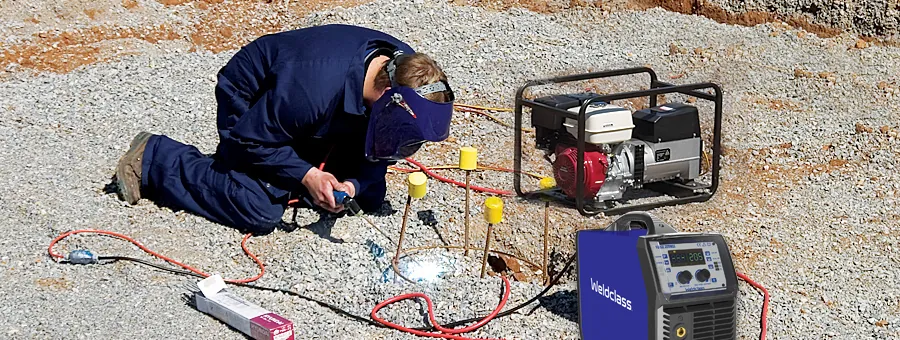
- Match the generator’s continuous (running) wattage, not its peak surge rating, to the welder’s input draw.
- Inverter welders need roughly 1.5–2x their rated output in generator capacity because of power factor and inrush current.
- A pure sine wave inverter generator is safer for welders with digital control boards than a conventional brushed generator.
- Add 25–30% headroom above the welder’s nameplate input amps to avoid nuisance tripping.
- Engine-driven welders (like Miller Trailblazer or Lincoln Ranger) sidestep the whole sizing problem.
- Never backfeed a house panel or run a generator indoors — carbon monoxide kills.
Start With the Welder’s Input Rating
Every welder has a data plate showing input voltage, input amperage, and duty cycle. That plate — not the output amperage — is what you size the generator against. A 240V welder drawing 30 input amps needs 7,200 watts just to strike an arc. Multiply by your duty cycle if you plan long beads, because a 60% duty cycle machine pulls harder during the on-cycle than the average suggests.
Why Duty Cycle Matters
A welder rated at 200 amps and 60% duty cycle can run 6 minutes out of every 10 at full output. The generator must handle the peak draw during those 6 minutes, not the average across the hour.
Sizing Chart by Welder Type
| Welder Type | Typical Input Draw | Minimum Generator (continuous) |
|---|---|---|
| 120V MIG (140A) | 20–24 amps | 4,000–5,000W |
| 240V MIG (210A) | 25–30 amps | 7,000–8,500W |
| 240V Stick (200A) | 30–40 amps | 9,000–10,000W |
| 240V TIG (200A) | 22–28 amps | 6,500–8,000W |
| Engine-driven welder | N/A | Built-in |
These are starting points. Always check the specific machine’s manual, because inverter units often draw less while transformer units draw more.
Inverter vs. Conventional Generators
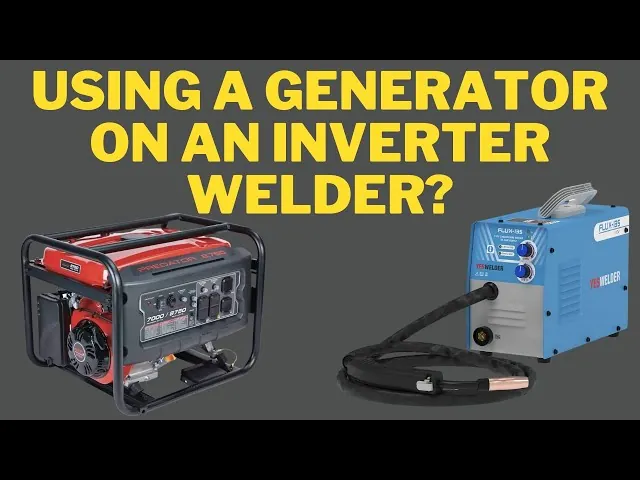
Inverter generators produce clean, stable sine wave power, which protects the welder’s circuit board and gives consistent arc characteristics. Conventional generators are cheaper per watt but produce dirtier power and a wider voltage swing under load. If your welder has a digital display or synergic controls, spend the extra money on an inverter unit.
Match the Generator to the Welding Process
Stick (SMAW)
The most forgiving process for generator power. Stick welders tolerate voltage sag well, and many engine-driven units are built specifically for this. A 9,000–10,000W conventional generator handles most 200-amp stick machines.
MIG (GMAW)
MIG is fussier. Wire feed speed and voltage must stay consistent or the arc stutters. Use an inverter generator with at least 25% headroom, and keep the leads short.
TIG (GTAW)
TIG needs the cleanest power of all three, especially for aluminum with high-frequency start. A dirty generator waveform can cause arc wander and erratic HF initiation.
Generator Features That Actually Matter
- Continuous vs. surge watts: Surge lasts seconds; welding lasts minutes. Size to continuous.
- THD (total harmonic distortion): Under 5% is ideal for welders with electronics.
- Idle control: Auto-idle saves fuel but can cause voltage dips when the arc strikes.
- Fuel type: Gasoline is common; propane and diesel units last longer under sustained load.
- Outlets: A 240V NEMA 14-50 or L14-30 receptacle is essential for most 240V welders.
Common Mistakes to Avoid
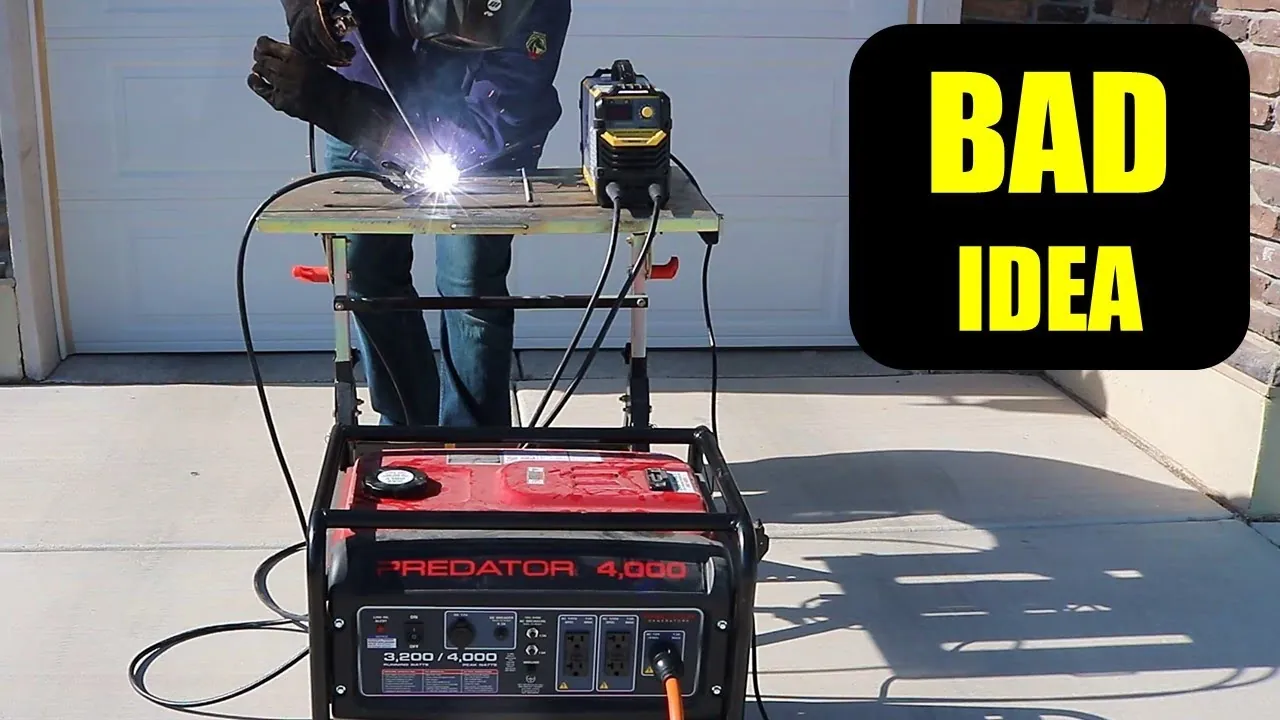
Warning: The single biggest error is sizing to surge watts. A “10,000W peak / 8,000W running” generator will trip the moment you lay a hot bead on a 240V MIG unit rated at 30 input amps. Read the running figure.
Other frequent problems:
- Running a 240V welder on a 120V adapter — it won’t strike an arc properly.
- Using an undersized extension cord, which causes voltage drop and overheating.
- Ignoring altitude — generators lose roughly 3.5% of rated output per 1,000 feet above sea level.
- Forgetting that a generator running other loads (lights, compressor) has less capacity left for welding.
When an Engine-Driven Welder Wins
If you weld off-grid regularly, a combination unit like a Miller Bobcat or Lincoln Ranger is purpose-built. It generates welding power and auxiliary power from the same engine, so there’s no mismatch to calculate. The trade-off is cost and weight. For occasional jobs, a standalone generator plus a portable inverter welder is cheaper and more flexible.
Frequently Asked Questions
Can a 5,000W generator run a 240V welder?
Usually not for a full-size 240V machine. A 5,000W continuous generator supplies about 21 amps at 240V, which is below the 25–30 amp draw of most 210-amp MIG welders. It may run a small 120V unit instead.
Will a generator damage my welder?
Only if the power is dirty or voltage swings wildly. A generator with under 5% THD and stable voltage regulation won’t harm a modern welder. Cheap conventional units with poor regulation can stress circuit boards over time.
Do I need a pure sine wave generator for welding?
For inverter welders and TIG with high-frequency start, yes. Pure sine wave power keeps the electronics stable. Basic stick welders with transformer designs are more tolerant of modified waveforms.
How many watts does a 200-amp welder need?
A 200-amp, 240V welder typically draws 30–40 input amps, which equals 7,200–9,600 watts. Add 25% headroom, so plan on a generator rated 9,000–12,000 watts continuous.
Can I run a welder and a grinder at the same time?
Only if the generator has spare capacity. A 4.5-inch grinder draws 5–8 amps. Add that to the welder’s draw before sizing, or run them one at a time to avoid tripping the breaker.
Is it safe to weld off a generator in the rain?
No. Generators and welding equipment must stay dry. Use a covered, ventilated area and keep the generator at least 20 feet from the work zone to avoid exhaust and sparks.
Conclusion
Check your welder’s data plate and manual first, then compare the input amps to a generator’s continuous wattage rating before you buy or rent. Getting those two numbers to line up is the whole job — everything else is fine-tuning.
Hi, I’m Zachary Ford. I’m passionate about welding and dedicated to helping both beginners and experienced welders make informed decisions. I research, test, and write about welding helmets, welding machines, safety equipment, and essential workshop tools. My goal is to provide honest reviews, practical buying guides, and easy-to-follow tutorials that help you weld more safely, work more efficiently, and choose the right gear with confidence.