
If you’re shopping for a Forney Easy Weld review, you’re probably a home welder, a farmer, or a hobbyist who wants to fix a trailer, patch a gate, or build something in the garage. These five welders differ in real ways: what they run on, what processes they support, what metal thickness they claim, and how much you have to carry. Every pick below is judged on the same three things — what it’s strong at, what it gives up, and what living with it would ask of you.
As an Amazon Associate, we earn from qualifying purchases. This post contains affiliate links – if you buy through them, we may earn a commission at no extra cost to you.
1. Easy Weld 140 Amp 120-Volt Flux-Cored Wire Feed Welder

Best for: The first-time welder with a 20-amp garage circuit
This is the entry-level flux-core machine. It runs on 120-volt household power as long as you have at least a 20-amp breaker, and it uses 0.030 in flux-core wire, so there’s no gas cylinder to buy or regulator to set. The 140-amp output lets it weld up to 1/4 in of mild steel, and it takes both 2 and 10 pound wire rolls.
Strengths:
- Runs on standard household power with a 20-amp breaker
- Welds up to 1/4 in mild steel at 140 amps
- No gas needed, so no cylinders or regulators
- Infinite voltage and wire feed speed control
- All-metal case, 19 pounds, easy to carry
Trade-offs:
- Needs at least a 20-amp breaker, not a standard 15-amp one
- Flux-core only, so no stick or TIG processes
- You’ll manage the slag and cleanup flux-core wire leaves
The power draw is the detail that decides this one for a lot of buyers.
| Best for | Why |
|---|---|
| First-time welder | Simple setup on household power |
| Trailer and gate repairs | Handles up to 1/4 in steel |
| Garage hobbyist | No gas cylinders to manage |
2. 271 Easy Weld 140 MP Multi-Process Welder – Versatile 3-in-1

Best for: The welder who wants three processes in one machine
This is the 3-in-1 option: Stick, MIG, and DC TIG. The listing highlights a simple start feature and a 3-position switch for quick process changes, plus infinite voltage and wire feed speed adjustments. It ships with a 10 foot MIG gun, an 8 foot electrode holder, an 8 foot ground clamp, a 20amp-15amp adapter, and one extra.030 inch contact tip.
Strengths:
- Three processes: Stick, MIG, and DC TIG
- 3-position switch for quick process changes
- Infinite voltage and wire feed speed adjustments
- 10 foot MIG gun plus electrode holder included
- All-metal case, runs on a 120-volt source
Trade-offs:
- MIG and DC TIG need gas; the listing notes only the power source
- Three processes mean more settings to learn at the start
- Switching processes adds setup time between jobs
The reason to pick this over the single-process machines is range. The trade-off is learning curve: a 3-position switch is quick, but each process has its own feel, and your first TIG beads won’t look like your first stick beads.
| Best for | Why |
|---|---|
| Multi-process learner | Stick, MIG, and DC TIG in one |
| Farm and shop work | Switch processes between jobs |
| Growing hobbyist | Room to build skills over time |
3. 298 Easy Weld 100ST 90 Amp Welder

Best for: The stick welder working outdoors on rusty metal
This is the stick machine in the group. It runs on 120-volt input from any household outlet, puts out 90 amps, and ships with an 8 foot electrode holder and an 8 foot ground clamp. The all-metal case is built to take day-to-day use.
Strengths:
- Runs on any household 120-volt outlet
- 90-amp output for tough jobs
- Stick and TIG capabilities per the listing
- Includes electrode holder and ground clamp
- All-metal case for day-to-day work
Trade-offs:
- 90 amps is the lowest output of the five picks
- Stick welding takes practice to strike and hold an arc
- No wire feed, so no MIG-style beads
Stick is the process this machine supports, which is why it earns its place for outdoor repairs and farm equipment.
| Best for | Why |
|---|---|
| Outdoor repairs | Stick handles dirty, rusty metal |
| Farm and ranch | No gas, simple setup |
| Beginner on a budget | Fewest settings to manage |
4. Forney Easy Weld 262 141 FC-i Flux Core Gasless Wire

Best for: The beginner who wants gasless welding with inverter smoothness
This is the flux-core pick, built around gasless operation and inverter technology. It runs on a standard 120V household outlet at 140 amps, welds mild steel from 24-gauge up to 1/4 inch, and weighs about 19 lbs. The listing describes the inverter design as providing a smooth, stable arc, and both voltage and wire feed speed are fully adjustable.
Strengths:
- Gasless flux-core, so no cylinders or regulators
- 140-amp output on a standard 120V outlet
- Welds mild steel from 24-gauge up to 1/4 inch
- Inverter technology for a smooth, stable arc
- About 19 lbs and easy to move around
Trade-offs:
- Flux-core only, so no stick or TIG
- Flux-core wire leaves slag to chip and brush
The thickness range is the number that matters here — it covers thin steel up to thicker steel without switching equipment.
| Best for | Why |
|---|---|
| Auto body repair | Handles 24-gauge thin steel |
| Outdoor welding | Gasless, no wind problems |
| Beginner welder | Stable arc, simple controls |
5. Forney Easy Weld 280 160 ST-i Dual Voltage Stick

Best for: The welder who needs both home and job-site power
This is the dual-voltage pick. It runs on both 120V and 230V input, so you can weld in a home garage on a standard outlet or move to a job site with higher voltage. It’s a 2-in-1 machine covering Stick and DC TIG, puts out up to 160 amps of DC power, welds with up to 5/32″ electrodes, and weighs only 15 lbs.
Strengths:
- Runs on both 120V and 230V input
- Stick and DC TIG in one machine
- 160-amp DC output, up to 5/32″ electrodes
- Only 15 lbs, the lightest of the five
- Inverter electronics for easy arc striking
Trade-offs:
- Stick and TIG only, so no MIG or wire feed
- 230V performance means having that outlet available
Dual voltage is the feature that separates this one, and it’s worth thinking through.
| Best for | Why |
|---|---|
| Job-site and home use | Runs on 120V or 230V |
| Maintenance and repair | 160 amps for thicker steel |
| Welder on the move | Only 15 lbs to carry |
Side by Side
This table lines up the five picks on process, power source, capacity, weight, and box contents.
How to Judge One of These
What it runs on
The outlet in front of you decides more than any feature list. The 140 needs at least a 20-amp breaker, so check your circuit before ordering. If you have a 230V outlet — a dryer or range plug, or a dedicated shop circuit — a dual-voltage machine opens up its full output.
The process it supports
Stick, MIG, flux-core, and TIG aren’t interchangeable, and each does a different job well. MIG needs shielding gas but gives clean, tidy beads on clean steel. DC TIG gives the most control and the neatest results, but it’s the slowest to learn. Match the process to the metal you actually weld.
Claimed metal thickness
Every listing here states a thickness it can weld, and that number is the honest ceiling for your projects. Thin metal — auto body panels, for example — punishes too much heat, so a machine that goes down to 24-gauge matters if that’s your work. Thick plate needs amps, and amps need the right input voltage. A machine that covers your thickest job but can’t go thin enough for your thinnest one will frustrate you on half your projects.
The feature that rarely earns its place
Portability matters less than most buyers think. Buy for the outlet and the process first. Confirm the cord length and what’s in the box before you order.
Frequently Asked Questions
Will any of these run on a normal household outlet?
Most of them will, with one condition. The Forney Easy Weld 140 draws more than a standard lighting circuit can supply, while the 140 MP, 100ST, and 141 FC-i run on 120 volts and the 160 ST-i runs on 120V or 230V. Check the breaker for your outlet before ordering — if it says 15, you’ll need an electrician or a different circuit.
What does the first week with one of these look like?
Expect setup, then practice, then real work. You’ll unpack the machine, fit the wire or electrode holder, set your voltage and wire feed or amperage, and run your first beads on scrap steel — not on the project. Flux-core machines leave slag you chip and brush off each bead, and stick machines ask you to learn striking and holding an arc. Plan on scrap metal and a little patience before anything structural.
What will these welders not do?
None of them does everything. The 140 and 141 FC-i are flux-core only, so no stick or TIG. The 100ST and 160 ST-i are stick and TIG, so no wire feed and no MIG. The 100ST’s 90-amp output is the lowest here, which limits thick plate, and MIG or DC TIG modes need shielding gas, which the listings don’t include.
Is the simplest pick here enough?
For a lot of buyers, yes. If your work is trailer repairs, gates, brackets, and general garage fabrication in mild steel up to 1/4 inch, the Forney Easy Weld 140 covers it with the fewest settings and no gas to manage. If you plan to weld thin auto body panels, the 141 FC-i’s 24-gauge range is the better fit.
Closing
For most home welders — a garage, a typical household circuit, and a mix of repair and hobby work — the Forney Easy Weld 140 is the pick that fits the common case, because it welds up to 1/4 in mild steel with no gas to manage. If your need is unusual — you work off both household and job-site power, or you want three processes in one unit — the 160 ST-i and the 140 MP cover those cases. The next step is simple: check your breaker and your outlet, write down the thickest and thinnest steel you’ll weld, then open the listing for the pick that matches both and confirm what’s in the box.
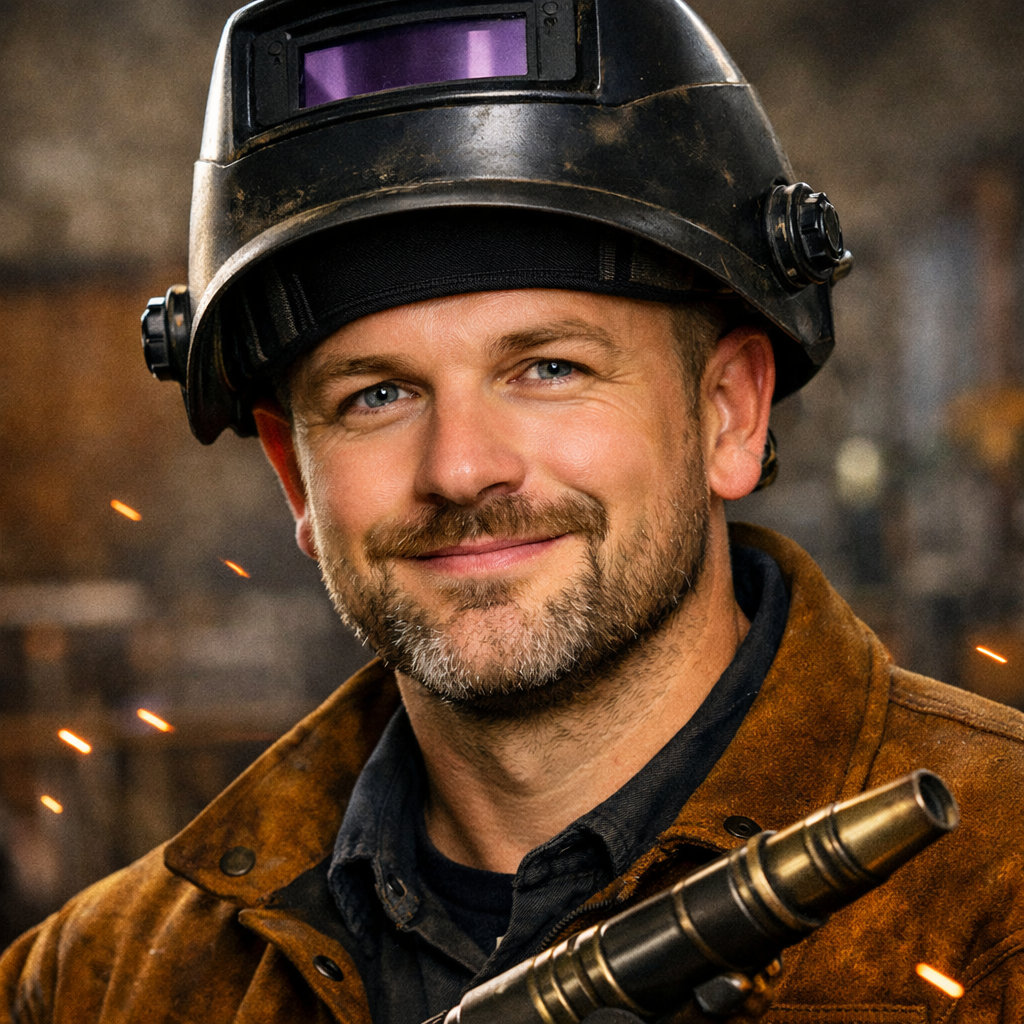
Hi, I’m Zachary Ford. I’m passionate about welding and dedicated to helping both beginners and experienced welders make informed decisions. I research, test, and write about welding helmets, welding machines, safety equipment, and essential workshop tools. My goal is to provide honest reviews, practical buying guides, and easy-to-follow tutorials that help you weld more safely, work more efficiently, and choose the right gear with confidence.